Non-Renewble Fossil Fuels (Cambridge International IGCSE Geography)
Importance of Non-Renewable Fossil Fuels
Spec point —
3.5.1· Importance of non-renewable fossil fuels globally and in different countries at different levels of development
-
Global energy demand is rising rapidly
-
Population growth and development are the key drivers of increased energy consumption because
-
Food production:
- The higher demand for food leads to more intensive farming, which needs more energy for machines, light and heat
-
Industrial growth:
- Factories need energy for operations, heating, and lighting
-
Transportation:
- Increased movement relies on petrol, diesel, and electricity
-
Urbanisation:
- Increasing urban population use domestic appliances, heating, and lighting
-
Economic development:
- Rising wealth leads to people buying more appliances and technology that need energy
-
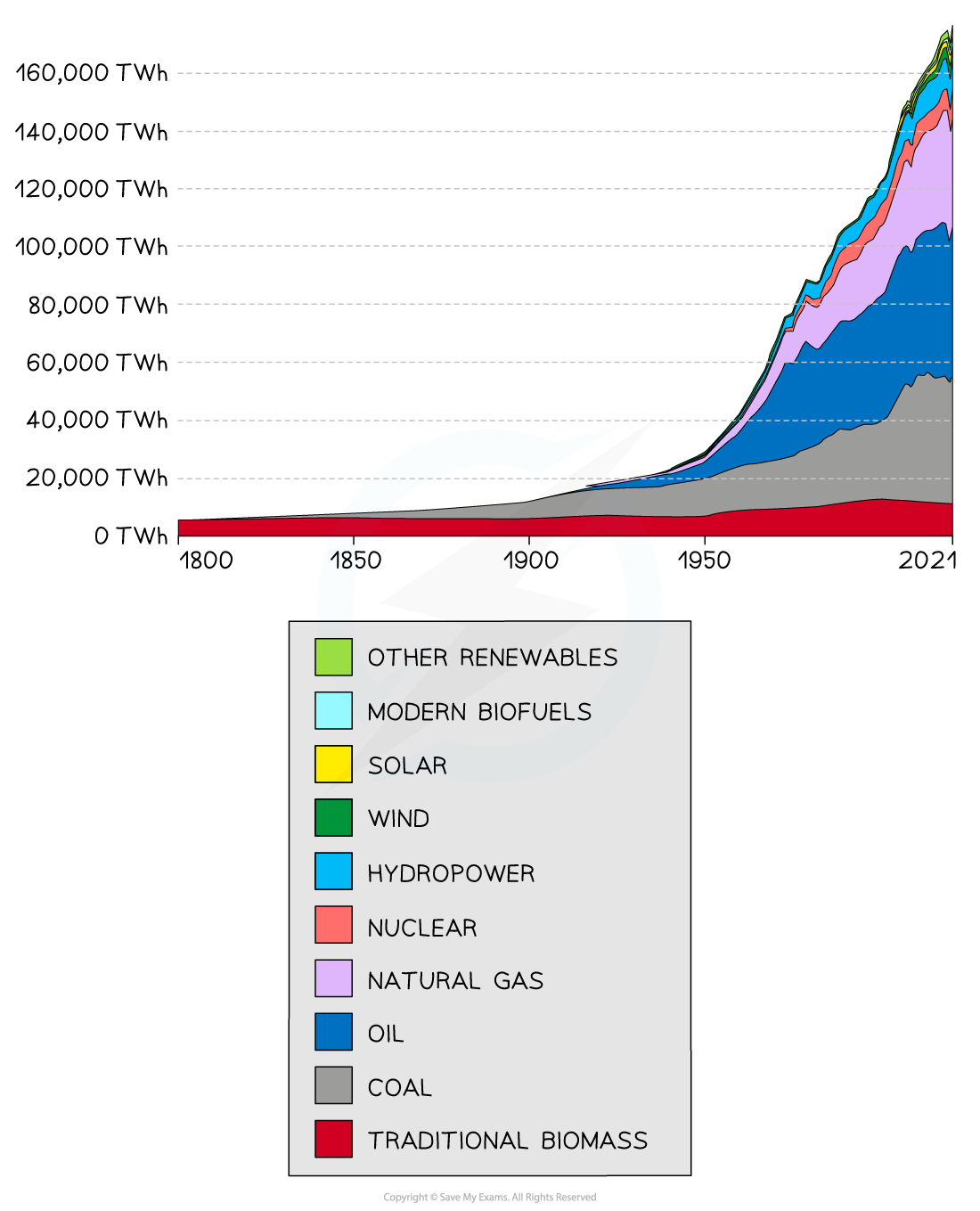
Graph showing world energy demand by source.
-
Over 80% of the world's energy is provided by fossil fuels (coal, oil and gas)
- 33% oil
- 27% coal
- 24% gas
-
Fossil fuels are fuels formed from the remains of living organisms (plants/animals)
- These are non-renewable as they cannot be replaced at a speed that keeps up with consumption
-
It is estimated that based on current use and availability, gas and oil will run out by 2080
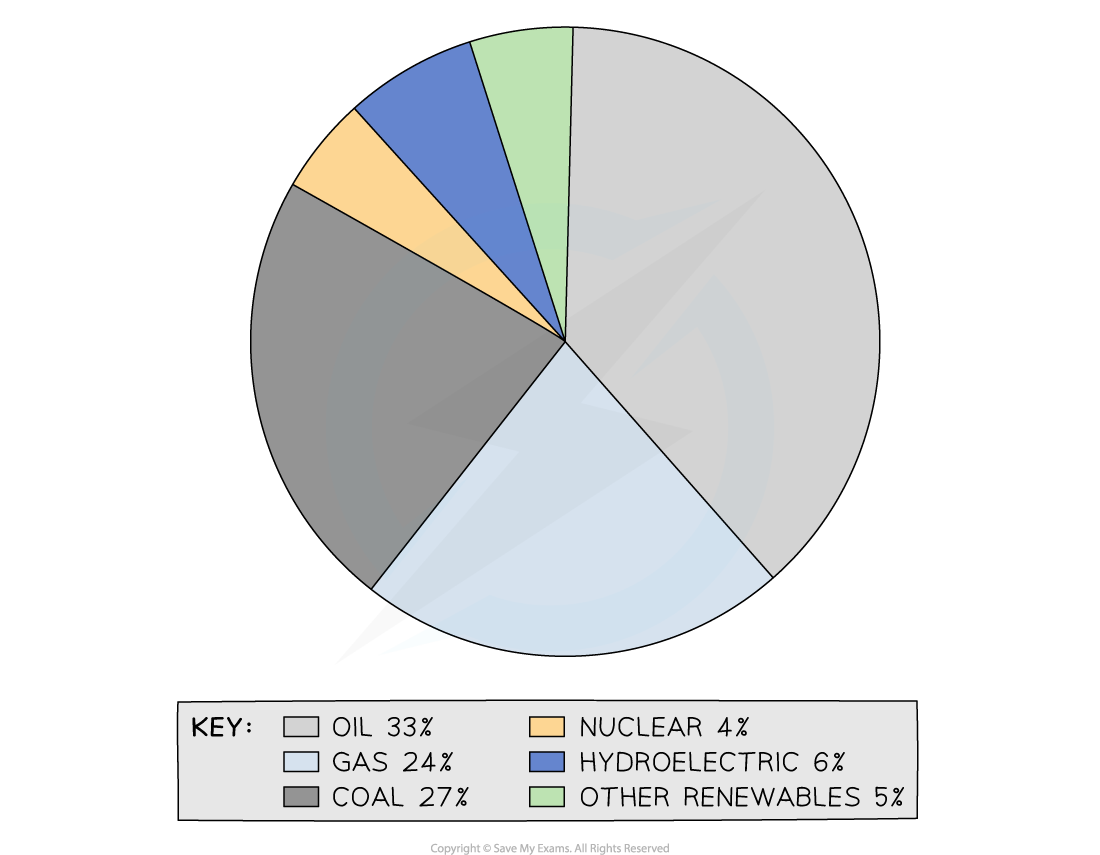
World energy mix
-
The use of nuclear and renewable energy is growing but non-renewable fossil fuels still dominate energy production
-
It is predicted that the use of gas and oil will continue to increase over the next 30 years
- Fossil fuels are expected to still provide over 75% of the world's energy by 2040
Coal
Advantages
- World reserves estimated at 120 years
- Reliable and easy to produce energy from
- Technology has enabled coal to be obtained more easily
Disadvantages
- Non-renewable— it will run out
- Releases carbon dioxide (greenhouse gas) and sulphur dioxide (causes acid rain) when burnt
- Heavy and bulky to transport
- Most accessible coal has been used and so the cost of production has increased as coal reserves are more difficult to access
- Risk of accidents due to mine collapse and gas release
- Opencast mining damages large areas of the environment
Oil and gas
Advantages
- Reliable and easy to produce energy from
- Efficient—it has a high energy density so it produces a lot of energy per kilogram
- Not as harmful to the environment as coal (gas is the least harmful)
- Easy to transport via pipeline
Disadvantages
- World reserves estimated to be between 50-60 years
- Non-renewable— they will run out
- The gases released when they are burnt are greenhouse gases
- Oil spills damage the environment and wildlife over large areas
- Prices fluctuate rapidly
- Supplies can be affected by conflict and political disagreements, e.g. the war in Ukraine
Energy use
-
MEDCs usually use more energy than LEDCs
- Countries with the highest energy consumption per person tend to be MEDCs and include Canada, Norway and Saudi Arabia
- Countries with the lowest energy consumption per person are LEDCs, which are all in Africa and include Niger, Chad and Tanzania
-
The greatest growth in energy use in LEDCs and newly emerging economies such as China and India
-
Development means more use of energy in
- businesses and factories
- homes as people buy more appliances and technology
- transport
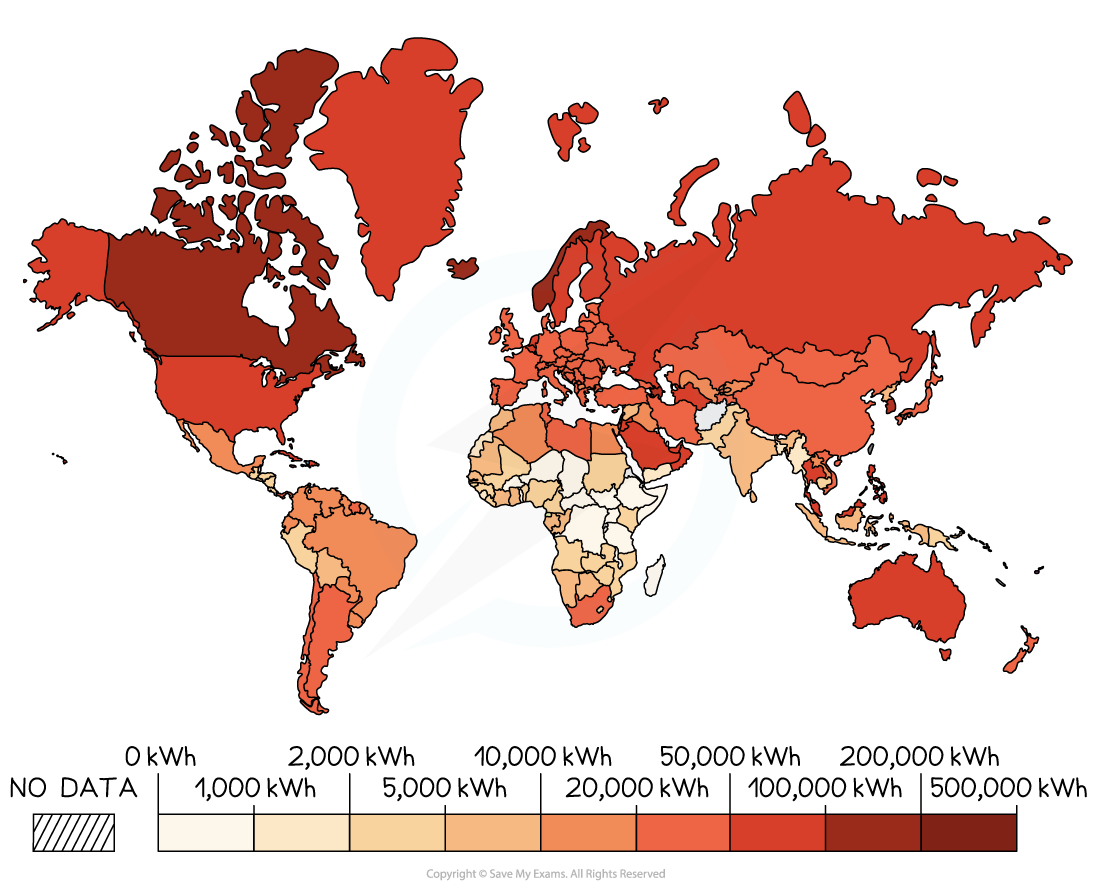
Energy use per person in kwh
Energy security
-
An energy gap is when a country cannot meet the demand for energy using its own resources
-
When countries have an energy gap, they have to import energy to meet the demand
-
Having an energy gap means that a country is not energy-secure
-
To be energy secure, a country needs an
- uninterrupted supply of energy
- affordable supply
- accessible supply
-
The UK has a widening energy gap and is not energy secure because:
- Renewable energy is not as efficient and so cannot replace full energy from fossil fuels
- It is cheaper to import fossil fuels than it is to exploit the resources in the UK
-
The commitment of many countries to tackling climate change and reducing the use of fossil fuels has increased energy insecurity in many countries
-
Energy security can also be affected by:
- energy sources running out
- war/conflict
- natural hazards
- political disputes
Energy mix
- The energy mix in countries varies depending on the level of development
- The most economically developed countries have a wider use of renewables and nuclear energy
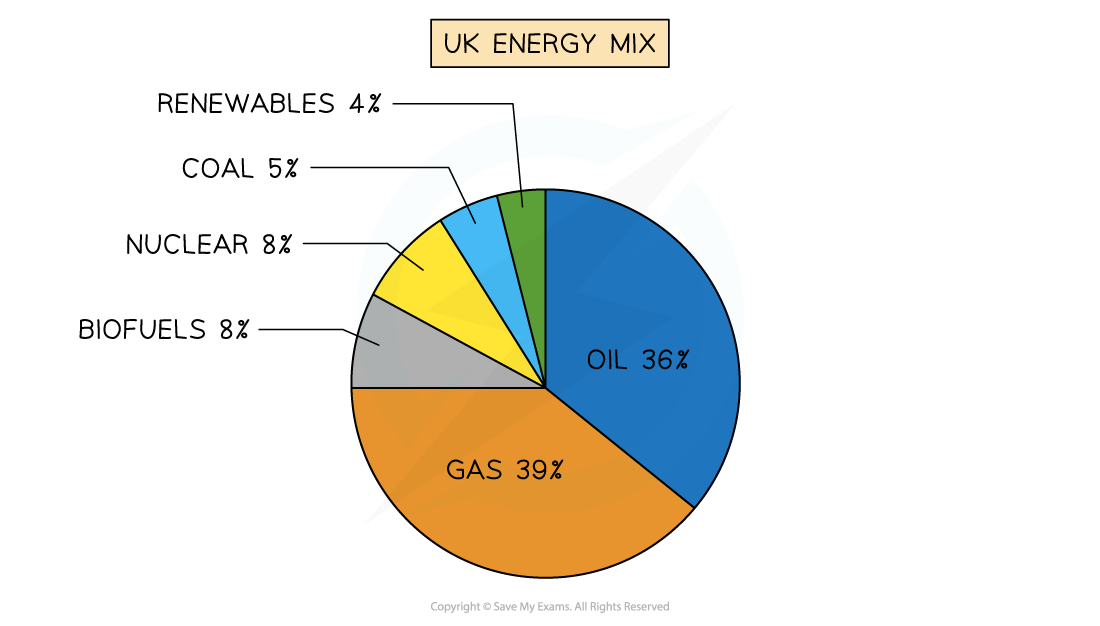
- The newly emerging countries are more dependent on fossil fuels
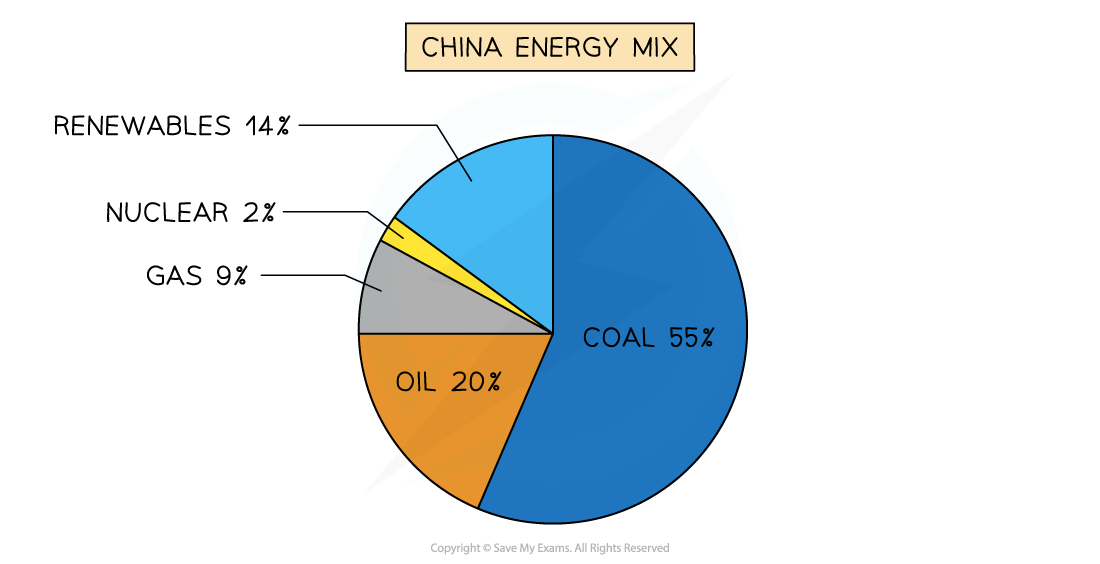
- The least economically developed countries are dominated by biofuels, which are mostly fuel wood used for heating and cooking, particularly in rural areas
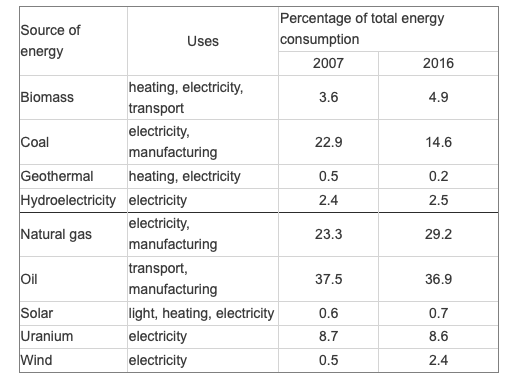
Worked Example Table 1 shows energy consumption in the USA in 2007 and 2016.
Table 1
Describe the changes in non-renewable energy consumption shown in Table 1.
[3 marks]
Final answer: Answer
- Coal has decreased from 22.9% to 14.6% [1]
- Gas has increased from 23.3% to 29.2% [1]
- Oil has decreased slightly from 37.5% to 36.9% [1]
- Uranium has decreased slightly by 0.1% [1]
Was this revision note helpful?
Build on this topic