Causes & Impacts of Soil Erosion (Cambridge International IGCSE Environmental Management)
What are the causes of soil erosion?
-
Soil erosion refers to the removal of the top layer of soil (usually by wind or water)
- Topsoil contains most of the soil’s nutrients and organic matter, so losing it reduces crop growth
-
Soil erosion happens when the soil is unprotected, disturbed, or exposed to strong forces like rain, rivers or wind
Unsustainable agricultural practices
-
Some farming methods damage soil health
- Includes overcultivation, overgrazing and poor irrigation
-
Overcultivation (growing crops repeatedly on the same land) removes nutrients quickly
- Soil becomes dry and loose, making it easier for wind or water to carry it away
-
Overgrazing (too many animals feeding in one area) exposes soil by removing vegetation
- Roots that hold soil together are lost
- Exposed soil becomes loose and easier to wash or blow away
-
Mismanaged irrigation (too much or too little water) weakens soil structure
-
Runoff can wash soil downhill
-
Excessive irrigation can cause soil salinisation (build-up of salts)
- Salty soil becomes dry and crumbly, increasing erosion risk
-
Deforestation
-
Cutting down trees and natural vegetation removes protective cover
- Leaves and branches normally slow down rainfall, reducing soil loss
-
Tree roots help bind soil together
- Without roots, soil becomes loose and more likely to be eroded
-
Land cleared for farming or development becomes exposed to wind and rain
Farming on steep slopes
-
Gravity pulls water and soil downhill, especially after heavy rain
-
Rainwater runs quickly down slopes
- Fast-moving water removes soil in layers or can create deep gullies
-
Machinery use on slopes can make this worse
- Tractors and equipment disturb soil
- This creates loose soil that can wash downhill quickly
Bare soil
-
Soil without plant cover is easily eroded
- Plants protect soil from rain impact and help hold it in place
-
Bare soil dries out faster
- No roots to hold soil together
- Soil becomes dry and light
- Dry soil breaks into small particles that are easily blown away by wind
-
No wind barrier from trees or other plants means wind can lift and transport loose, dry soil particles
-
Leaving fields bare between harvesting and the next planting increases erosion risk
Wind and water erosion
-
Wind erosion—strong winds blow away dry, loose soil
- Common in dry climates or during droughts
-
Water erosion—rain, rivers or runoff remove soil
- Heavy rain can splash soil particles loose or wash them downhill
- Rivers can cut into banks, removing soil from the edges of fields
- Storm events (intense rainfall over a short time) greatly increase the rate of soil erosion on exposed land
Exam Hint Students often list causes without linking them to how they remove soil. Always give a short cause-and-effect explanation, such as 'overgrazing removes vegetation, leaving soil exposed to wind and rain.'
Use key terms such as 'overgrazing', 'deforestation', 'runoff' and 'topsoil'. These keywords show accurate understanding and will help you gain marks.
What are the impacts of soil erosion?
-
Soil erosion reduces soil productivity and affects both the environment and human communities
- Impacts can be local, such as reduced crop yield, or wide-reaching, such as desertification or even displacement of communities
Silting of rivers
-
Eroded soil is carried by water into rivers and lakes
- This causes silt to build up on the riverbed
-
Silt reduces the depth of rivers
- This increases the risk of rivers flooding during heavy rain
-
Silting also reduces water quality
- Muddy water blocks sunlight, reducing plant growth in the river
- Suspended particles clog fish gills, making it harder for them to breathe
- Silt can smother fish eggs and aquatic plants, reducing survival rates
Desertification
-
Loss of soil creates dry, infertile land that cannot support crops
-
Vegetation dies, leaving the ground exposed
-
Over time, the land turns into desert-like conditions
- This is common in areas with drought, overgrazing or deforestation
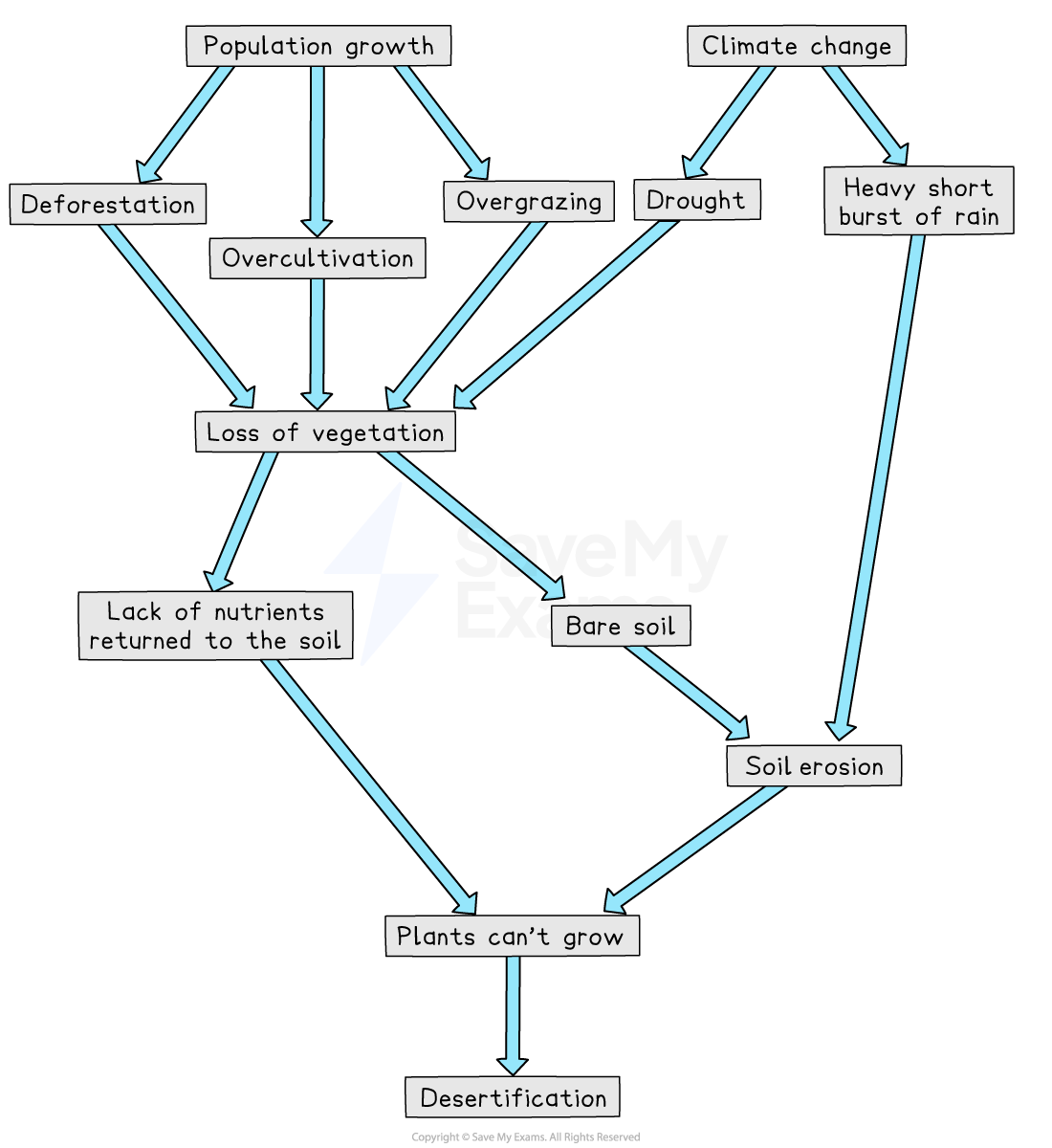
Causes of desertification
Mass movement: landslides, rockslides and mudslides
-
Removing vegetation weakens soil structure on hillsides
- This is mainly because plant roots normally hold soil in place
-
Heavy rain can trigger landslides or mudslides
- Loose soil becomes saturated and slides downhill
-
Rockslides occur when exposed rock breaks away
- These events can destroy homes, roads and farmland
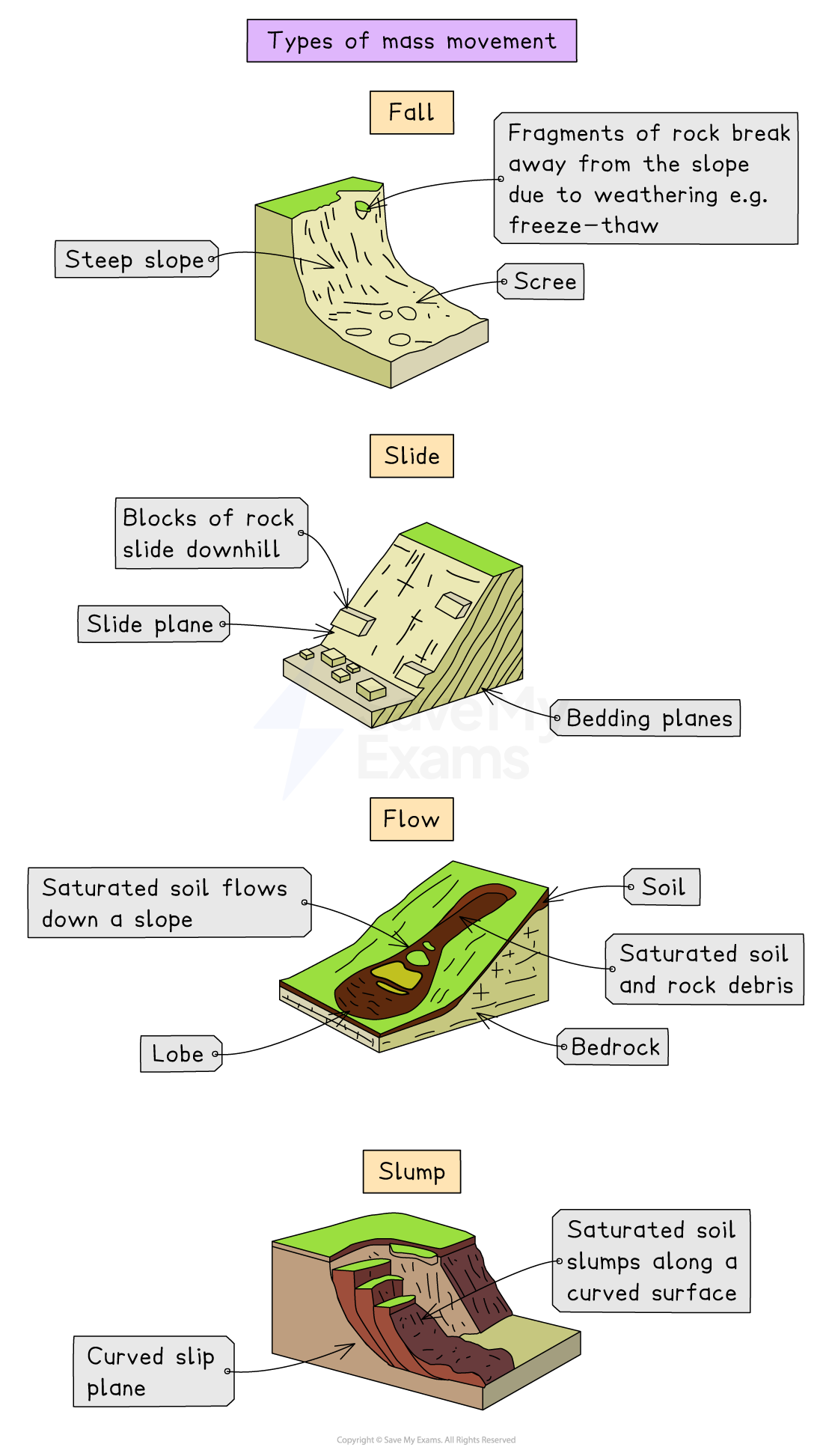
Types of mass movement
Loss of habitats and biodiversity
-
Soil erosion destroys habitats for plants, insects and animals
- Many species cannot survive once their habitat is gone
-
Loss of vegetation reduces biodiversity
- Fewer plant species mean fewer food sources for wildlife
-
Rivers filled with silt may lose aquatic species
- Ecosystems become less stable
Reduction in crop yield
-
With less topsoil, crops have fewer nutrients and poorer growing conditions
- Roots cannot spread deeply or absorb enough water
-
Reduced yields affect farm income and food availability
-
Farmers may need more fertiliser, increasing costs and pollution
Malnutrition and famine
-
Lower crop yields reduce the amount of food available
- Communities may not have enough to eat
-
Malnutrition occurs when people lack essential nutrients in their diets
-
Severe or long-term soil erosion can contribute to famine
- Especially in areas already facing poverty and drought
Displacement of people
-
When land becomes unproductive and crops fail, families may be forced to move elsewhere
- This can lead to rural-to-urban migration
-
Loss of farmland reduces income
- People leave to find work or food
-
Displacement can cause overcrowding in towns or cities
- This can put pressure on housing, water and healthcare
Exam Hint Remember that environmental impacts (like biodiversity loss or loss of soil nutrients) often have a knock-on effect, leading to human impacts (like reduced food supply). Showing this chain of impacts can help you reach the top level in extended responses.
Was this revision note helpful?
Build on this topic