Features & Impacts of Earthquakes & Volcanoes (Cambridge International IGCSE Environmental Management)
Features of earthquakes
- An earthquake is the sudden, violent shaking of the ground
- They are the result of pressure building when tectonic plates move
Release of energy
- Stored elastic energy is released as seismic waves, causing shaking.
Focus
- The point inside the Earth where the earthquake starts
Epicentre
- The point directly above the focus on the surface
- Usually experiences the strongest shaking
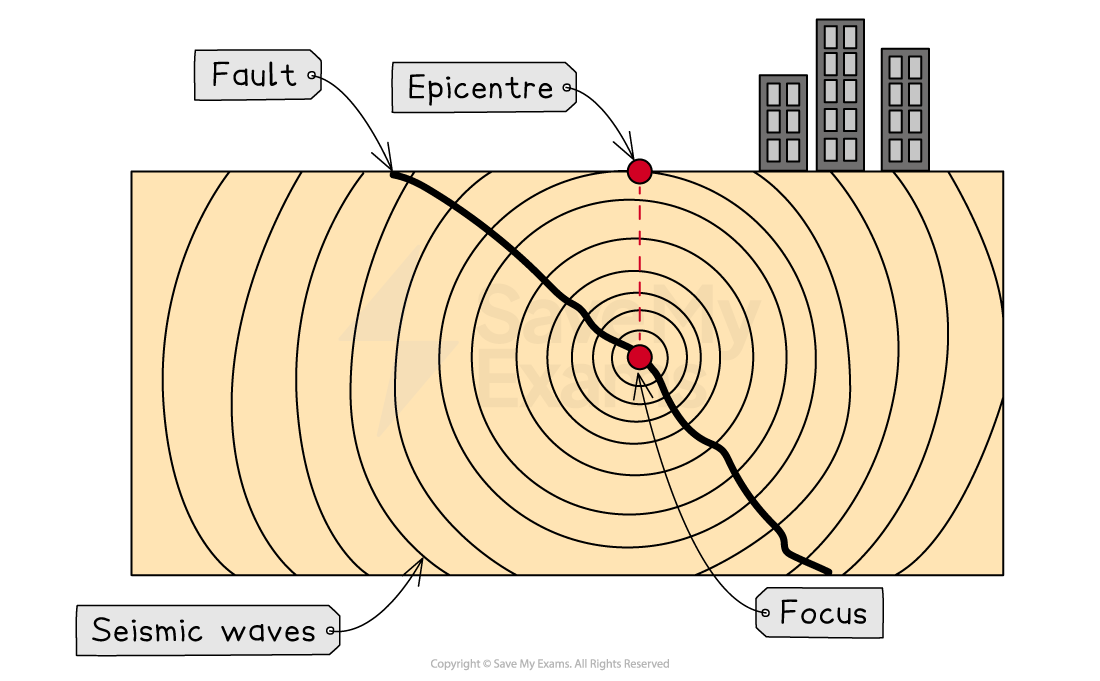
Features of an earthquake
Magnitude (Moment Magnitude Scale)
- Measures the energy released(strength/power) of earthquakes
- Logarithmic: each whole-number increase is ~32× more energy
- More accurate for large earthquakes than the older Richter scale
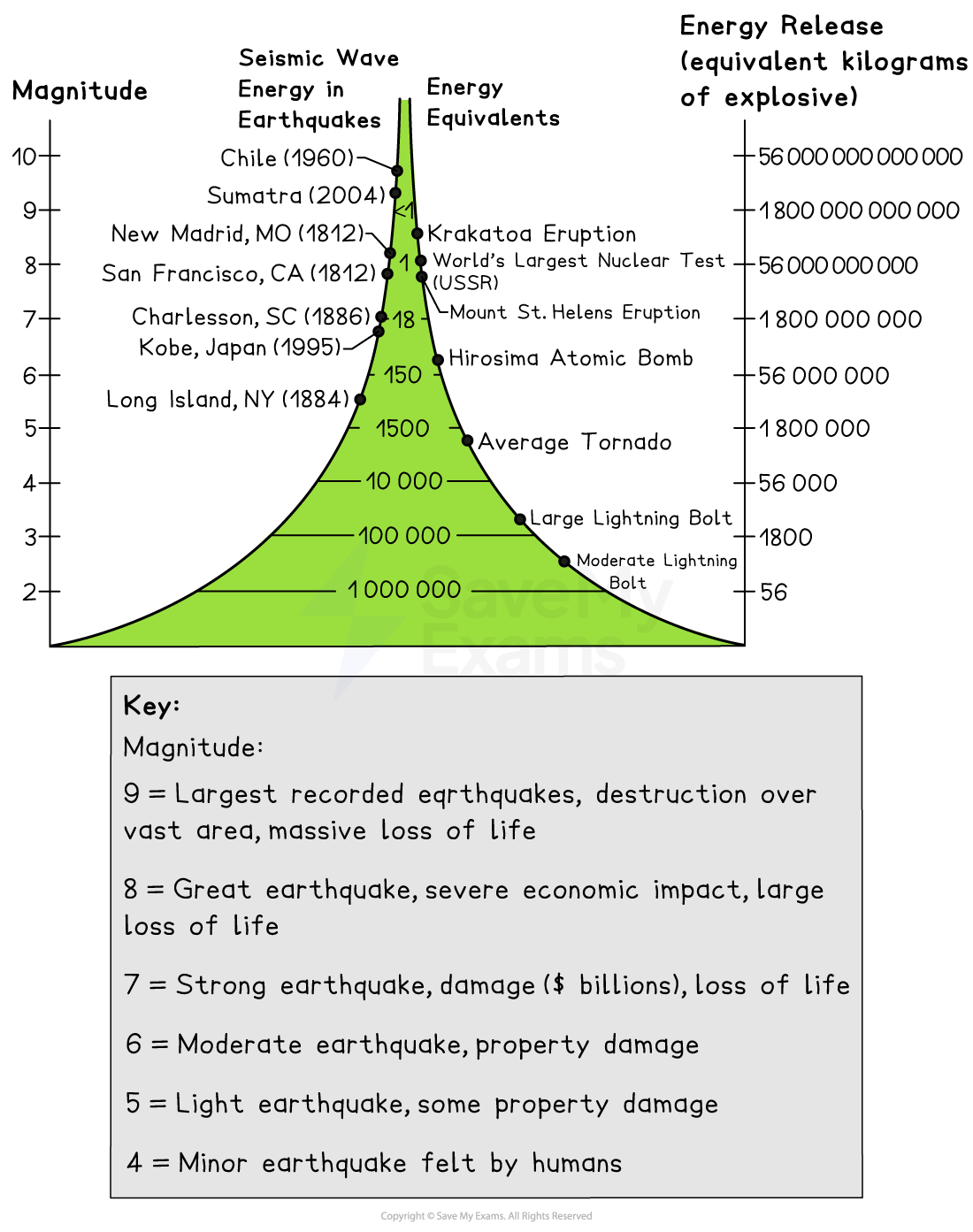
Measuring earthquake magnitude
- The damage caused by earthquakes is measured on the Mercalli Scale
Features of volcanic eruptions
-
Volcanic eruptions vary from gentle lava flows to catastrophic explosions
-
Key features include:
-
Magma rising to the surface
- Magma rises through cracks due to buoyancy and gas pressure
- When magma reaches the surface, it becomes lava and forms new crust and volcanic landforms
-
Ash
- Tiny fragments of rock and volcanic glass
- Can travel globally in the upper atmosphere
- Heavy ashfall collapses roofs, suffocates vegetation, and disrupts transport
-
Gases (H₂O, CO₂, SO₂)
- Water vapour is the most common volcanic gas
- CO₂ can accumulate in low areas and cause suffocation
- SO₂ forms volcanic smog and contributes to acid rain and atmospheric cooling
-
Acid rain
- Forms when SO₂ reacts with water in the atmosphere
- Damages vegetation, acidifies soils and water bodies, and corrodes stone
-
Volcanic bombs
- Large, molten or semi-molten rocks ejected during explosive eruptions
- Cool as they travel, landing as solid rock — dangerous at close range
-
Pyroclastic flows
- Fast-moving clouds of hot gas, ash and rock fragments
- Can exceed 400°C and travel at >100 km/h
- Extremely destructive and often fatal
- Responsible for many historical volcanic disasters (e.g. Mont Pelée 1902)
Measuring eruption magnitude
- The magnitude of a volcanic eruption is measured on the Volcanic Explosivity Index (VEI)
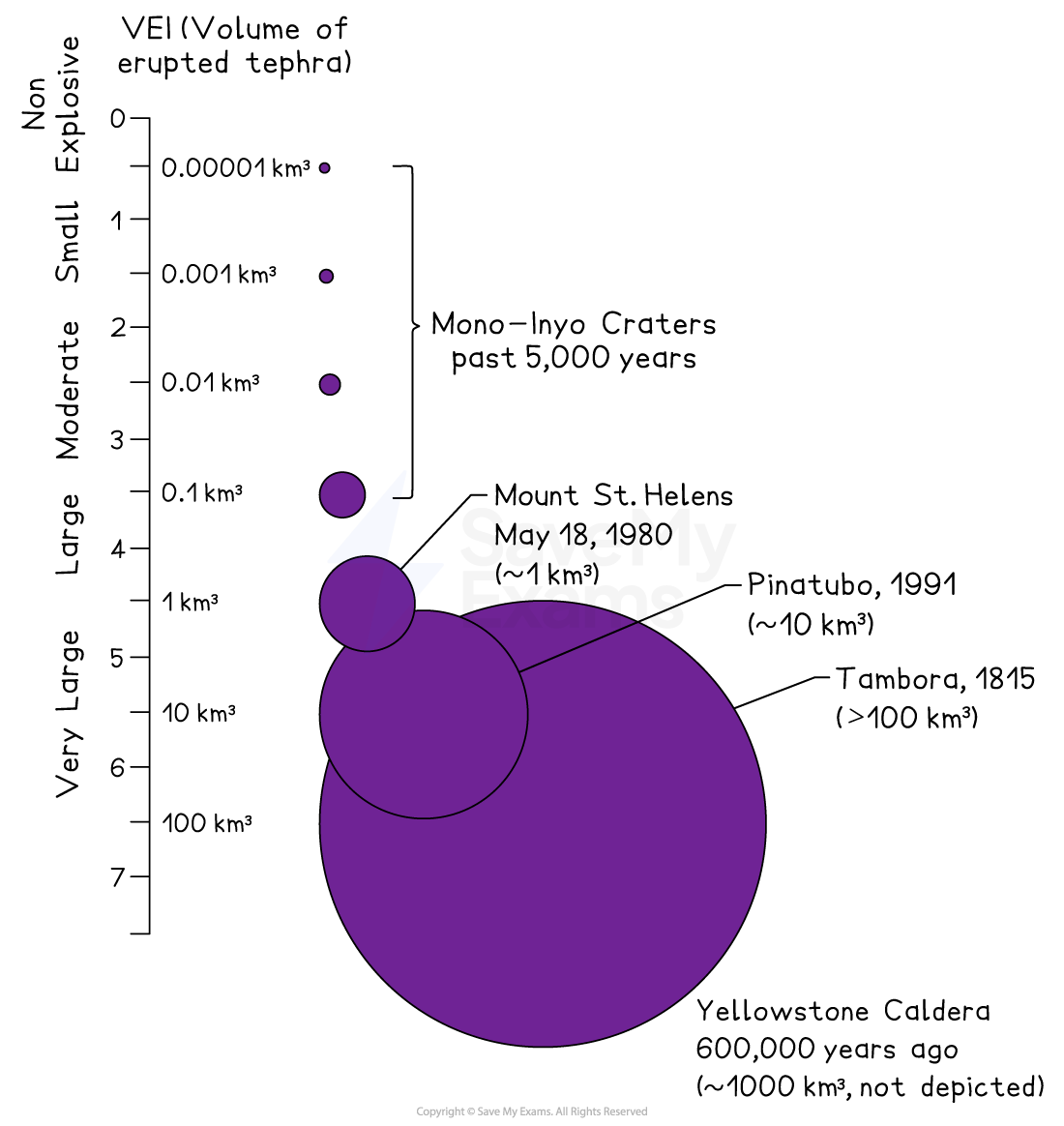
The volcanic explosivity index (VEI)
Opportunities provided by volcanoes
- Although volcanoes pose serious hazards, they also create valuable opportunities that attract people to volcanic regions
- These benefits often outweigh the risks, especially in countries where the land and resources around volcanoes support livelihoods and economic development
Fertile soils
-
Volcanic activity produces ash, lava and rock fragments that eventually break down into highly fertile soils
-
Why they are fertile:
- Volcanic materials weather into soils rich in minerals, especially potassium, phosphorus, magnesium and iron
- These nutrients make soils excellent for crop growth
-
Examples:
- The slopes of Mount Etna (Italy) are famous for citrus orchards and vineyards
- Java (Indonesia) supports rice farming on volcanic soils that feed millions
-
Why people live there:
- Reliable, productive farmland that increases food security and income
Extraction of minerals
-
Volcanoes bring valuable minerals and metals close to the Earth’s surface, making them easier to mine
-
Key volcanic minerals include:
- Copper
- Gold
- Silver
- Lead and zinc
- Sulphur (from volcanic gases and fumaroles)
-
How they form:
- Hot volcanic fluids deposit minerals in cracks and fissures
- Repeated eruptions concentrate valuable ore bodies
-
Benefits:
- Mining creates jobs and export income
- Supports local industry and national economic growth
-
Examples:
- Copper mining in the Andes (Chile, Peru)
- Sulphur mining in Indonesia from active volcanic vents
Building materials
-
Volcanoes produce materials that are widely used in construction and industry
-
Common volcanic building materials:
- Basalt: hard rock used for road building and building blocks
- Pumice: lightweight and porous; used in concrete, abrasives, and horticulture
- Scoria: used for drainage, landscaping, and lightweight construction
-
Why they’re useful:
- Durable, abundant, and easy to quarry near volcanic regions
-
Example:
- Volcanic stone from Iceland and Hawaii is used in construction and coastal engineering
Geothermal power
-
Volcanoes provide a reliable and renewable source of geothermal energy
-
How it works:
- Heat from magma warms underground water
- Hot water becomes steam
- Steam is extracted through wells
- It drives turbines that generate electricity
-
Benefits:
- Clean and sustainable energy source
- Reduces reliance on fossil fuels
- Provides heat for homes, greenhouses, and industries
-
Examples:
- Iceland generates about 25–30% of its electricity from geothermal power
- New Zealand uses geothermal heat for spas, heating and electricity
Tourism
-
Volcanic landscapes are major attractions for domestic and international visitors
-
Tourism activities include:
- Hiking volcanic cones (e.g., Mount Fuji, Japan)
- Visiting hot springs and geysers (e.g., Yellowstone, USA)
- Viewing lava flows (e.g., Hawai‘i Volcanoes National Park)
- Exploring volcanic beaches, crater lakes and lava tubes
-
Benefits:
- Generates employment (guides, hotels, restaurants)
- Boosts local and national economies
- Encourages conservation of volcanic landscapes
-
Why tourism thrives:
- Volcanoes offer dramatic scenery and unique natural features
- Cultural significance adds value (e.g., rituals and traditions around volcanoes)
Impacts of tectonic events
-
Tectonic hazards affect societies at every level, such as infrastructure, health, economy, and ecosystems
-
Impacts vary depending on:
- Magnitude
- Distance from the epicentre/volcano
- Population density
- Building quality
- Preparedness
-
The impacts of earthquakes and volcanic eruptions can be categorised into:
- Primary hazards: these are a direct result of the earthquake or eruption
- Secondary hazards: these occur as a result of the primary effects
-
Damage to buildings and infrastructure
- Earthquake shaking collapses homes, bridges, and pipelines
- Lava and pyroclastic flows destroy everything in their path
- Roads become impassable, slowing rescue and recovery
- This leads to people being homeless for months and even years after the event
- The more buildings that are destroyed or damaged, the higher the costs of rebuilding
-
Loss of crops, livestock and habitats
- Ash covers farmland; lava buries fields, causing the death of crops
- Earthquakes can destroy irrigation and greenhouses
- Wildlife habitats burn or become uninhabitable
- This leads to food shortages and affects farmers' income
-
Evacuation of people and livestock
- Volcanic warnings often lead to mass evacuations
- Tsunami threats require rapid coastal evacuation
- Evacuation disrupts livelihoods and may become long-term
-
Fire
- Ruptured gas lines ignite after earthquakes
- Lava ignites forests and settlements
- Fires spread quickly when emergency services are limited
-
Tsunamis
- Triggered by undersea earthquakes, volcanic eruptions or landslides
- Flood coastlines, destroy infrastructure and cause high death tolls
-
Landslides
- Shaking destabilises slopes
- Volcanoes produce lahars (mudflows) when ash mixes with water
- Landslides bury communities and block rivers
-
Contamination of drinking water
-
Ash and debris pollute reservoirs
-
Broken sewage pipes contaminate supply lines
-
CO₂ emissions from volcanoes may reach groundwater
- Volcanic plume emissions dissolve in the atmospheric water, which infiltrates the surface after precipitation and percolates downwards
- When magma rises, gases like CO₂ and sulphur are released into fissures, faults, and porous surfaces
- These gases dissolve in underground water sources, lowering the pH and increasing acidity
-
-
Water-related disease
- Flooding and infrastructure collapse cause outbreaks
- Examples: cholera, dysentery, gastroenteritis
- Poor sanitation in evacuation shelters increases risk
-
Financial losses
- Rebuilding is expensive
- Tourism declines after major events
- Agriculture, business and industry all face disruption
- It is dangerous for jet planes to fly through ash clouds due to possible engine failure, so flights are cancelled
-
Human health
- Injuries from collapsing structures, burns, and inhalation of ash
- Long-term respiratory issues from ash and toxic gases
- Mental health effects (trauma, anxiety, displacement)
Was this revision note helpful?
Build on this topic