Antony and Cleopatra: Character Quotations (Cambridge International IGCSE English Literature)
In your exam, you will be asked to respond to questions on themes and characters. Being able to support your answers with quotes from the text, and understand the context of these quotes, will help you to form higher level answers.
If you can remember quotes related to themes of the text, it is easier for you to focus on character representation and development. Here we will examine some important quotations from the following key characters:
- Cleopatra
- Antony
- Octavius
- Enobarbus
Exam Hint It is important to remember that examiners reward the use of evidence to support your ideas. This does not mean you need to memorise long quotations. Instead, you should use short, well-chosen quotes to support a clear interpretation of a character or theme in Antony and Cleopatra.
Also remember that the term “references” in the mark scheme does not only mean quotations. You can also refer to key scenes and events from the play. For example, you might write: “In Shakespeare’s play, Antony’s decision to return to Cleopatra after the battle of Actium shows how his personal desires overpower his sense of duty.” This still shows secure knowledge of the text and supports your argument clearly.
Antony and Cleopatra: Character Quotations: Cleopatra
Cleopatra
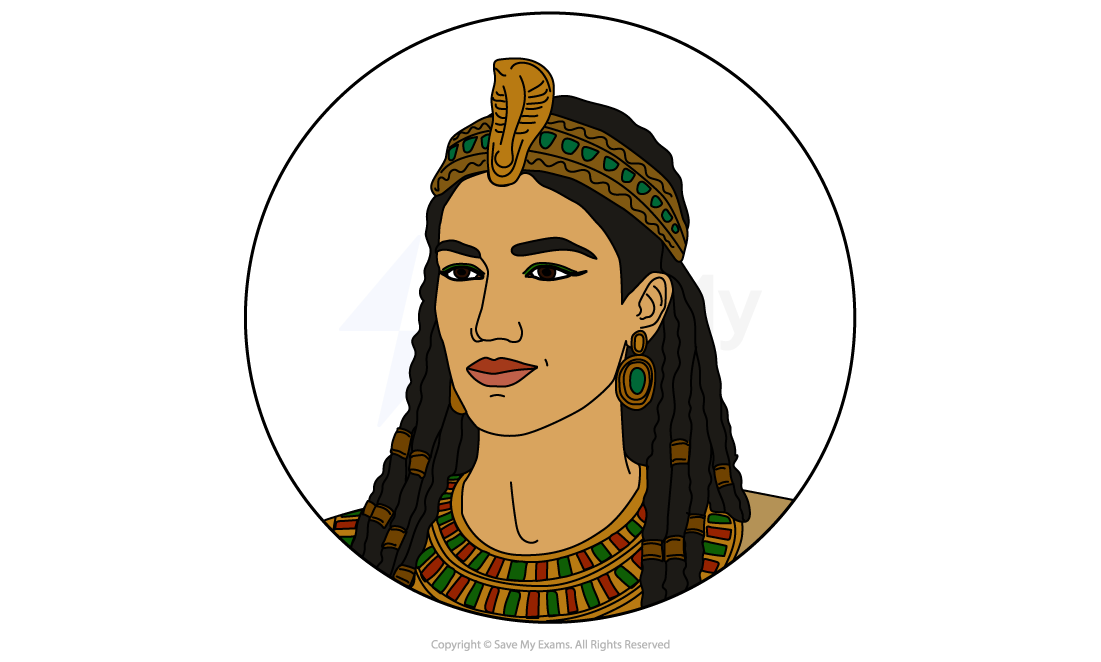
blockquote "My salad days, When I was green in judgement, cold in blood," — Cleopatra, Act 1 Scene 5
| Key word or phrase to memorise | What the quotation means | Theme |
|---|---|---|
| “My salad days” | This phrase refers to her youth, implying that she was inexperienced and immature, like a young plant (“salad”) and with less passion (“cold in blood”) | Rome versus Egypt |
| - Cleopatra is reflecting on her youth, when she was much more immature, but made decisions with less emotion and passion - This shows her self-awareness, and suggests she is acting more emotionally due to her love for Antony, rather than that just being who she is - That she is continuously painted by Romans as a lustful and manipulative woman might show the difference in the two places: - In Egypt, she is free to change, to fall in love and act emotionally - To the Romans, they are happy to dismiss her with misogynistic insults |
blockquote "My desolation does begin to make A better life." — Cleopatra, Act 5 Scene 2
| Key word or phrase to memorise | What the quotation means | Theme |
|---|---|---|
| “My desolation…a better life” | Cleopatra sees her death as a chance to live longer in legend, and be remembered as a stronger figure in death | Fate and circumstance |
| - Cleopatra looks at her death as a chance to transcend the problems she has now, and to be better in the afterlife: - She may mean that she will live better removed from the constraints of the politics of the living, and back with Antony - She sees it as her fate to be remembered in legend, and that she is left with no other option - This is also a chance, in her eyes, to control her destiny and regain her dignity |
blockquote "The odds is gone, And there is nothing left remarkable Beneath the visiting moon." — Cleopatra, Act 4 Scene 15
| Key word or phrase to memorise | What the quotation means | Theme |
|---|---|---|
| “there is nothing left remarkable” | Cleopatra thinks the world has lost anything remarkable now that Antony has died | Duty versus desire |
| - With Antony dead, Cleopatra thinks the world has little to offer her: - This exposes her lack of interest in duty, as she feels no need to live for her people, or to carry on for the sake of duty - It also shows how deeply she loves Antony, the only remarkable thing on Earth: - Without him, she feels purposeless |
blockquote “Antony Shall be brought drunken forth, and I shall see Some squeaking Cleopatra boy my greatness I’th’posture of a whore.” — Cleopatra, Act 5 Scene 2
| Key word or phrase to memorise | What the quotation means | Theme |
|---|---|---|
| “Some squeaking Cleopatra boy my greatness” | Cleopatra foresees how both her and Antony will be presented in Rome | Rome versus Egypt |
| - Both were seen as indulgent in their luxuries whilst in Egypt, and Cleopatra sees that, in defeat, Rome will be able to present her and Antony as they please - This is also meta-theatrical, as Cleopatra speaks of how she, and her legacy, will be acted out by a boy on a stage: - At this time, only men acted on stage, so a female character would likely be played by a boy or young man, with a higher, and therefore more feminine, voice - She is also very aware of how they are seen: - Antony is a drunk, lavish and ill-disciplined - Rome views Cleopatra’s power as sexual deviance |
Antony and Cleopatra: Character Quotations: Mark Antony
Mark Antony
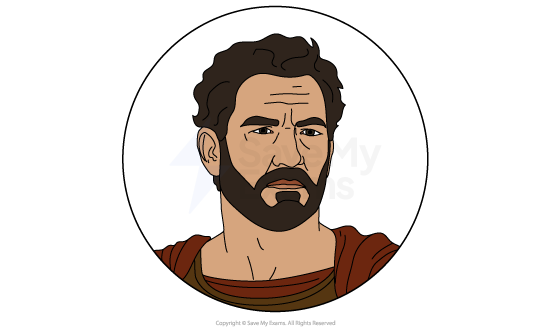
blockquote "He hath spoken true. The very dice obey him." — Antony, Act 2, Scene 3
| Key word or phrase to memorise | What the quotation means | Theme |
|---|---|---|
| “The very dice obey him” | Antony has asked the Soothsayer about the future, and hears bad news, but accepts it as true | Fate and circumstance |
| - Antony asks the Soothsayer for his fortunes after negotiations with Octavius: - He is given bad news, that the future will be better for Octavius - As a man who believes in fate and fortune, Antony does not argue: - Antony starts to see reasons why this is true once he hears it, showing his mind for military tactics remains - He starts to see his follies have left him weak, and that Octavius is a younger, stronger and more motivated opponent - On hearing this, he resolves immediately to go to Egypt: - He has given up, and is happier to go to Egypt and enjoy himself: - Once a renowned general, his desire to fight has gone - For the first time, Antony begins to understand his downfall: - However, we see the power his belief in fate has over him: - He does not see anything he can do, which is arguably as big of a problem as his indulgences - Maybe he could act to fix this, but believes the future is set and doesn’t see himself as someone who can change it - As a younger man, he would have |
blockquote "Please your thoughts In feeding them with those my former fortunes Wherein I lived the greatest prince o’ th’ world!" — Antony, Act 4 Scene 15
| Key word or phrase to memorise | What the quotation means | Theme |
|---|---|---|
| “I lived the greatest prince o’ th’ world” | On his deathbed, Antony asks to be remembered for his glory in his youth | Duty versus desire |
| - Whilst he has indulged himself and truly loved Cleopatra, he would rather be remembered as the heroic deeds of his youth, not for loving Cleopatra: - As much as he has changed in his later years, he is still a Roman and wants to be remembered as a man of duty - This is almost insulting to Cleopatra: - He is basically telling her to remember him for a past she was not involved in - In death, he is reasserting himself as a Roman: - He has come to prefer being in Egypt, but still sees himself as Roman and is most proud of what he did as a dutiful Roman - At the end of his life, he somewhat rejects Egypt in favour of Rome, showing that his duty is still more of him than his desires |
blockquote "I have lost my way for ever," — Antony, Act 3 Scene 11
| Key word or phrase to memorise | What the quotation means | Theme |
|---|---|---|
| “I have lost my way for ever” | Antony realises he cannot recover his status, and who he was | Duty versus desire |
| - Antony sees now that he has changed, and that the identity he had as a Roman general is gone: - He feels he has lost his honour, his identity, his power, and that his fate is sealed now, and cannot be reversed - He also knows he cannot return to Rome, or to who he was in Rome - His power, both in military and politics, is gone, and his reputation ruined - He says this after the disastrous Battle of Actium: - He believes Cleopatra has betrayed him by fleeing |
blockquote "I found you as a morsel cold upon Dead Caesar’s trencher." — Antony, Act 3 Scene 13
| Key word or phrase to memorise | What the quotation means | Theme |
|---|---|---|
| “I found you as a morsel” | Antony claims to have found Cleopatra as a discarded scrap after Caesar’s death | Rome versus Egypt |
| - He is insulting her as discarded, a piece of food left on Caesar’s plate (trencher) after his death - This is deliberately cruel, and exposes the misogyny of Rome that is still part of who Antony is: - As she was with another man before him, she is viewed as “used” - He says this after Cleopatra flees battle in Actium: - He is furious, but also hurt - Here, he is crushed by the realisation that his power is fading, he is insecure about her past with Julius Caesar, and he is worried she will leave him as he loses power - Antony is emasculated and lashes out: - He is also looking to blame her as he is becoming aware that his time in Egypt is changing him - Equally, the Roman upbringing means he quickly judges her sexuality as wrong |
Antony and Cleopatra: Character Quotations: Octavius Caesar
Octavius Caesar
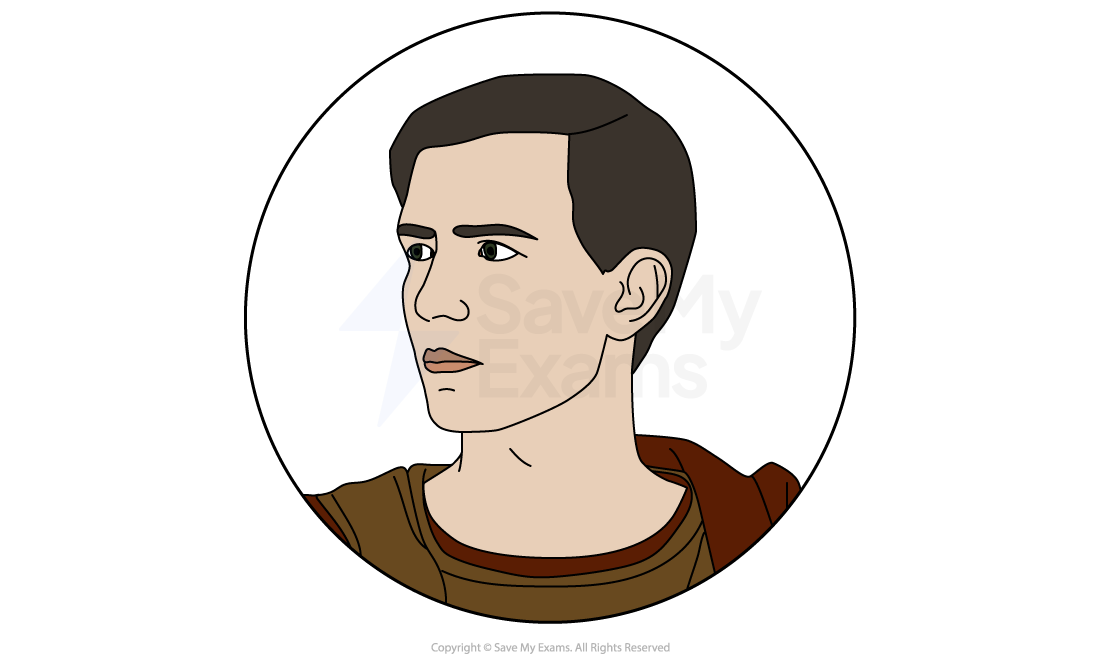
blockquote "The breaking of so great a thing should make A greater crack." — Octavius, Act 5 Scene 1
| Key word or phrase to memorise | What the quotation means | Theme |
|---|---|---|
| “The breaking of so great a thing” | Caesar thinks the death of a once great man like Antony should have more impact | Fate and circumstance |
| - Octavius respects the man Antony was, seeing him as powerful, and worthy of more: - This highlights the tragedy of Antony’s fall, showing that even a rival believes he was powerful and should have died with more grandeur - The fall of someone as great as Antony should have caused an even louder, more dramatic “crack,” meaning a bigger disruption in the world - This reveals his respect for Antony as he hears of his death: - This could be shock, that a figure of such power has passed away - This exposes the Roman belief that greatness in life should resonate, and that fate should give them a more momentous ending: - He may feel quite aware of his own mortality, and that he could as easily die without fanfare - This is part of what makes this play a tragedy: - A great man has passed, and it is sad not only because he has died, but he has died without it seeming to matter |
blockquote “She shall be buried by her Antony, No grave upon the earth shall clip in it A pair so famous.” — Octavius, Act 5 Scene 2
| Key word or phrase to memorise | What the quotation means | Theme |
|---|---|---|
| “A pair so famous” | Octavius ensures they are buried together, and no grave shall ever match the fame of the pair | Rome versus Egypt |
| - This is a great mark of respect from Octavius, who buries Antony and Cleopatra with honour, and tries to respect the love they shared by burying them together - He is also very aware of their fame, and remains impressed by them: - With the pair defeated, he respects them as foes and as people - This is a rare gesture, and speaks to the honour that Romans feel towards great soldiers and leaders - This is also against the usual standards of tragedy, in that they are kept together, honoured, and celebrated: - Rather than leaving the audience sad, this allows them to celebrate the pair and be happy that they ended up together, in some way - By choosing to bury them together, he symbolically absorbs their story as part of Rome, rather than just rejecting it and burying them according to normal customs: - Usually, an enemy would not be elevated like this, but this shows reverence and respect |
Antony and Cleopatra: Character Quotations: Enobarbus
Enobarbus
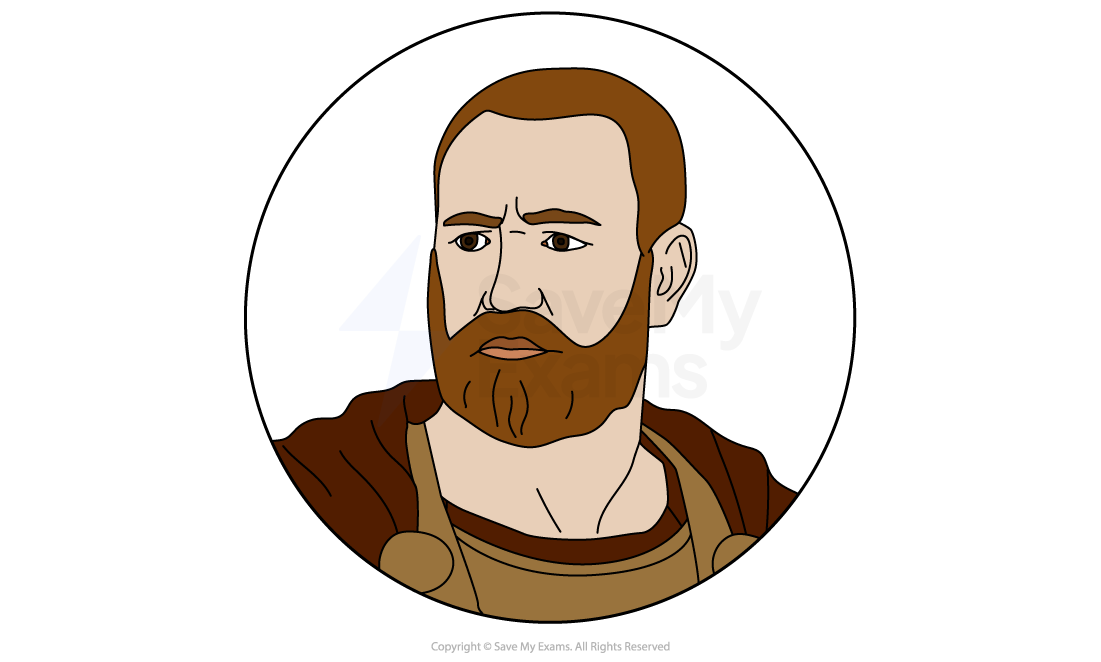
blockquote "Age cannot wither her, nor custom stale Her infinite variety. Other women cloy The appetites they feed, but she makes hungry Where most she satisfies.” — Enobarbus, Act 2 Scene 2
| Key word or phrase to memorise | What the quotation means | Theme |
|---|---|---|
| “Age cannot wither her” | Cleopatra is so beautiful and charming that she cannot be changed or lessened by age or time | Duty versus desire |
| - Cleopatra here is presented as the antithesis to Roman order, a charming woman with “infinite variety” - She is so charming, that even when she gives someone everything they were hoping for, they are still desperate for more - Enobarbus shows he understands why Antony is seemingly obsessed with her: - He portrays her as eternally alluring - It is not just that she is beautiful, she is also endlessly fascinating - This also shows that he disagrees with Roman stereotypes that she is merely a beautiful woman and Antony is lustful: - He tells them that it is more than just charm, and that the appeal is psychological and emotional, rather than just physical - Shakespeare may have used this line to show how Cleopatra represents Egyptian freedom: - Roman men, like Enobarbus, usually speak in disciplined terms, but even Enobarbus is drawn to poetic description as he speaks of Cleopatra |
blockquote "Men’s judgements are A parcel of their fortunes, and things outward Do draw the inward quality after them." — Enobarbus, Act 3 Scene 13
| Key word or phrase to memorise | What the quotation means | Theme |
|---|---|---|
| “things outward do draw the inward” | Things outside of your control can shape who you are and what you do | Fate and circumstance |
| - Enobarbus talks about how people’s decisions are shaped by their circumstances, not just by their character - This comes after Cleopatra has abandoned the battle, yet Antony forgives her: - He is trying to rationalise why Antony would forgive her, something he disagrees with - He sees this as not a personal failing, but a man who has been corrupted by his circumstances - Shakespeare has Enobarbus deliver this line as he is the play’s most rational observer: - He judges that Antony is not a weak man, but has been weakened by the pressures he is under - This has distorted his usual qualities as a leader - Here, Enobarbus is saying that people are not fixed to act one way or another, but that they can change and be shaped by the circumstances they find themselves in - He believes Antony’s downfall has come not because he is a bad or weak man, but that fortune has turned against him, and this is dragging his judgement and identity down with it. |
Sources
Stanley Wells and Gary Taylor (eds), 2005, The Oxford Shakespeare: The Complete Works (Second Edition), Oxford University Press
Was this revision note helpful?