Model Answer: Narrative Writing (Cambridge International IGCSE English Language)
For your IGCSE English Language coursework you need to complete three assignments, and Assignment 3 is the narrative writing assignment. The following guide will provide you with a narrative writing model answer.
Planning your narrative writing
Let’s take this narrative writing task as an example of a suitable task for Assignment 3:
‘Write a story which involves an injustice.’
We can use a five-part narrative structure to plan our response:
| Step 1 | Exposition/setting | - A house that nobody has lived in for a long time - Atmosphere is silent and uncared for |
|---|---|---|
| Step 2 | Rising action | - Background information — grandparents’ house - Light, laughter and joy - Narrator and sister playing in a treehouse |
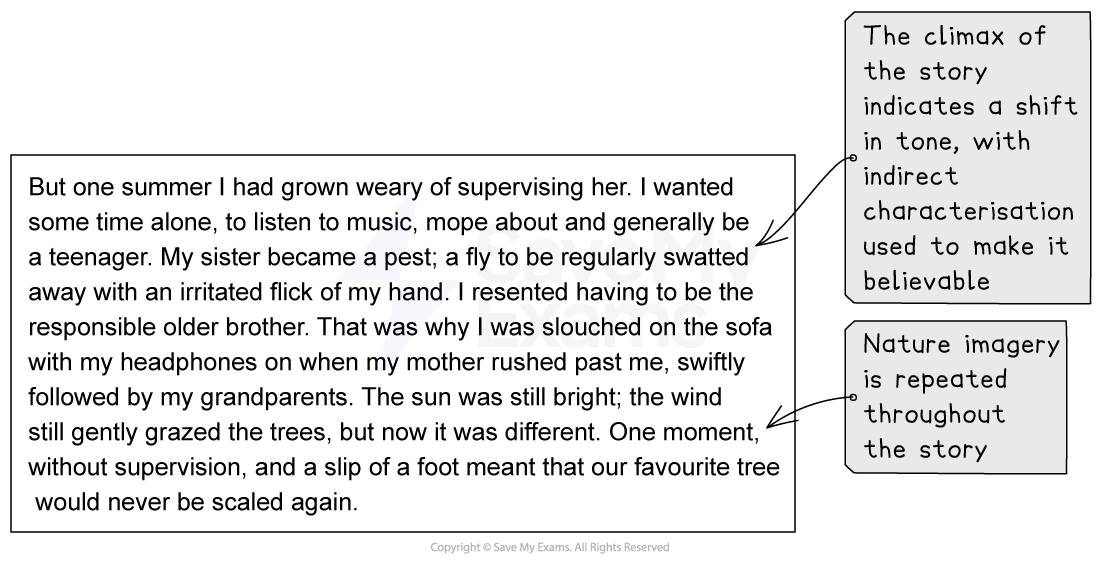
| Step 3 | Climax | - Accident involving the narrator’s sister - Narrator gets the blame |
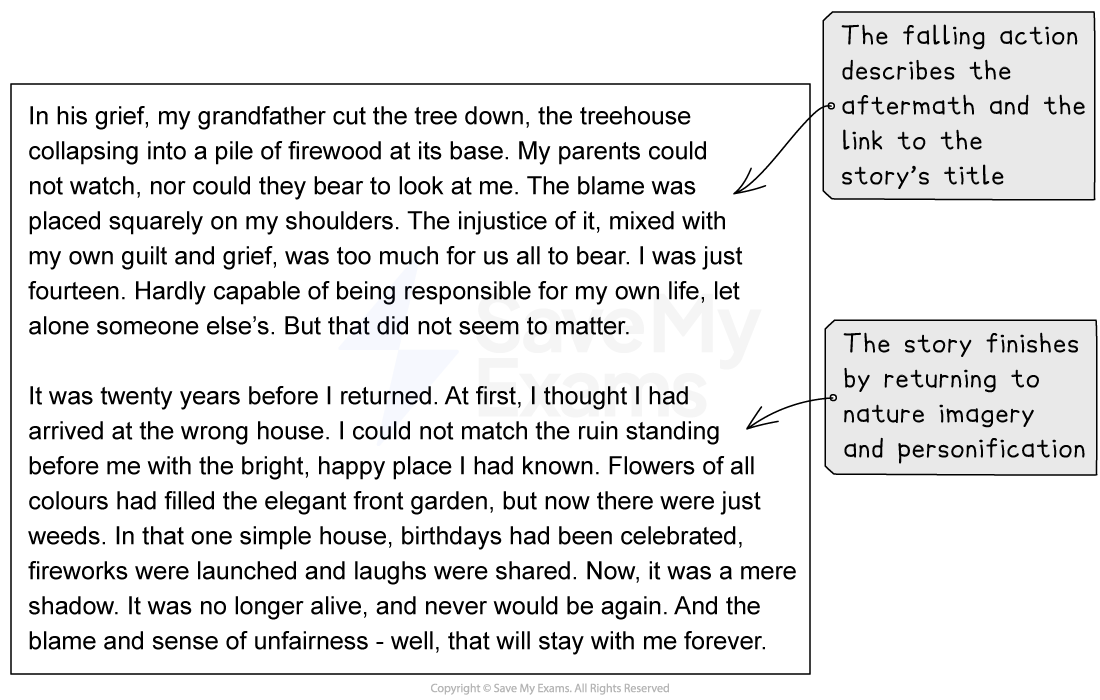
| Step 4 | Falling action | - Aftermath — leave the house and return to the city - Family crumbles |
| Step 5 | Resolution | - Present day — narrator returns to the house |
Narrative writing model answer
The following model answer demonstrates how to structure, and what techniques to include in, a top-mark response to the above task:
Commentary
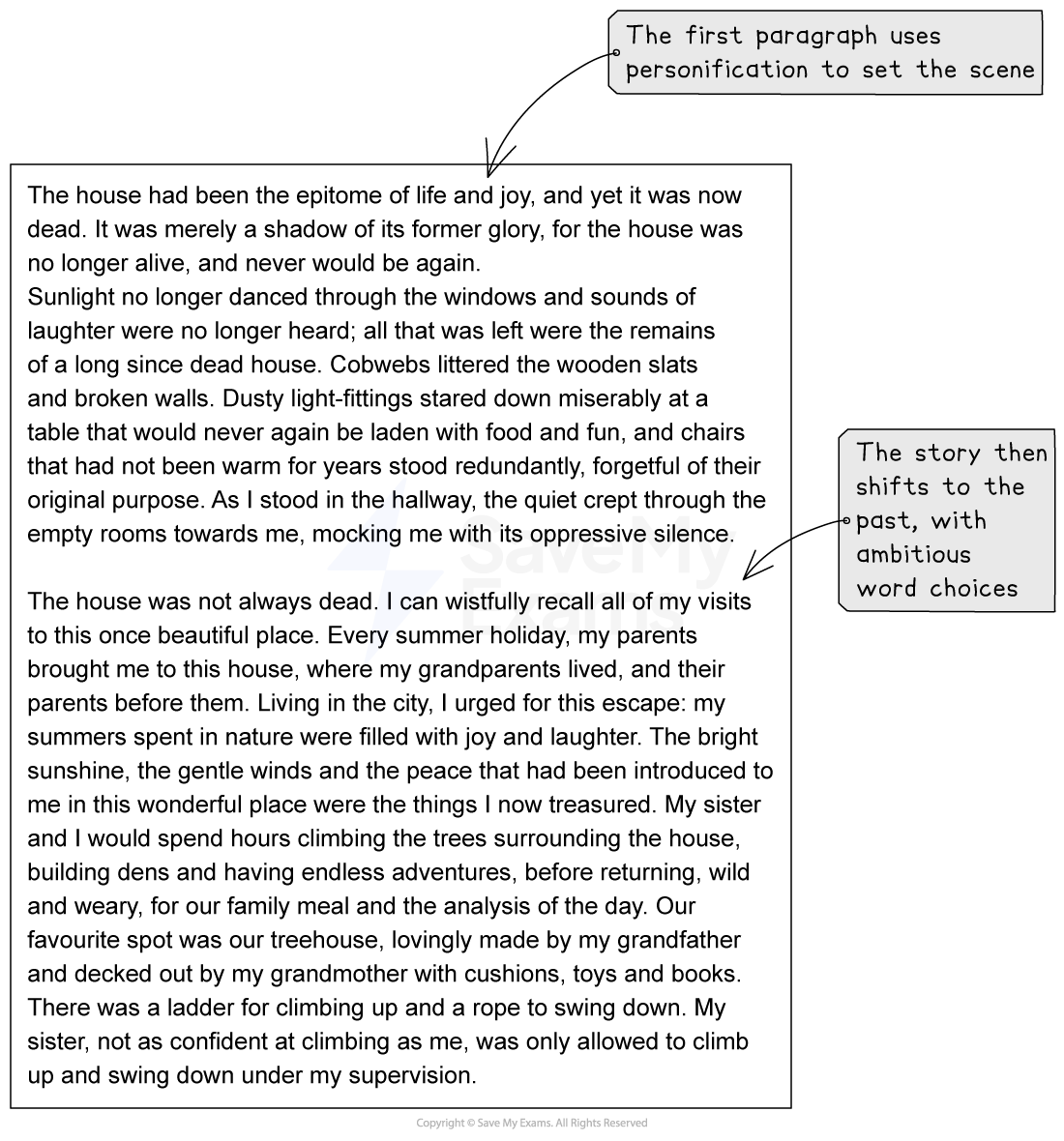
- The first paragraph uses personification to set the scene
- The story then shifts to the past, with ambitious word choices
- The climax of the story indicates a shift in tone, with indirect characterisation used to make it believable
- Nature imagery is repeated throughout the story
- The falling action describes the aftermath and links to the focus of the story’s title: “injustice”
- The story finishes by returning to nature imagery and personification
Summary
-
Remember, plan the order and the “flow” of your story
-
Stick to one setting and no more than two main characters
-
Vary your sentence and paragraph lengths
-
Employ imagery and literary devices to bring your story to life
-
Use indirect characterisation to make your characters realistic and believable
-
Consider your story as a “scene” in a film:
- It is not necessary to know everything about your characters
- It is better to immerse the reader with vivid “showing” techniques, such as sensory imagery and interesting vocabulary, rather than “telling” them with direct description and characterisation
-
Write with technical accuracy
Was this revision note helpful?
Build on this topic