The Price Mechanism (Cambridge International IGCSE Economics)
Understanding the price mechanism
Spec point —
2.4.1· "how the price mechanism provides answers to the basic resource allocation decisions of what, how and for whom to produce"
Understanding the price mechanism
What is the price mechanism?
-
The price mechanism is where the forces of demand and supply determine the prices of goods and services in a market economy
- The price mechanism ensures that scarce resources are allocated efficiently in competitive markets
-
Prices act as signals and incentives that help answer the three fundamental economic questions:
1. What to produce?
-
Producers observe prices in the market to decide which goods and services are most profitable to supply
- If the price of electric vehicles rises, it signals strong demand and potential profit
- In response, firms are incentivised to produce more electric vehicles instead of petrol cars
2. How to produce?
-
Firms choose the most cost-effective method of production based on prices of inputs (labour, machinery, raw materials)
- If wages rise, firms may substitute labour with machines to lower costs
- If fuel prices fall, they might use more energy-intensive methods
3. For whom to produce?
-
Goods and services are produced for those willing and able to pay based on consumer purchasing power
- If higher-income consumers demand more luxury goods, producers will respond to that market segment
- This means that income distribution in the economy affects who gets access to goods
Case Study Global Coffee Prices and Producer Response in Brazil
Incentives and signals in the coffee market
Scenario
In 2021, global demand for coffee surged as cafés reopened after pandemic lockdowns. At the same time, a major drought and frost in Brazil — the world’s largest coffee exporter — damaged crops and reduced supply. This caused the global price of coffee beans to rise sharply on commodity markets
The incentive and signal
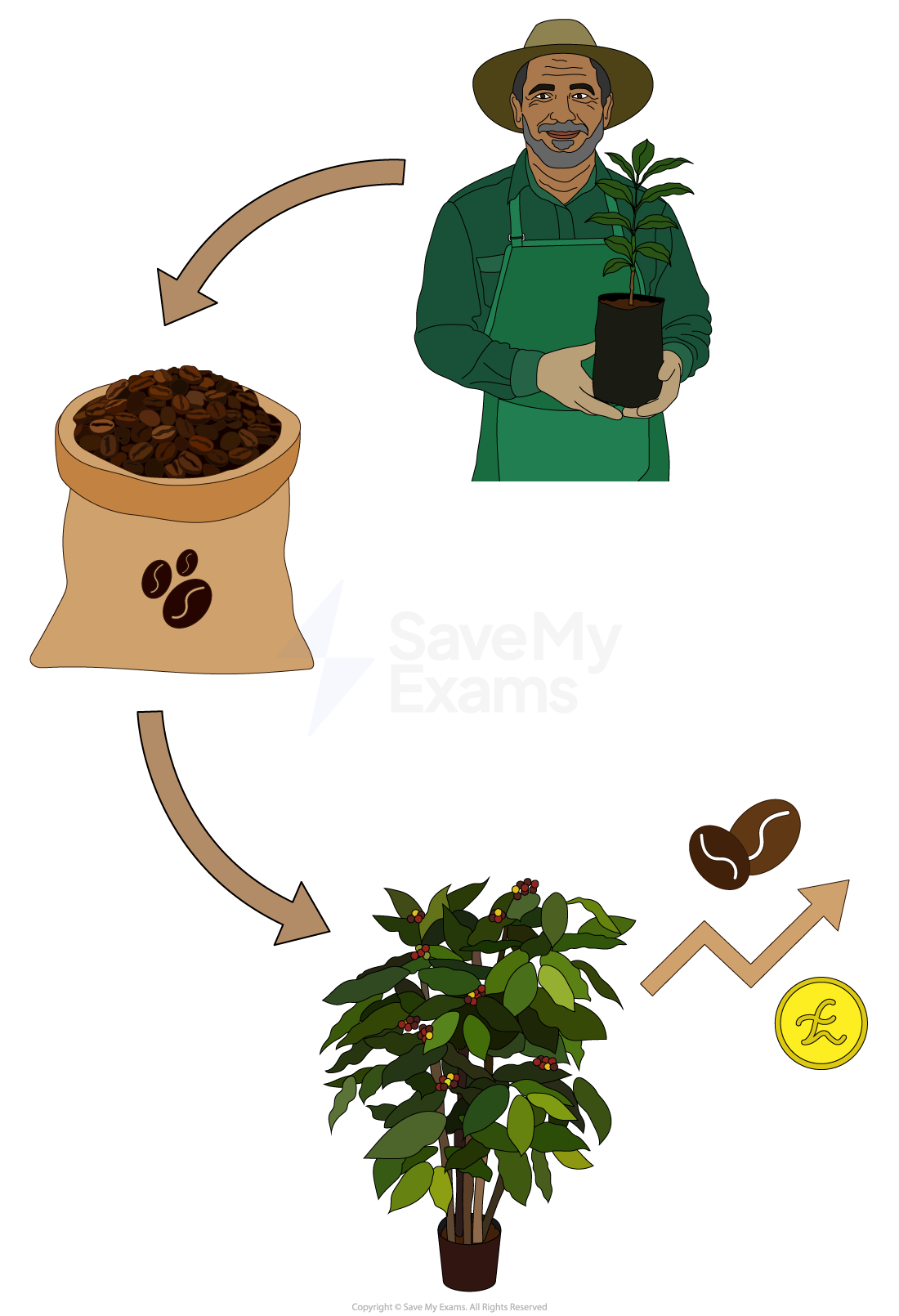
- The price rise acted as a signal to coffee producers: global buyers were willing to pay more
- It also served as an incentive — higher prices meant potentially greater profits for farmers
- In response, producers began planting more coffee trees, investing in irrigation systems, and prioritising coffee over other crops like maize or sugarcane
The outcome
- Over the next year, supply increased as new coffee plants matured and better weather returned
- More producers entered the market, while existing farmers expanded production
- As supply grew to meet demand, global prices began to stabilise, demonstrating how the price mechanism efficiently directed resources toward a highly demanded good
Was this revision note helpful?
Build on this topic