Which Proteins are Synthesised? (Cambridge International IGCSE Biology)
Control of gene expression: Extended
Spec point —
17.1.5· Explain that most body cells in an organism contain the same genes, but many genes in a particular cell are not expressed because the cell only makes the specific proteins it needs Describe a haploid nucleus as a nucleus containing a single set of chromosomes Describe a diploid nucleus as a nucleus containing two sets of chromosomes State that in a diploid cell, there is a pair of each type of chromosome and in a human diploid cell there are pairs
Control of gene expression: Extended
- Expression of a gene means whether that gene is transcribed and translated in a particular cell or not
- Most genes are not expressed in a particular cell; they are 'switched off'
- Only the genes whose proteins are vital to that cell's function are expressed ('switched on')
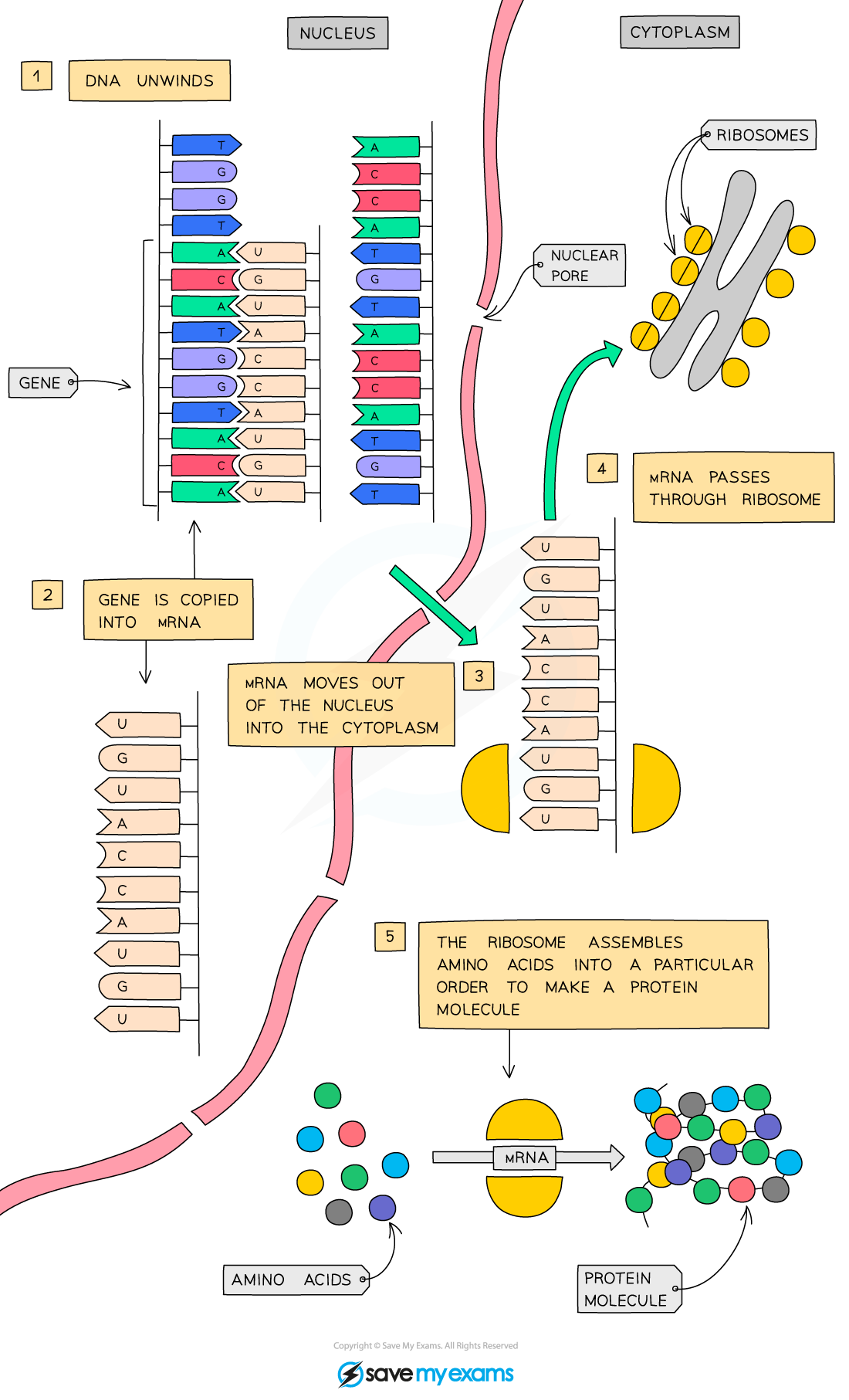
Protein synthesis
- In this way, DNA controls cell function by controlling the production of proteins
- The proteins may be enzymes, antibodies, or receptors for neurotransmitters
- Although all body cells in an organism contain the same genes, many genes in a particular cell are not expressed because the cell only makes the specific proteins it needs
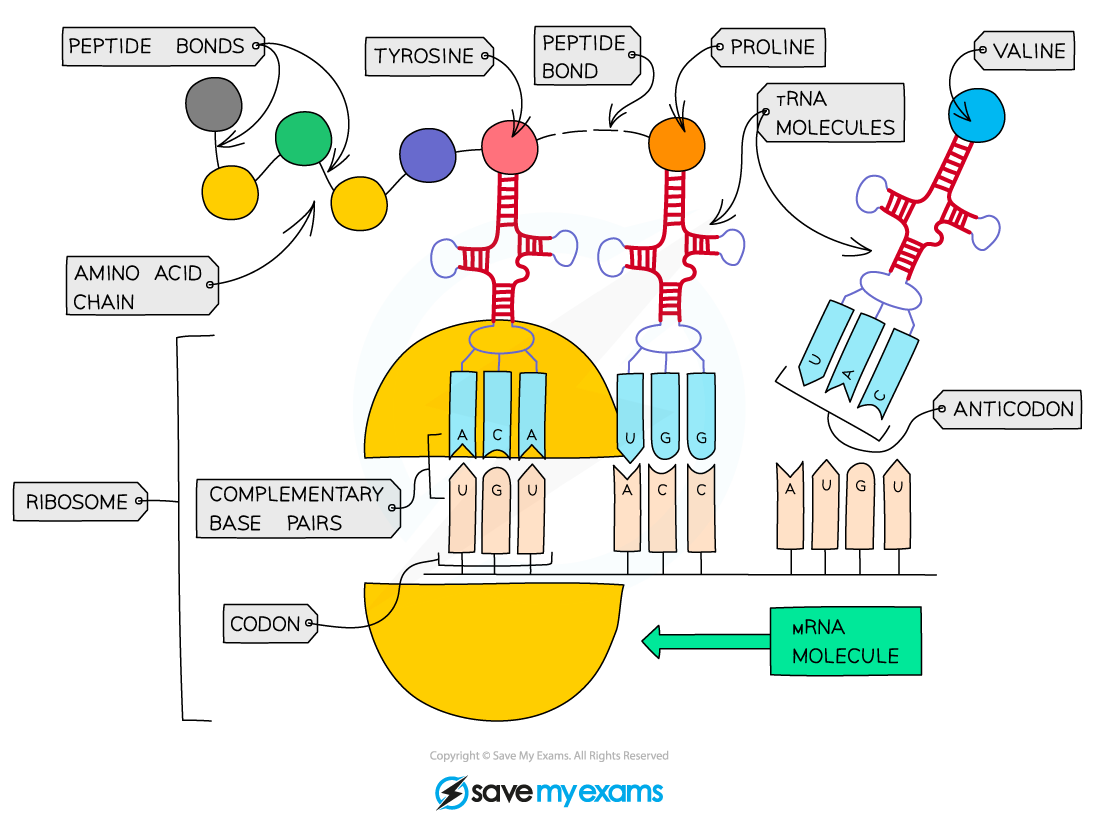
*The triplet code of DNA (carried by mRNA) is read by the ribosome and amino acids are attached together in a specific sequence to form the protein *
Haploid and diploid cells
- All humans have 23 different chromosomes in each cell
- Human body cells, not including the gametes (sex cells), contain two copies of each chromosome, leading to a total of 46 chromosomes
- Nuclei with two sets of chromosomes are known as diploid nuclei
- The gametes (egg and sperm cells) only have one copy of each chromosome, meaning they have a total of 23 chromosomes in each cell
- Nuclei with one set of unpaired chromosomes are known as haploid nuclei
Exam Hint An easy way to remember the difference between haploid and diploid is to remember:
Haploid = Half the normal number of chromosomes
It’s worth noting that the human diploid chromosome number is 46. In an exam, you may be given information about a different species, with a different number of chromosomes. Make sure you read exam questions carefully.
Was this revision note helpful?