Drugs in Medicine (Cambridge International IGCSE Biology)
What is a drug?
Spec point —
15.1.1· nan
Drug definition
-
A drug is any substance taken into the body that modifies or affects chemical reactions in the body
-
Some drugs are medicinal drugs that are used to treat the symptoms or causes of a disease - for example, antibiotics
- The liver is the primary site for drug metabolism
Antibiotics
Spec point —
15.1.1· nan
What are antibiotics?
- Antibiotics are chemical substances made by certain fungi or bacteria that affect the working of bacterial cells, either by disrupting their structure or function or by preventing them from reproducing
- Antibiotics are effective against bacteria but not against viruses
- Antibiotics target processes and structures that are specific to bacterial (prokaryotic) cells; as such they do not generally harm animal cells
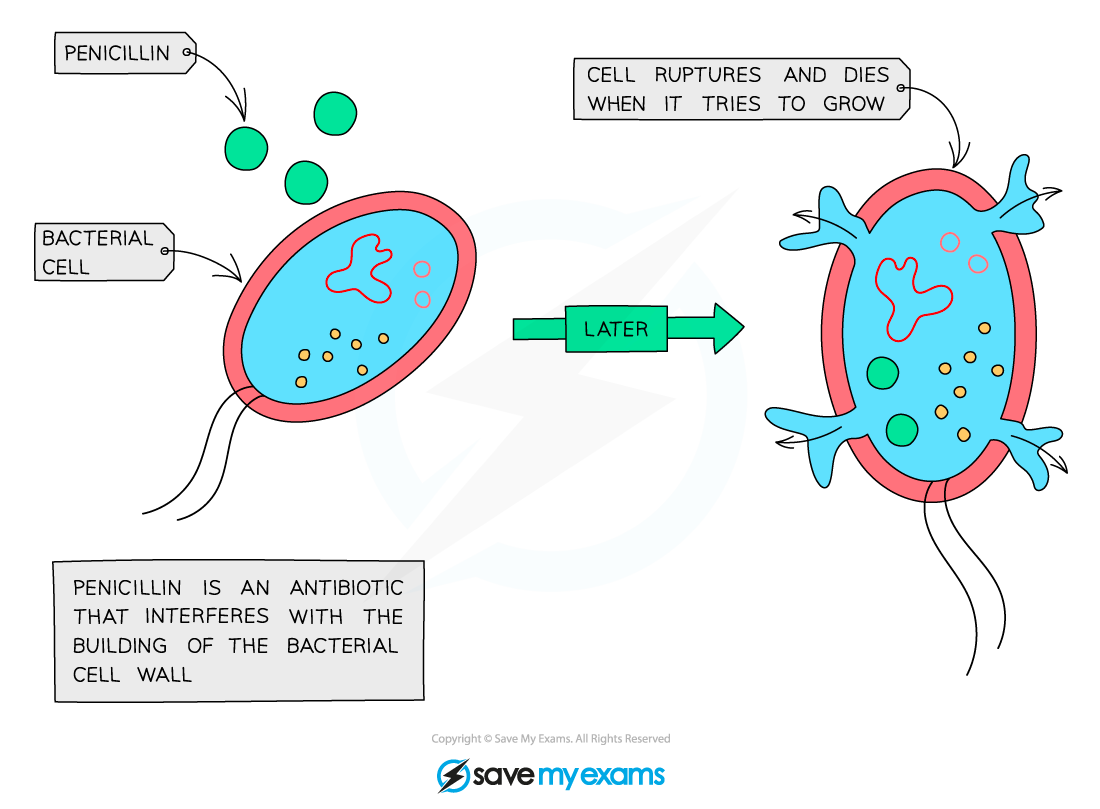
How antibiotics work
Antibiotic resistance & use: extended
Spec point —
15.1.1· nan
-
Commonly prescribed antibiotics are becoming less effective due to a number of reasons:
- overuse and being prescribed when not really necessary
- patients failing to complete the fully prescribed course by a doctor
- large scale use of antibiotics in farming to prevent disease when livestock are kept in close quarters, even when animals are not actually sick
-
This has led to the effectiveness of antibiotics being reduced, and the incidence of antibiotic resistance increasing
-
These bacteria are commonly known as 'superbugs' and the most common is MRSA
How to prevent antibiotic resistance
-
Ways individuals can help prevent the incidence of antibiotic resistance increasing include:
- only taking antibiotics when absolutely essential
- ensuring that the entire course of antibiotics prescribed is completed even if they feel better after a few days
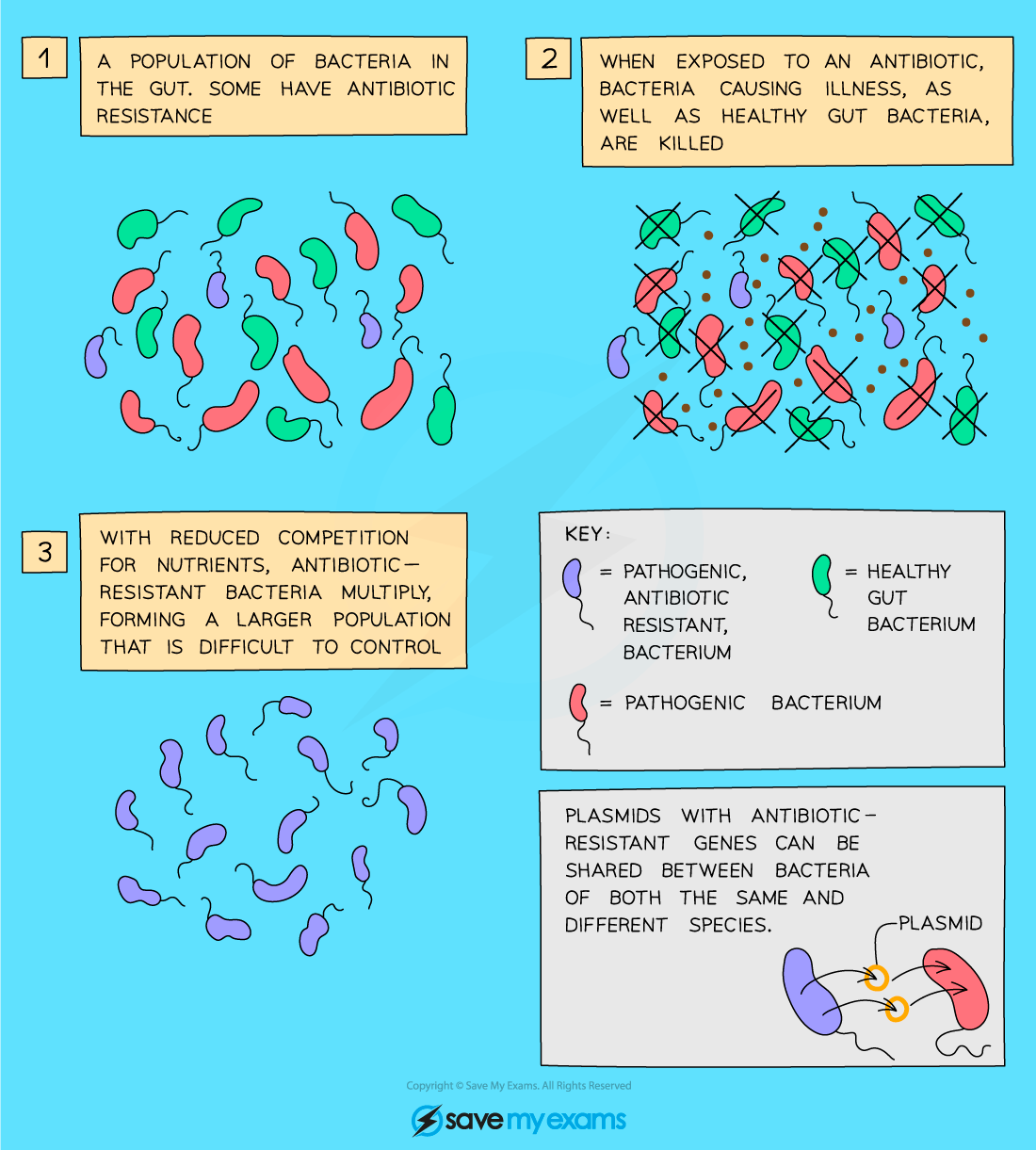
Antibiotic resistance
Was this revision note helpful?
Build on this topic