The Breathing System (Cambridge International IGCSE Biology)
Exam board Cambridge International · IGCSEUpdated 2026-09-02
Spec point —
11.1.2· Identify in diagrams and images the following parts of the breathing system: lungs, diaphragm, ribs, intercostal muscles, larynx, trachea, bronchi, bronchioles, alveoli and associated capillaries
The breathing system
-
The breathing system includes the following parts:
- the lungs
- diaphragm
- ribs
- intercostal muscles
- larynx
- trachea
- bronchi
- bronchioles
- alveoli and associated capillaries
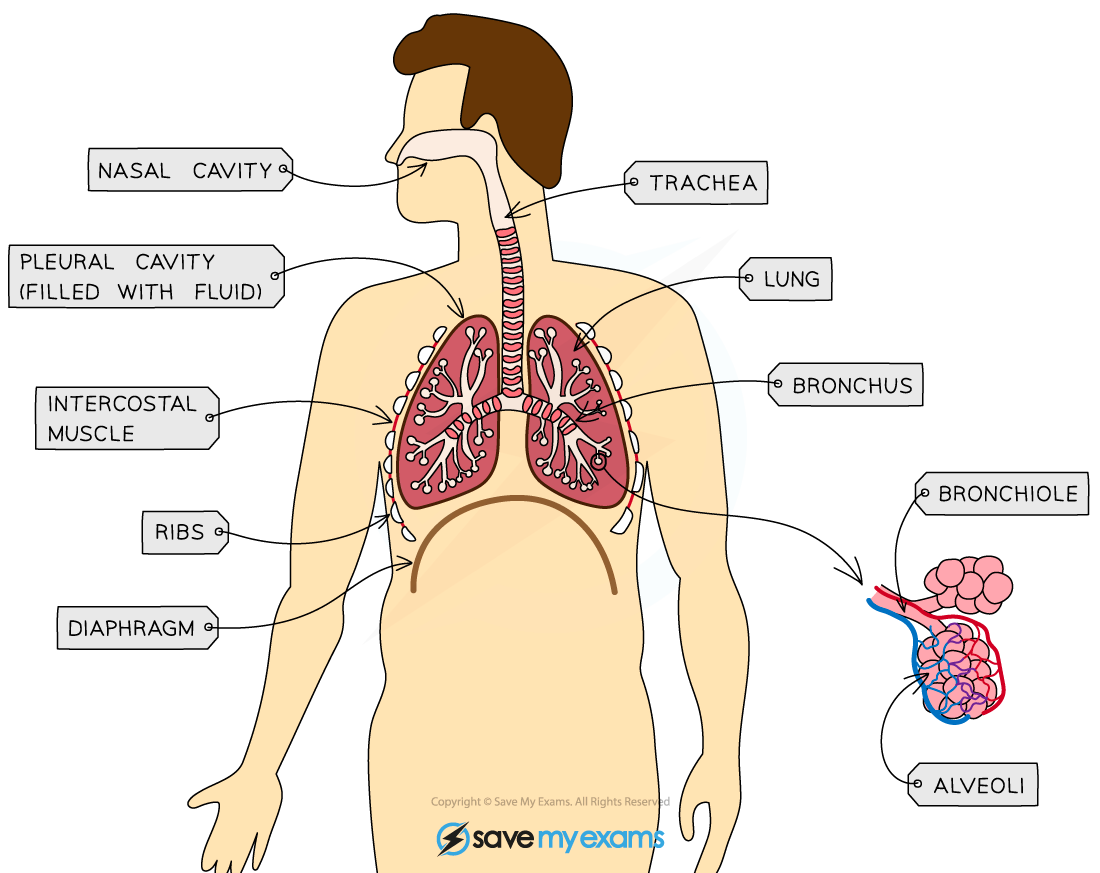
Structures in the human breathing system
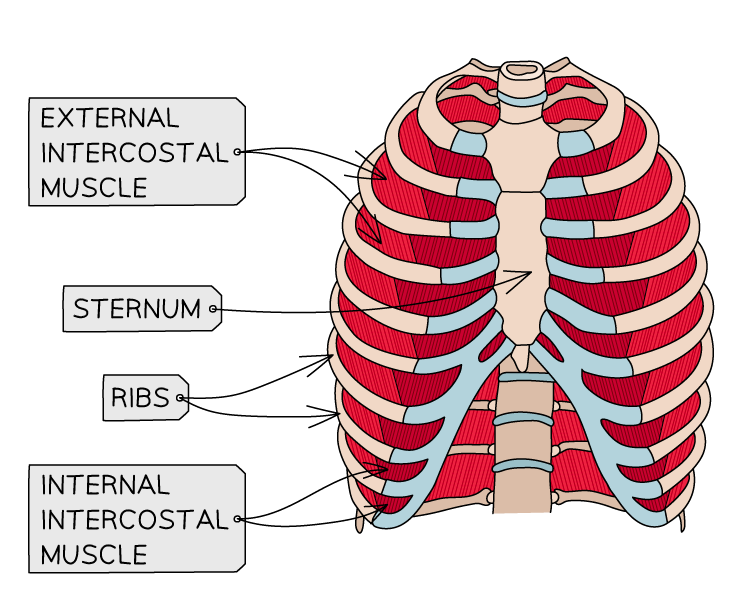
The internal and external intercostal muscles
Structures of the breathing system table
| Structure | Description |
|---|---|
| Ribs | Bone structure that protects internal organs such as the lungs |
| Intercostal muscle | Muscles between the ribs which control their movement, causing inhalation and exhalation |
| Diaphragm | Sheet of connective tissue and muscle at the bottom of the thorax that helps change the volume of the thorax to allow inhalation and exhalation |
| Trachea | Windpipe that connects the mouth and nose to the bronchi, allowing air to pass into the lungs |
| Larynx | Also known as the voice box; when air passes across here, we are able to make sounds |
| Bronchi (singular: bronchus) | Large tubes branching off the trachea, with one for each lung |
| Bronchioles | Bronchi split to form smaller tubes called bronchioles in the lungs, connected to alveoli |
| Alveoli | Tiny air sacs where gas exchange takes place |
Exam Hint You should be able to identify in diagrams and images the parts of the breathing system listed above, so make sure you study them.
Was this revision note helpful?
Build on this topic