Vaccination (Cambridge International IGCSE Biology)
Exam board Cambridge International · IGCSEUpdated 2026-08-28
Vaccination: Extended
Spec point —
10.1.5· Explain that active immunity is gained after an infection by a pathogen or by vaccination Outline the process of vaccination: (a) weakened pathogens or their antigens are put into the body (b) the antigens stimulate an immune response by lymphocytes which produce antibodies (c) memory cells are produced that give long-term immunity
Vaccination: Extended
Extended Tier Only
- Vaccinations give protection against specific diseases and boost the body’s defence against infection from pathogens without the need to be exposed to dangerous diseases that can lead to death
- The level of protection in a population depends on the proportion of people vaccinated
- Vaccines allow a dead or altered form of the disease-causing pathogen, which contains specific antigens, to be introduced into the body
- In this weakened state, the pathogen cannot cause illness but can provoke an immune response
- Lymphocytes produce complementary antibodies for the antigens
- The antibodies target the antigen and attach themselves to it in order to create memory cells
- The memory cells remain in the blood and will quickly respond to the antigen if it is encountered again in an infection by a ‘live’ pathogen
- As memory cells have been produced, this immunity is long-lasting
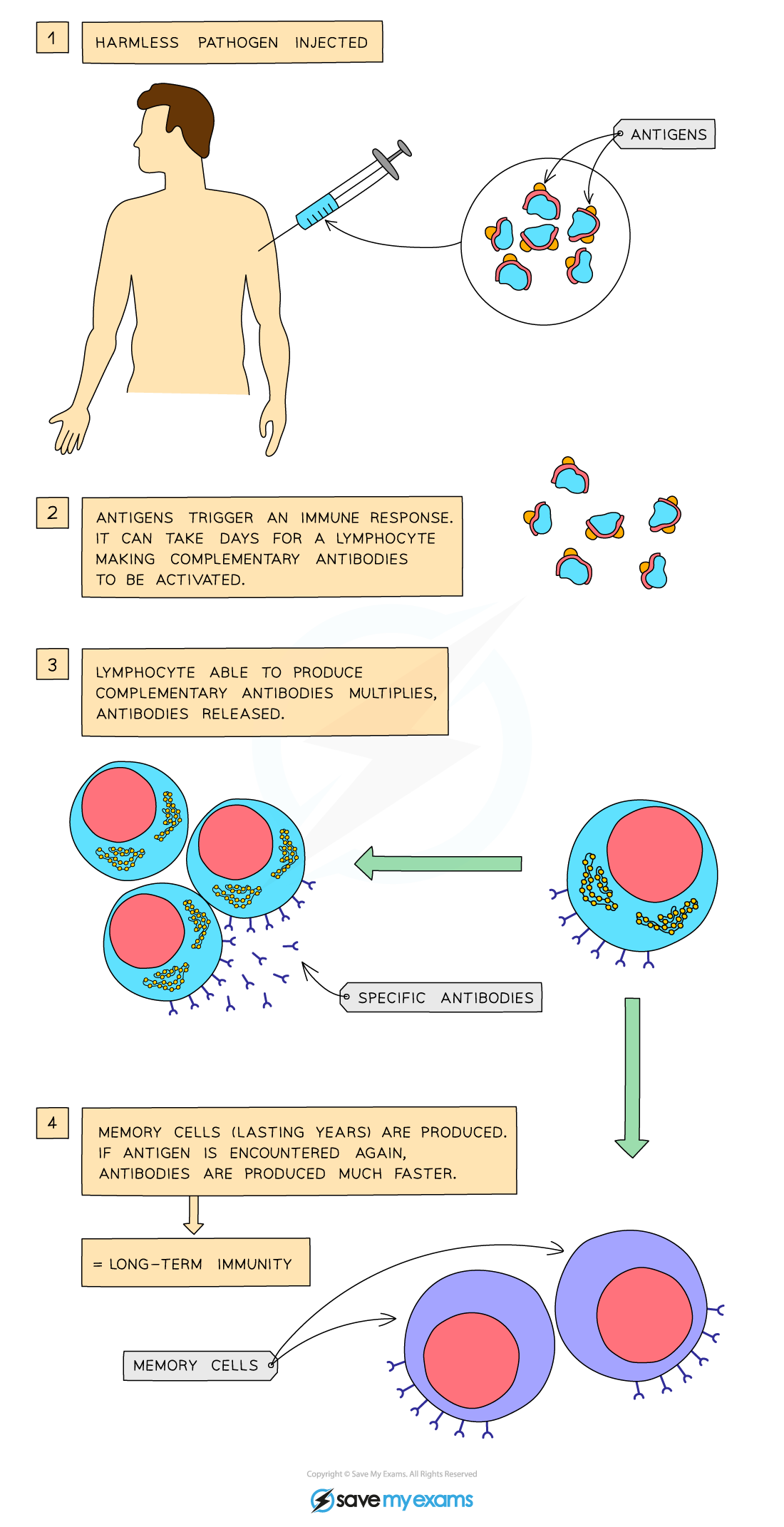
How vaccination works
Was this revision note helpful?
Build on this topic