Enzymes & Temperature (Cambridge International IGCSE Biology)
Exam board Cambridge International · IGCSEUpdated 2026-08-25
Enzymes & temperature: Extended
Spec point —
5.1.4· Explain the effect of changes in temperature on enzyme activity in terms of kinetic energy, shape and fit, frequency of effective collisions and denaturation
Extended Tier Only
- Enzymes are proteins and have a specific shape, held in place by bonds
- This is extremely important around the active site area as the specific shape is what ensures the substrate will fit into the active site and enable the reaction to proceed
- Enzymes work fastest at their ‘optimum temperature’ – in the human body, the optimum temperature is 37 °C
- Heating to high temperatures (beyond the optimum) breaks the bonds that hold the enzyme's structure together, causing it to lose its shape
- This changes the shape of the active site so it's no longer complementary to the substrate, and the enzyme is denatured
- Substrates cannot fit into denatured enzymes as the shape of their active site has been lost
- Denaturation is irreversible - once enzymes are denatured they cannot regain their proper shape and activity will stop
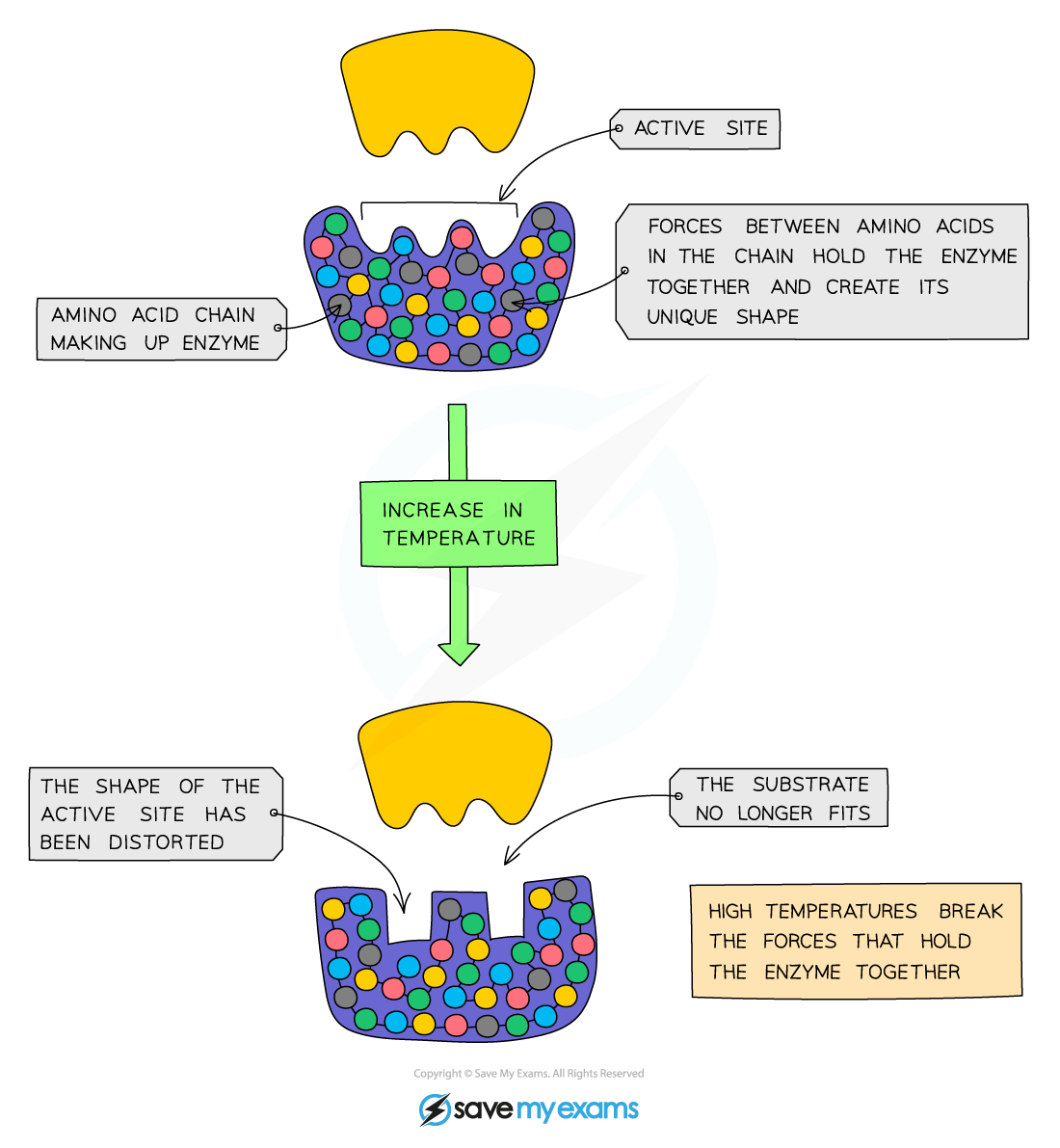
Effect of temperature on enzyme activity
- Increasing the temperature from 0 °C to the optimum increases the activity of enzymes as the more energy the molecules have the faster they move and the number of collisions with the substrate molecules increases, leading to a faster rate of reaction
- This means that low temperatures do not denature enzymes, they just make them work more slowly
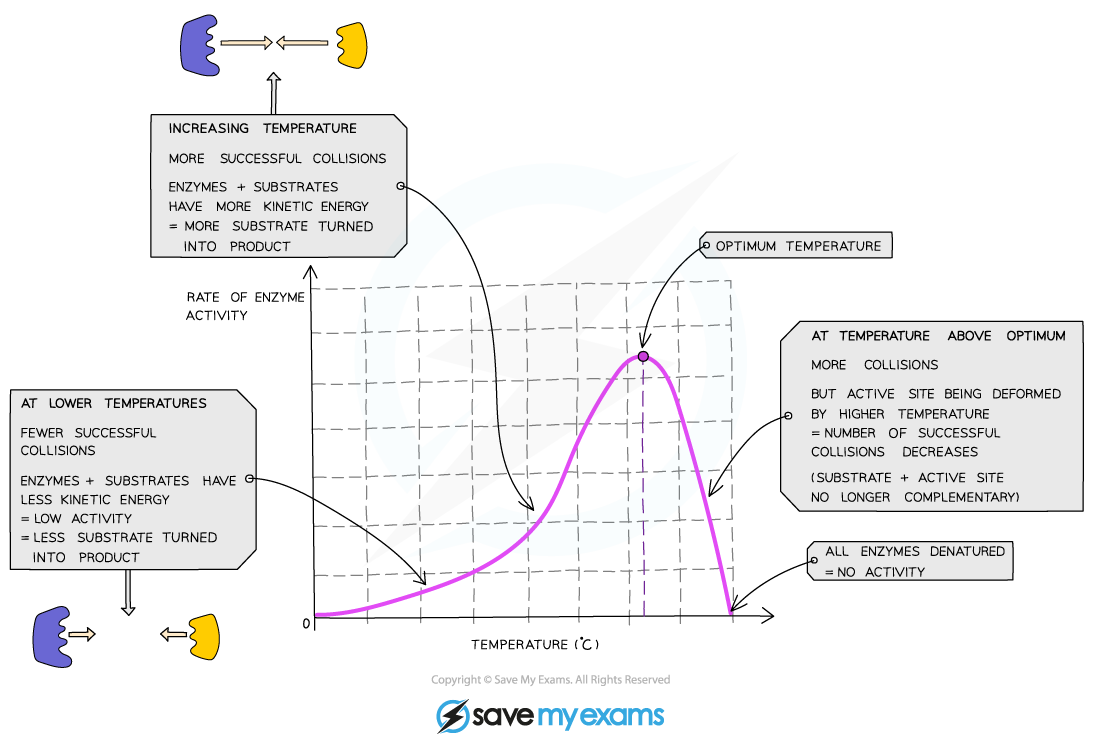
Graph showing the effect of temperature on the rate of enzyme activity
Was this revision note helpful?
Build on this topic