Water Pollution (Cambridge International IGCSE Biology)
Exam board Cambridge International · IGCSEUpdated 2026-08-31
Untreated sewage & excess fertiliser
Spec point —
20.1.3· Describe the effects of untreated sewage and excess fertiliser on aquatic ecosystems
- Human activities have led to the pollution of land, water and air
- Pollution comes from a variety of sources, including industry and manufacturing processes, waste and discarded rubbish, chemicals from farming practices, nuclear fall-out, and untreated sewage
| Pollutant | Source / Cause | Effect |
|---|---|---|
| Untreated sewage | Lack of sewage treatment (poor infrastructure/funding) means sewage enters rivers or streams. | Increases bacteria → reduces oxygen in water → kills aquatic life. This process is known as eutrophication. |
| Fertilisers | Runoff from farmland when used in excess. | Causes algal blooms → bacteria feed → oxygen depletion → death of aquatic organisms. Another case of eutrophication. |
| Methane | Released by cattle farming, rice paddies, and landfills. | Potent greenhouse gas, contributes to climate change. |
| Carbon dioxide | Produced by burning fossil fuels or trees (land clearance). | Also a greenhouse gas, contributing to global warming and climate change. |
Eutrophication: Extended
Spec point —
20.1.3· Explain the process of eutrophication of water, limited to: • increased availability of nitrate and other ions • increased growth of producers • increased decomposition after death of producers • increased aerobic respiration by decomposers • reduction in dissolved oxygen • death of organisms requiring dissolved oxygen in water
Eutrophication: Extended
- Runoff of fertiliser from farmland enters the water and causes increased growth of algae and water plants
- The resulting ‘algal bloom’ blocks sunlight so water plants on the bottom start to die, as does the algae when competition for nutrients becomes too intense
- As water plants and algae die in greater numbers, decomposing bacteria increase in number and use up the dissolved oxygen whilst respiring aerobically
- As a result there is less oxygen dissolved in water, so aquatic organisms such as fish and insects may be unable to breathe and would die
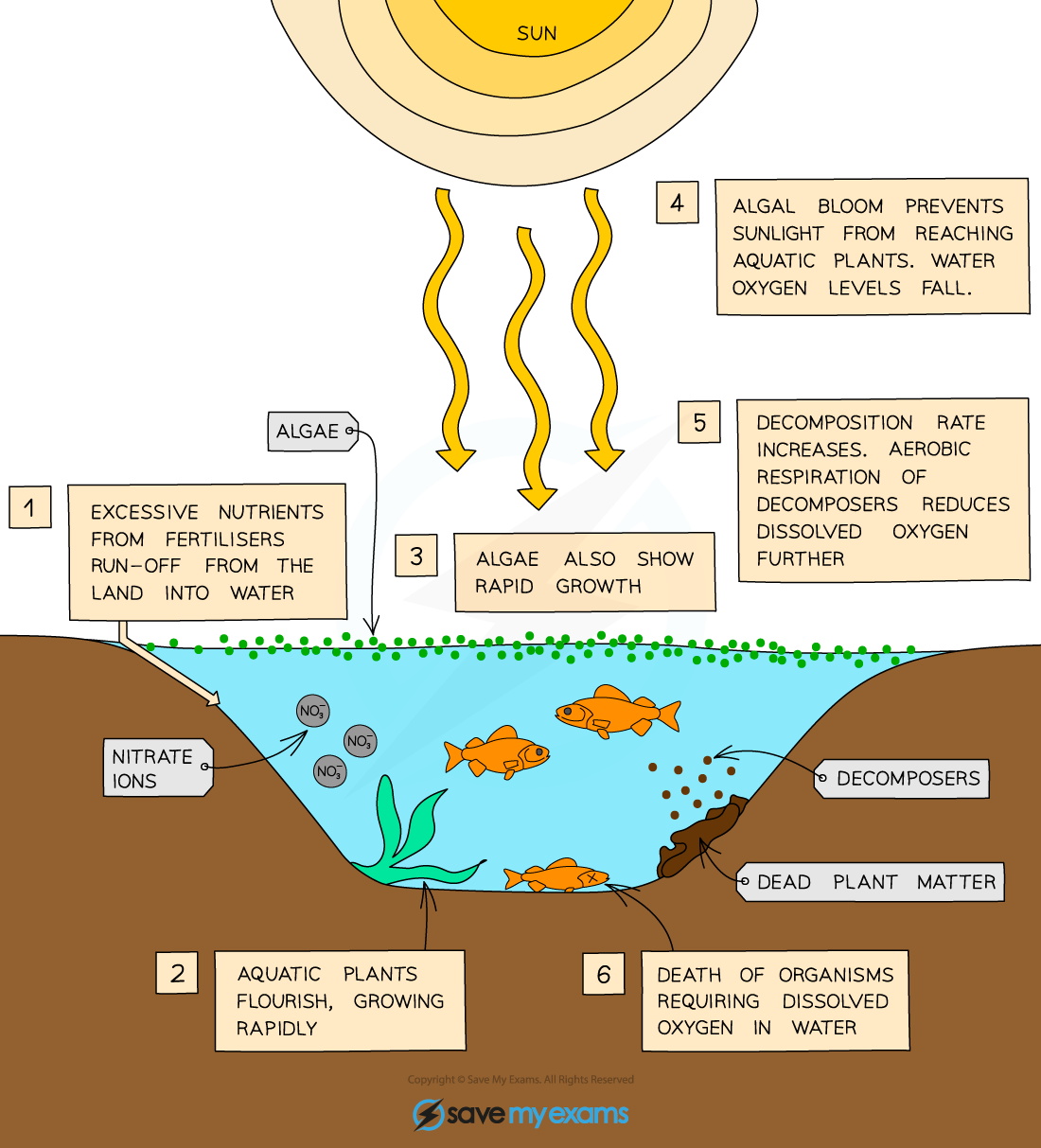
Sequence of events causing eutrophication in lakes and rivers
Was this revision note helpful?
Build on this topic