Adaptive Features Continued (Cambridge International IGCSE Biology)
Exam board Cambridge International · IGCSEUpdated 2026-08-31
Hydrophytes & xerophytes: Extended
Spec point —
18.1.3· nan
Extended Tier Only
- Hydrophytes are plants adapted to live in extremely wet conditions
- Common adaptations include:
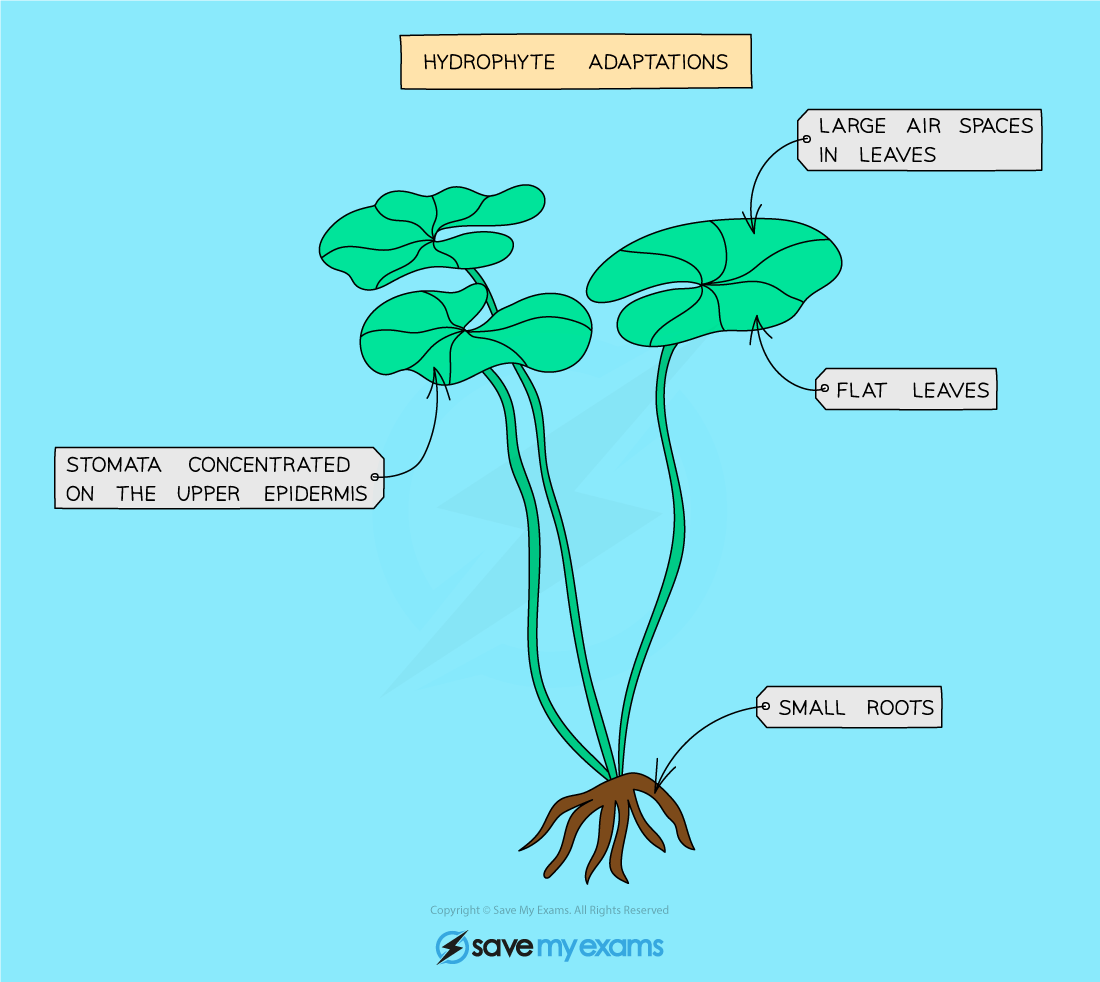
* Hydrophytes are adapted to live in wet conditions such as ponds*
-
large air spaces in their leaves for flotation, to keep the leaves close to the surface of the water where there is more light for photosynthesis
-
small roots as they can also extract nutrients from the surrounding water through their tissues
-
stomata usually open all the time and mainly found on the upper epidermis of the leaf where they can exchange gases much more easily with the air
-
Xerophytes are plants adapted to live in extremely dry conditions
-
Common adaptations include:
- thick waxy cuticle - the cuticle cuts down water loss in two ways: it acts as a barrier to evaporation and also the shiny surface reflects heat and so lowers the temperature
- sunken stomata - stomata may be sunk in pits in the epidermis; moist air trapped here lengthens the diffusion pathway and reduces the evaporation rate
- leaf rolled with stomata inside and an inner surface covered in hairs - traps moist air and prevents air movement across stomata which reduces transpiration
- small leaves - many xerophytic plants have small, needle-shaped leaves which reduce the surface area and therefore the evaporating surface
- extensive shallow roots allow for the quick absorption of large quantities of water when it rains or deep roots to reach deep water tables
- thickened leaves or stems which contain cells that store water
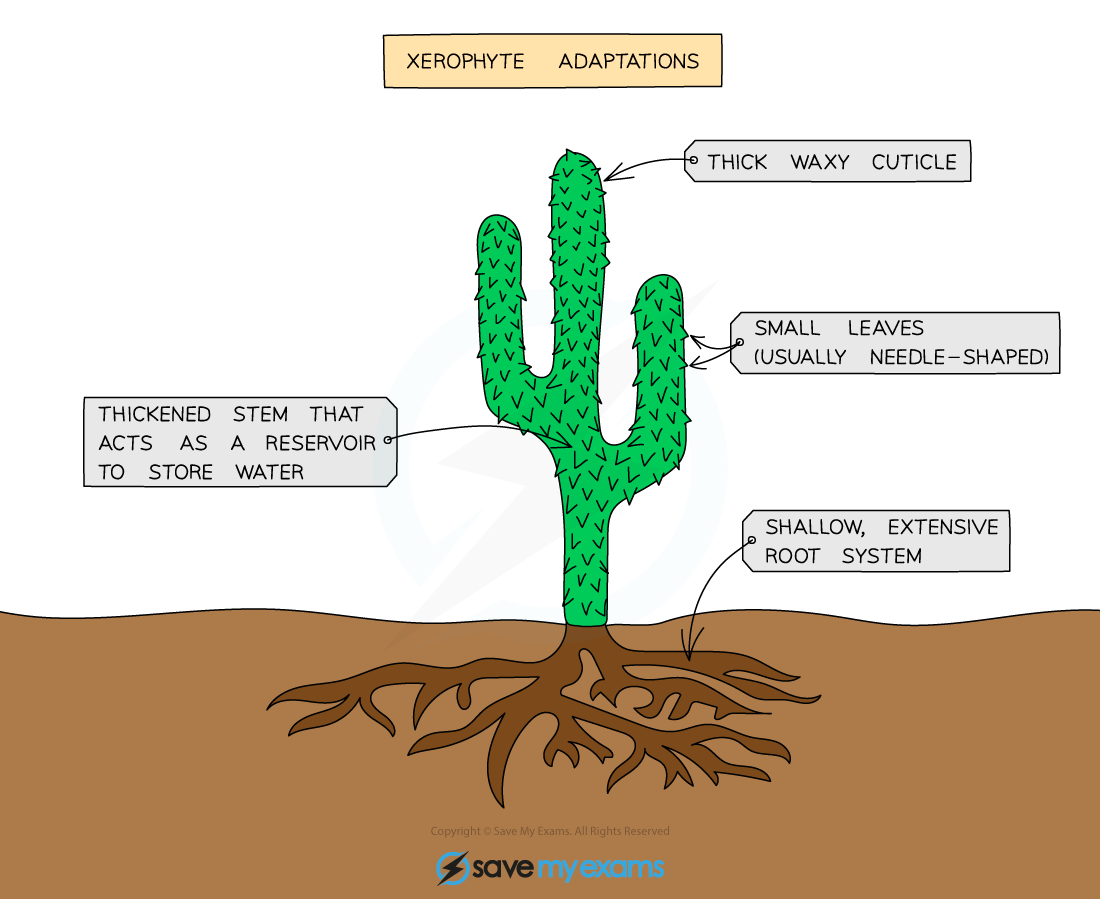
An example of a xerophyte adapted to live in extremely dry conditions such as deserts.
Was this revision note helpful?
Build on this topic