Kirchhoff's Second Law (Cambridge International AS Physics)
Exam board Cambridge International · ASUpdated 2026-07-02
Spec point —
10.2.2
Kirchhoff's second law
- Kirchhoff's second law states that:
The total e.m.f in a closed circuit is equal to the sum of the potential differences across the components
- This is a consequence of conservation of energy
- The energy transferred into the circuit is equal to the energy transferred out of the circuit
- The circuit below illustrates Kirchhoff’s second law:
Kirchhoff's second law in a series circuit
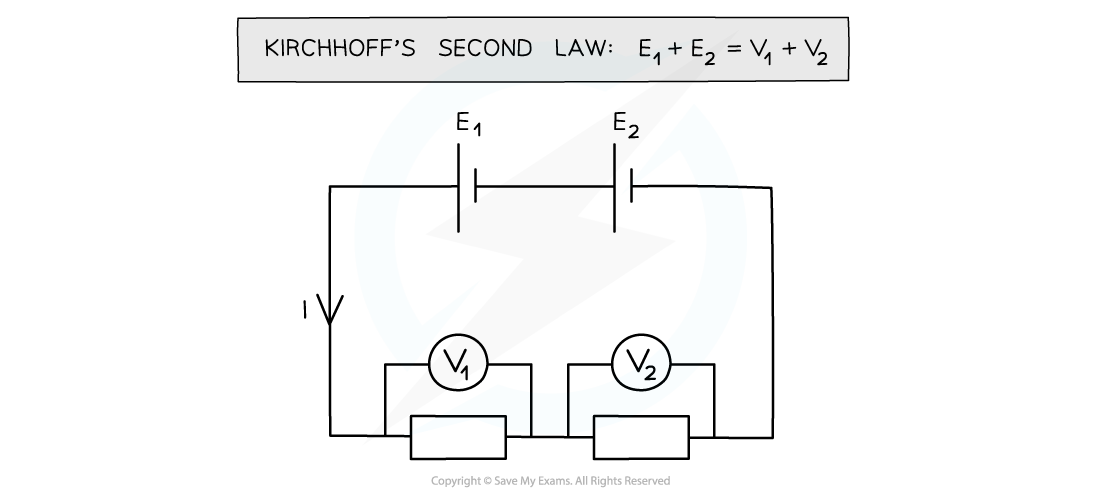
The sum of the potential difference across the individual components is equal to the sum of the e.m.f supplied by the batteries
-
In a series circuit, the potential difference is split across all components depending on their resistance
- The sum of the potential difference across each component is equal to the total e.m.f of the power supply
-
In a parallel circuit, the potential difference is the same across each closed loop
- The sum of the potential difference in each closed circuit loop is equal to the total e.m.f of the power supply:
Kirchhoff's second law in a parallel circuit
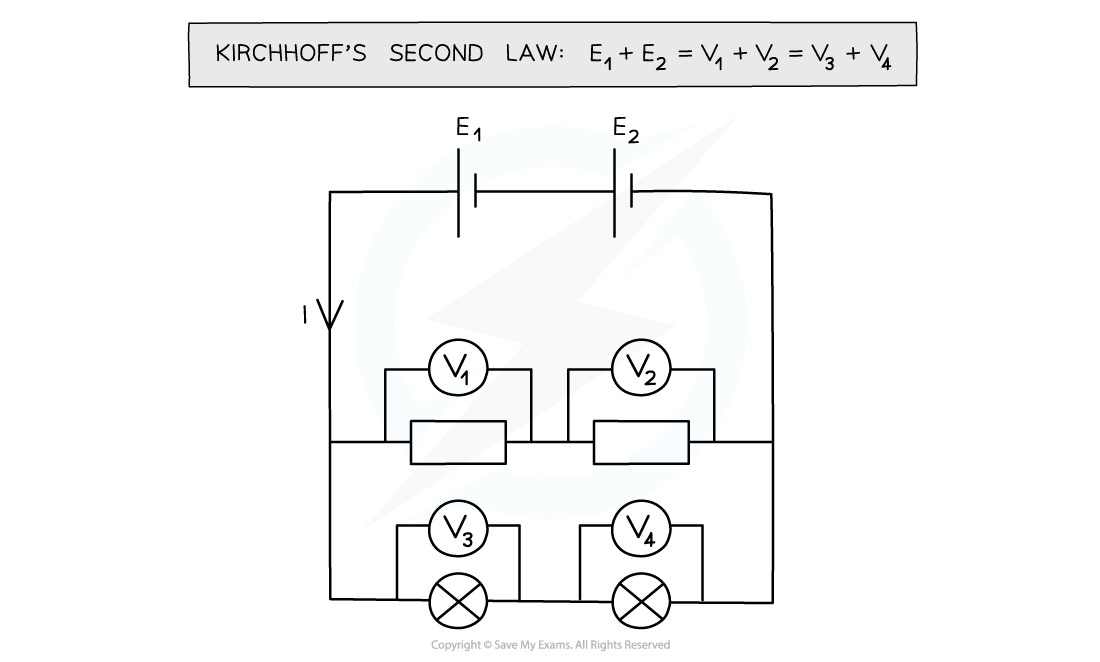
The total potential difference across the components is the sum of the potential difference across each individual component
- A closed circuit loop acts as its own independent series circuit and each one separates at a junction. A parallel circuit is made up of two or more of these loops
Loops in a parallel circuit
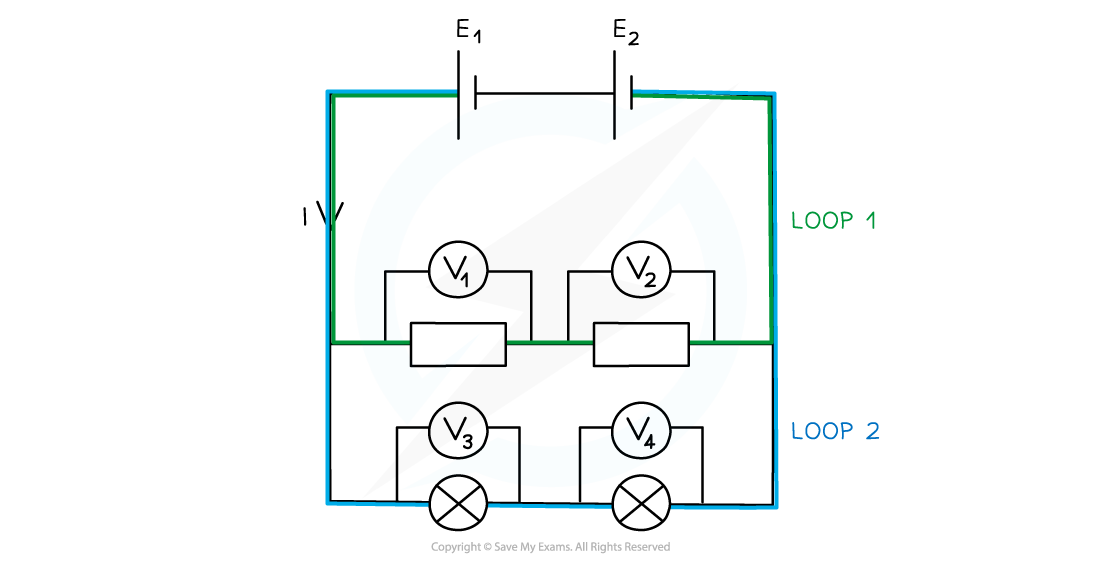
Each circuit loop acts as a separate, independent series circuit
- This makes parallel circuits incredibly useful for home wiring systems
- A single power source supplies all lights and appliances with the same potential difference
- If one light breaks, current can still flow through the rest of the lights and appliances
Was this revision note helpful?
Build on this topic