Gradient of a Displacement-Time Graph (Cambridge International AS Physics)
Spec point —
2.1.4
Gradient of a displacement-time graph
-
Displacement-time graphs show the changing position of an object in motion
-
They also show the direction an object is moving with respect to its starting position
- A positive gradient on a displacement-time graph shows a constant velocity in the positive direction
- A negative gradient on a displacement-time graph shows a constant velocity in the negative direction
-
The gradient (slope) of a displacement-time graph is equal to the velocity
- The steeper the slope, the greater the velocity
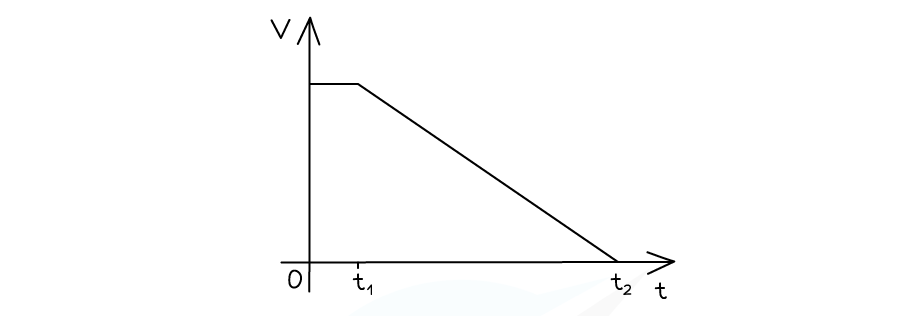
Worked Example A car driver sees a hazard ahead and applies the brakes to bring the car to a stop.
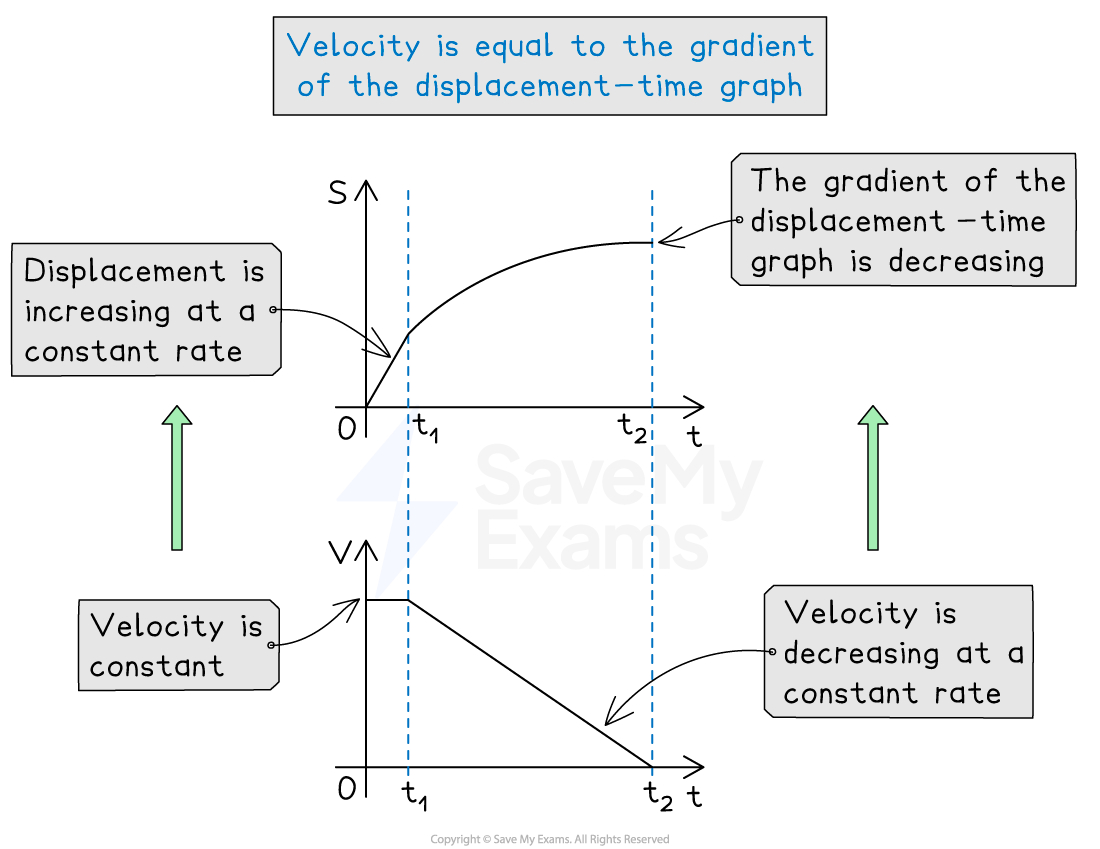
What does the displacement-time graph look like?
Answer:
When the velocity-time graph is a horizontal line, this means constant velocity
- This is a straight, diagonal line on a displacement-time graph
When the velocity-time graph is a diagonal line towards the negative direction, this means decreasing velocity (deceleration)
- This is a curve with a decreasing gradient on a displacement-time graph
Exam Hint Don’t forget that velocity is a vector quantity; it has a size and a direction. If velocity is initially positive and then becomes negative, then the object has changed direction.
Was this revision note helpful?
Build on this topic