Sketching Graphs of Modulus Functions (Cambridge International AS Mathematics)
Modulus Functions - Sketching Graphs
Sketching graphs of modulus functions
What is the modulus function?
-
The modulus function makes any ‘input’ positive
-
|x| = x if x ≥ 0 |f(x)| = f(x) if f(x) ≥ 0
-
|x| = -x if x < 0 |f(x)| = -f(x) if f(x) < 0
- For example:|5| = 5 and |-5| = 5
-
Sometimes called absolute value
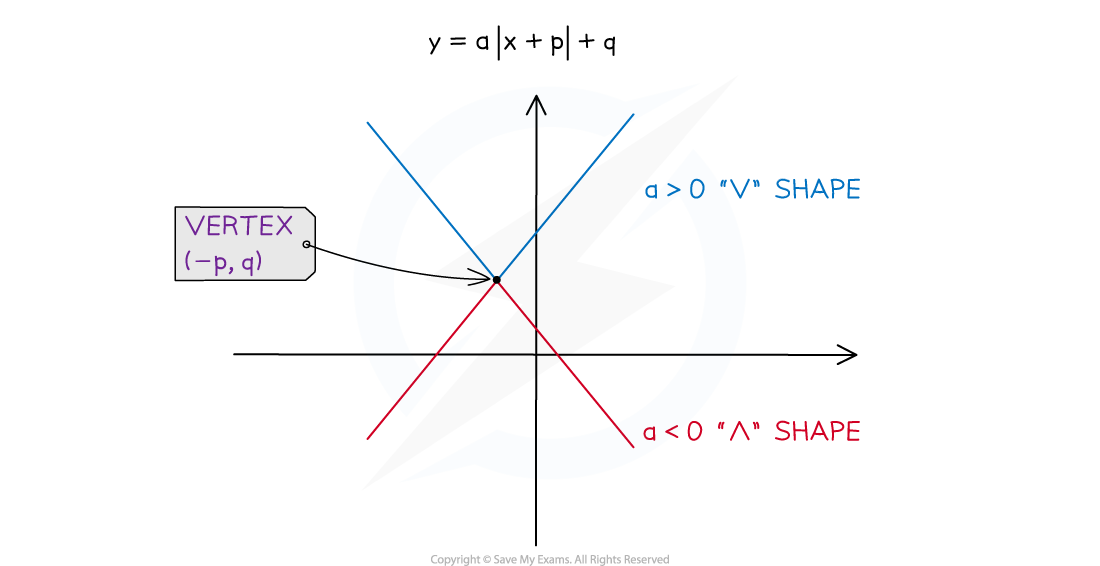
How do I sketch the straight line modulus graph y = a|x+p|+q?
-
The graph will look like a “ꓦ” if *a *> 0 or a “ꓥ” if *a *< 0
-
There will be a vertex at the point (-p, q)
-
There could be 0, 1 or 2 roots
- This depends on the location of the vertex and the orientation of the graph (ꓦ or ꓥ)
-
Compare this to the completed square form of a quadratic a(x* *+ p)² + q
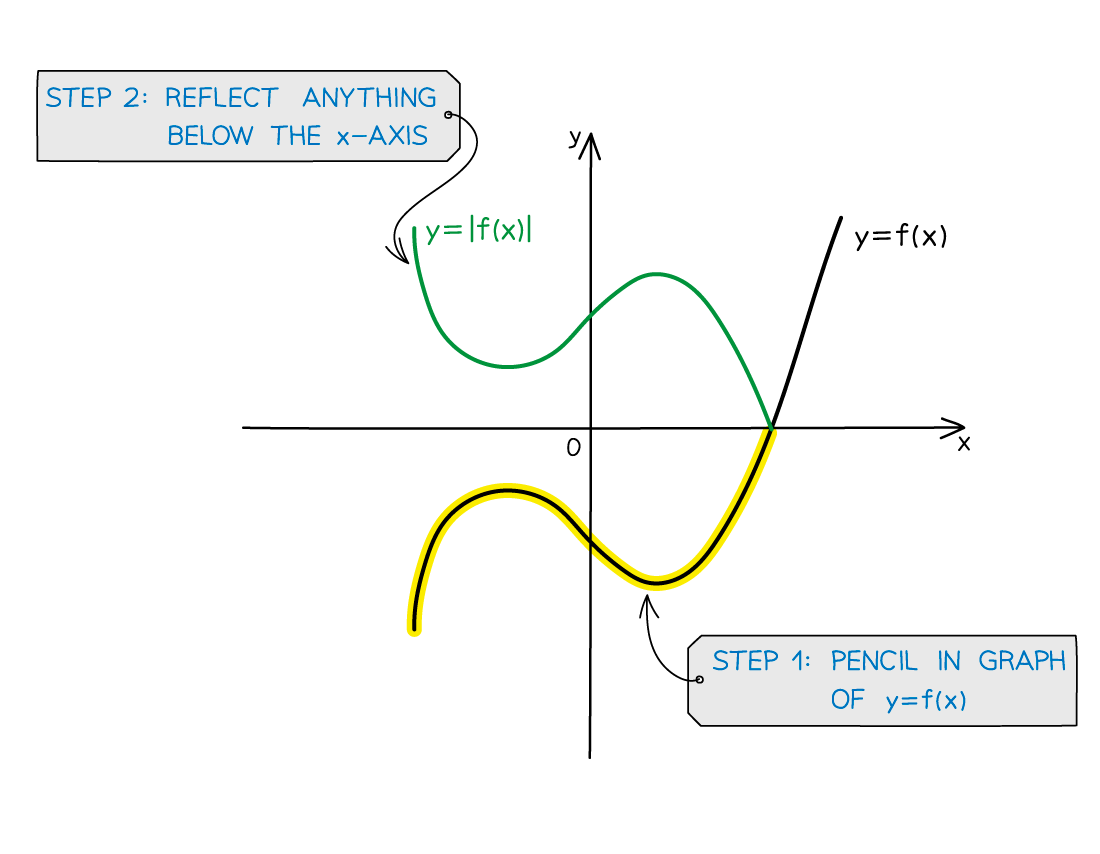
How do I sketch the modulus of a function y = |f(x)|?
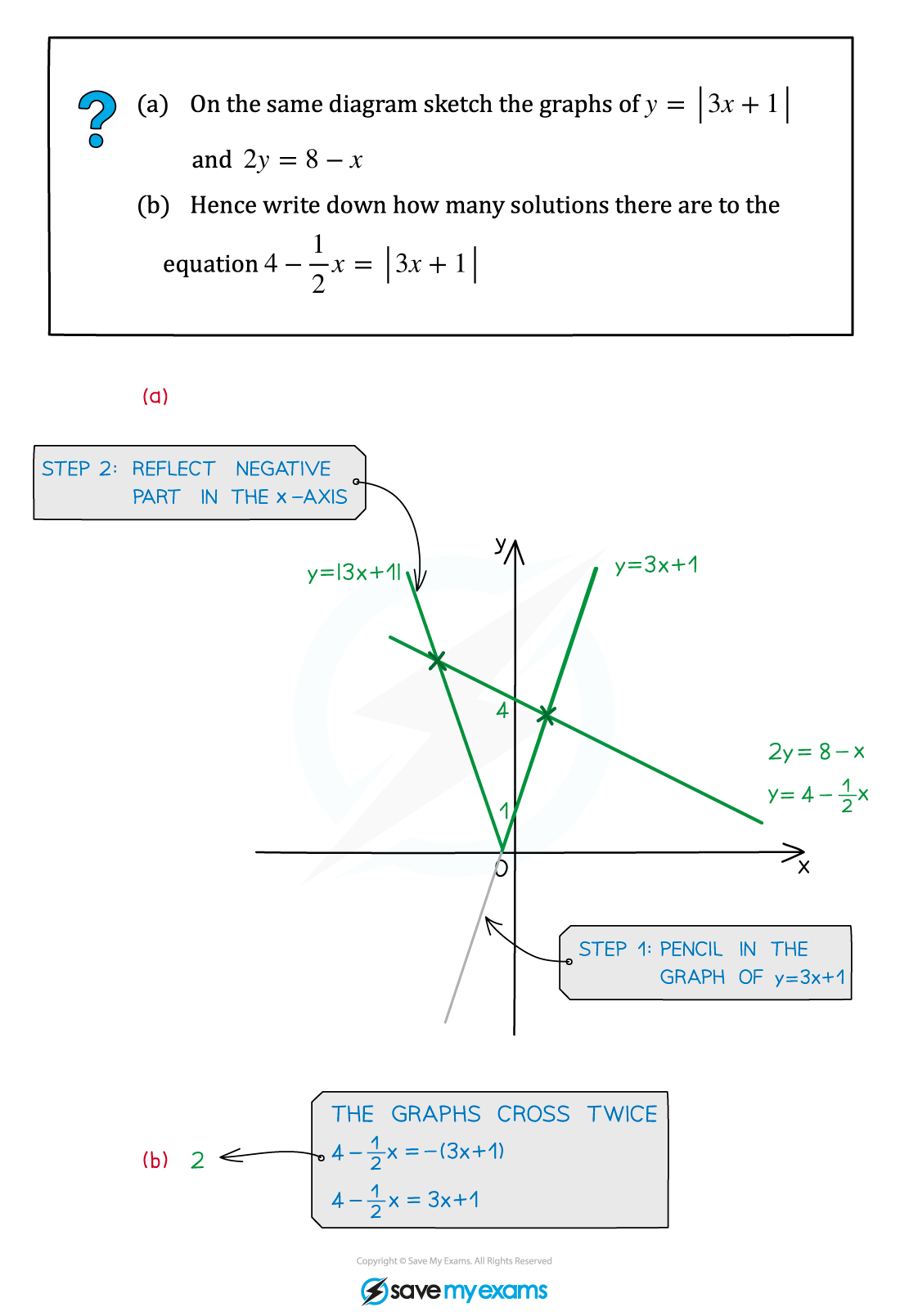
STEP 1 Pencil in the graph of y = f(x)
STEP 2 Reflect anything below the x-axis, in the x-axis, to get y = |f(x)|
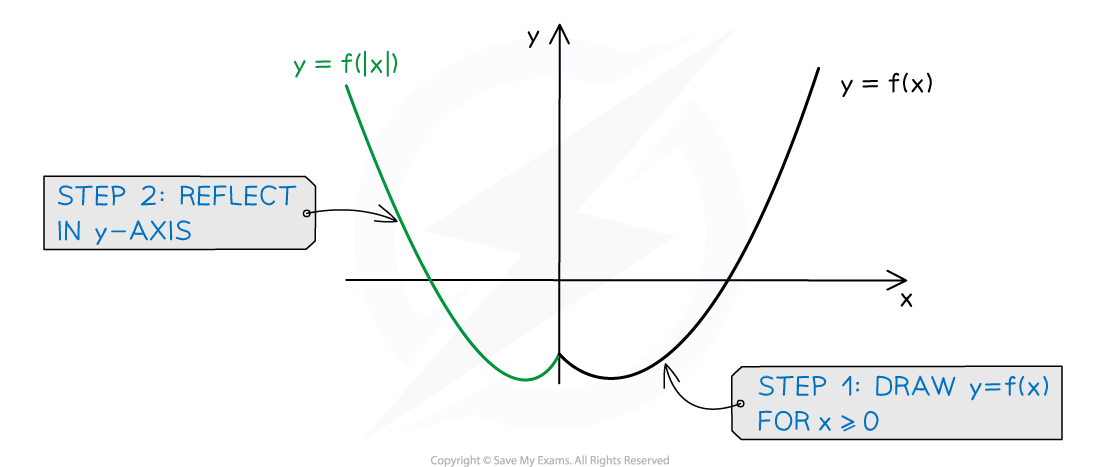
How do I sketch a function of mod x, y = f(|x|)?
STEP 1 Sketch the graph of y = f(x) only for x ≥ 0
STEP 2 Reflect this in the y-axis
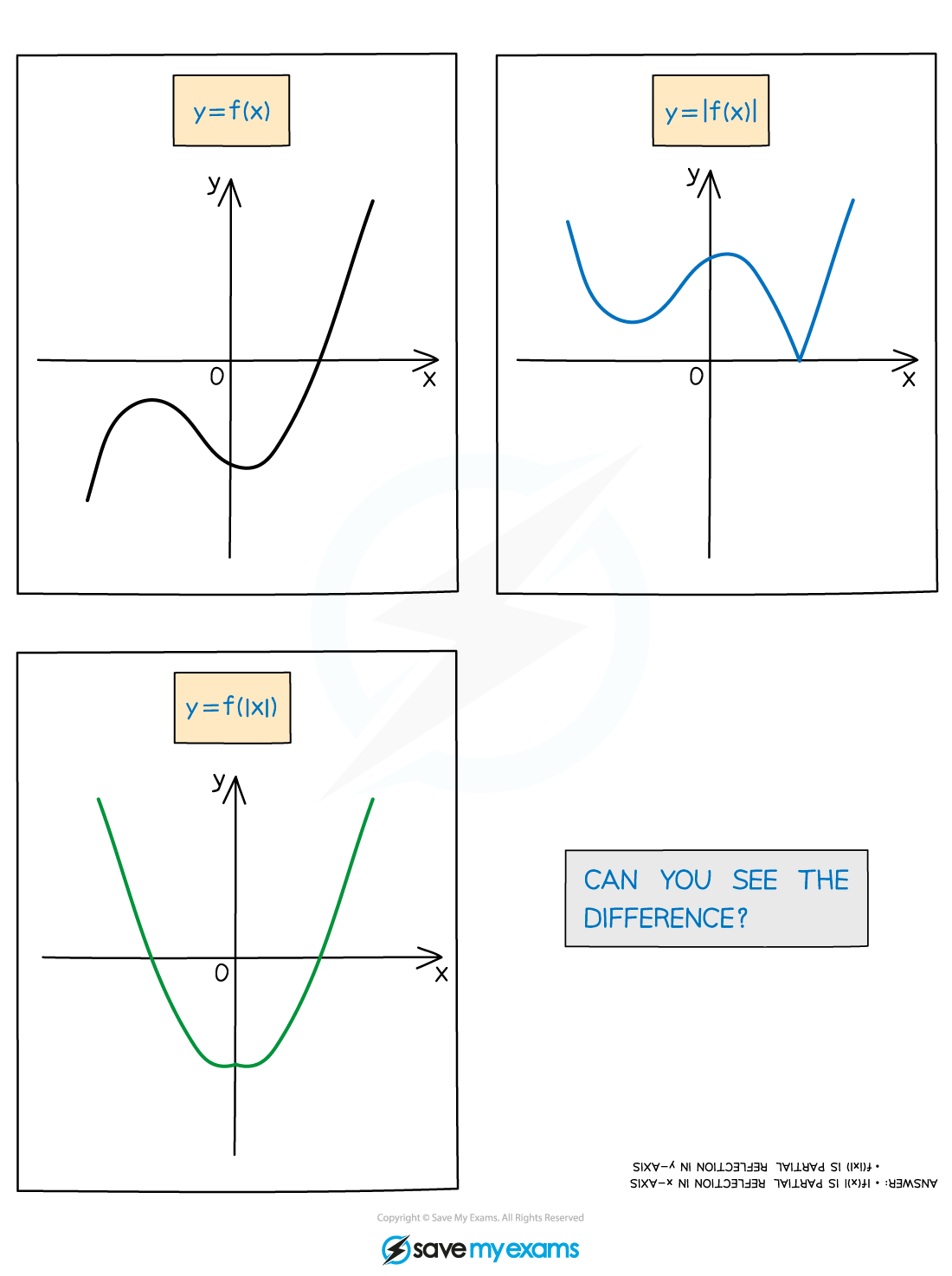
What is the difference between y = |f(x)| and y = f(|x|)?
-
There is a difference between y = |f(x)|and y = f(|x|)
-
The graph of y = |f(x)| never goes below the x-axis
- It does not have to have any lines of symmetry
-
The graph of y = f(|x|) is always symmetrical about the y-axis
- It can go below the x-axis
-
For the exam you will only be asked to do this when f(x) is linear
- Your graphs will all look like a “ꓦ” or a “ꓥ”
- You can also think of these graphs as transformations of the graph *y *= |x|
Worked Example
Was this revision note helpful?
Build on this topic