Covalent Bonding (Cambridge International AS Chemistry)
Defining Covalent Bonding
- Covalent bonding occurs between two non-metals
- A covalent bond involves the electrostatic attraction between nuclei of two atoms and the bonding electrons of their outer shells
- No electrons are transferred but only shared in this type of bonding
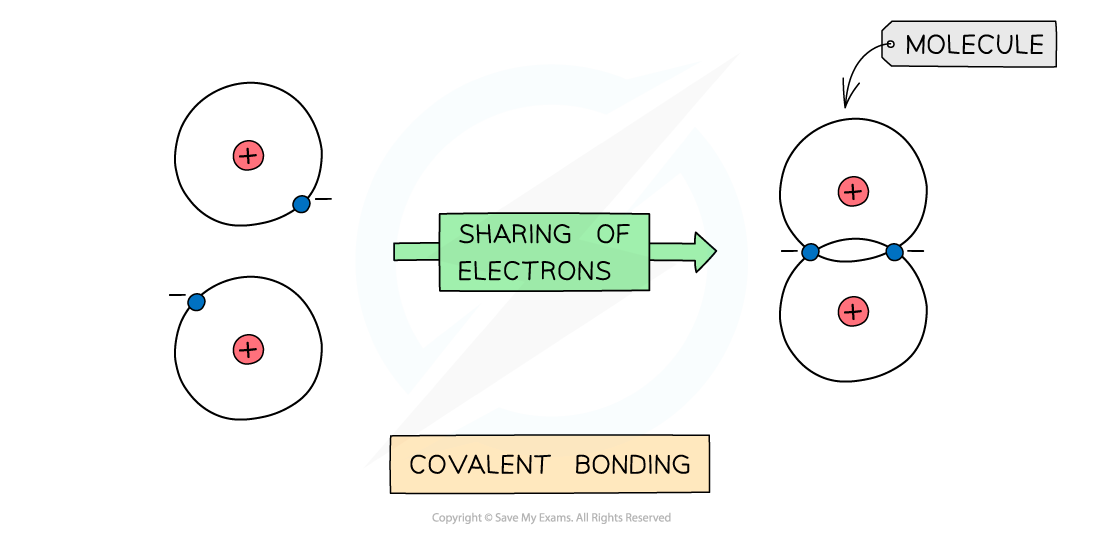
The positive nucleus of each atom has an attraction for the bonding electrons shared in the covalent bond
-
Non-metals are able to share pairs of electrons to form different types of covalent bonds
-
Sharing electrons in the covalent bond allows each of the 2 atoms to achieve an electron configuration similar to a noble gas
- This makes each atom more stable
Covalent bonds & shared electrons table
-
Single / C–C bond
- 2 electrons shared
-
Double / C=C bond
- 4 electrons shared
-
Triple / CC bond
- 6 electrons shared
Examples of Covalent Bonding
Dot & cross diagrams
- Dot and cross diagrams are used to represent covalent bonding
- They show just the outer shell of the atoms involved
- To differentiate between the two atoms involved, dots for electrons of one atom and crosses for electrons of the other atom are used
- Electrons are shown in pairs on dot-and-cross diagrams
Single covalent bonding
Hydrogen, H2
-
Each hydrogen atom has one outer electron
-
By sharing their outer electrons, the two hydrogen atoms are able to form a hydrogen molecule
- The molecule contains a single covalent bond due to one shared pair of electrons
Covalent bonding in hydrogen, H2

Chlorine, Cl2
-
Each chlorine atom has seven outer electrons
- Six electrons are paired and one electron is unpaired
-
By sharing their unpaired outer electrons, the two chlorine atoms are able to form a chlorine molecule
- The molecule contains a single covalent bond due to one shared pair of electrons
Covalent bonding in chlorine, Cl2

Hydrogen chloride, HCl
-
The hydrogen atom has one outer electron and the chlorine atom has seven outer electrons
- The chlorine atom has six paired electrons and one unpaired electron
-
When the hydrogen atom pairs its outer electron with the unpaired electron from chlorine, the two atoms are able to form a hydrogen chloride molecule
- The molecule contains a single covalent bond due to one shared pair of electrons
Covalent bonding in hydrogen chloride, HCl

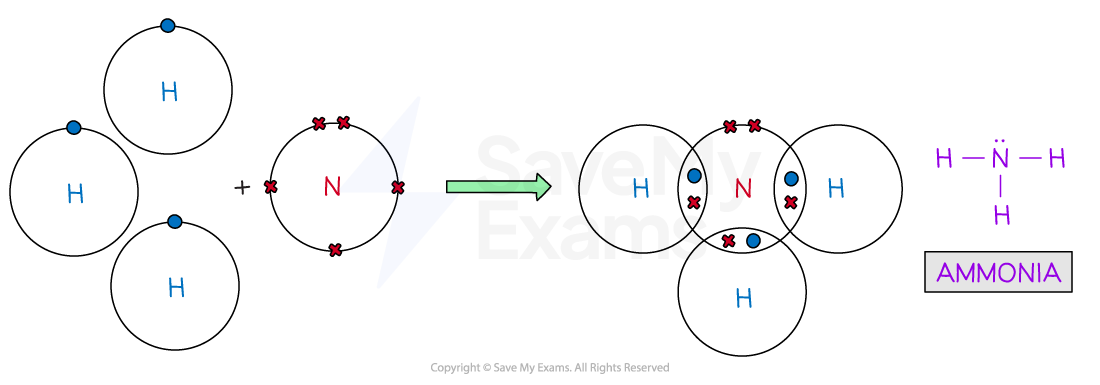
Ammonia, NH3
-
The hydrogen atoms have one outer electron and the nitrogen atom has five outer electrons
- The nitrogen atom has one lone pair of electrons and three unpaired electrons
-
When each hydrogen atom pairs its outer electron with each of the unpaired electrons from nitrogen, the nitrogen and hydrogen atoms are able to form an ammonia molecule
- The molecule contains three single covalent bonds due to three shared pairs of electrons
Covalent bonding in ammonia, NH3
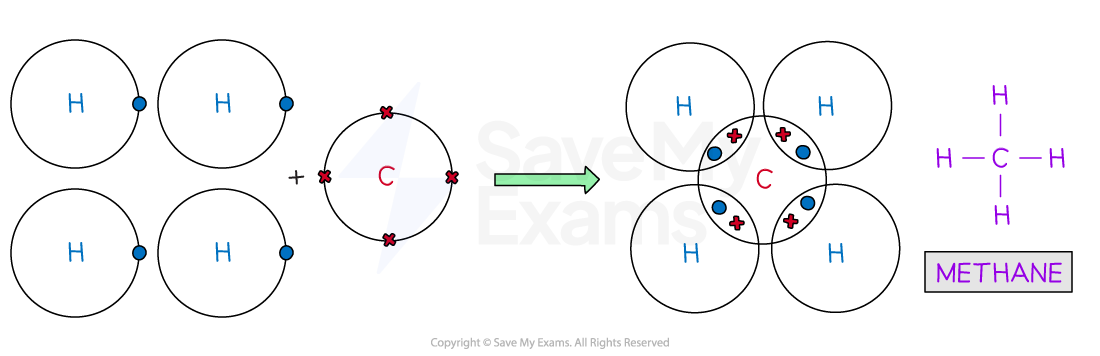
Methane, CH4
-
The hydrogen atoms have one outer electron and the carbon atom has four outer electrons
- The carbon atom has four unpaired electrons
-
When each hydrogen atom pairs its outer electron with each of the unpaired electrons from carbon, the carbon and hydrogen atoms are able to form a methane molecule
- The molecule contains four single covalent bonds due to four shared pairs of electrons
Covalent bonding in methane, CH4
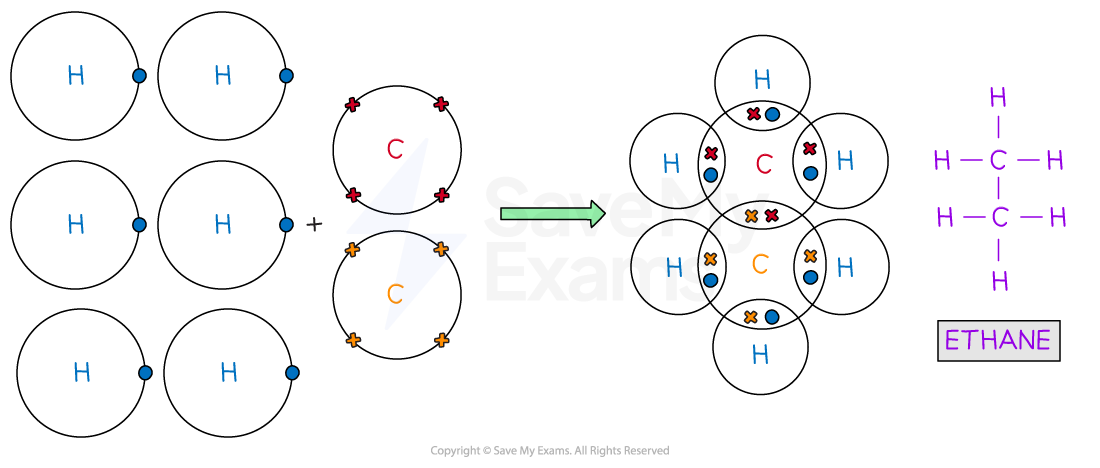
Ethane, C2H6
-
The hydrogen atoms have one outer electron and the carbon atoms have four outer electrons
- The carbon atom has four unpaired electrons
-
Each carbon atom shares one of its unpaired electrons with the other carbon atom
- This results in the formation of a single covalent bond between the two carbon atoms
-
When each hydrogen atom pairs its outer electron with the remaining unpaired electrons from carbon, the carbon and hydrogen atoms form six single covalent C-H bonds
- This results in an ethane molecule, which contains six single covalent C-H bonds and one single covalent C-C bond
Covalent bonding in ethane, C2H6
Double covalent bonding
Oxygen, O2
-
Each oxygen atom has six outer electrons
-
By sharing two of their outer electrons, the two oxygen atoms are able to form an oxygen molecule
- The molecule contains a double covalent bond due to two shared pair of electrons
Covalent bonding in oxygen, O2

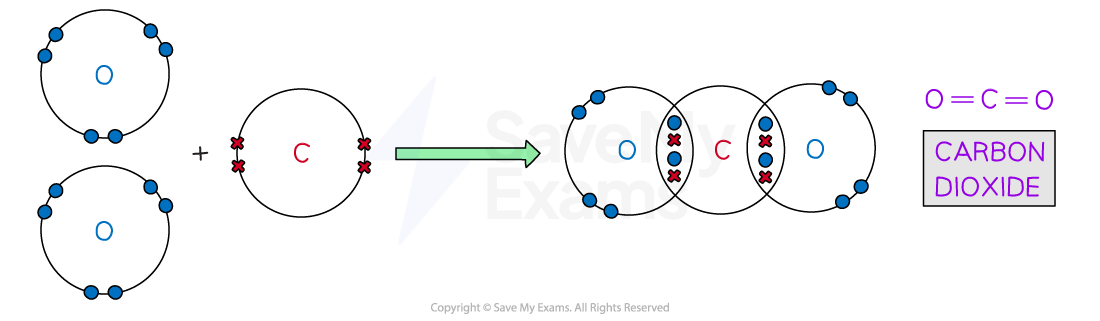
Carbon dioxide, CO2
-
Each oxygen atom has six outer electrons and the carbon atom has four outer electrons
-
Each oxygen atom shares two of its outer electrons with the carbon atom, which forms a carbon dioxide molecule
- The molecule contains two double covalent bonds due to two sets of two shared pairs of electrons
Covalent bonding in carbon dioxide, CO2
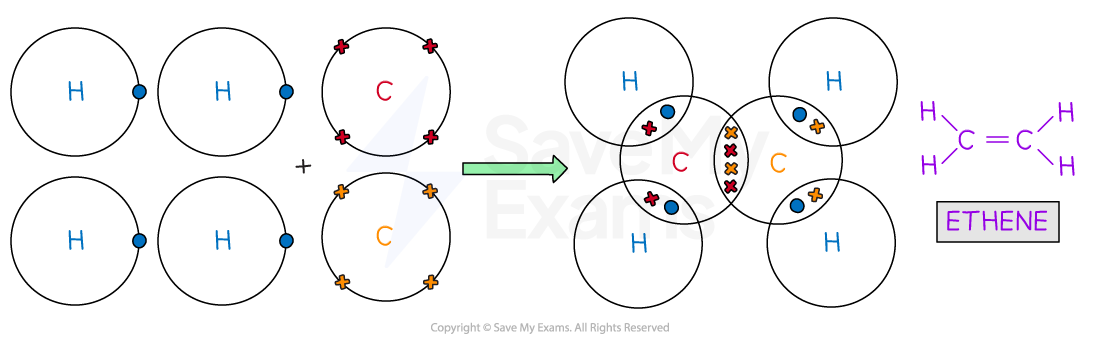
Ethene, C2H4
-
Each hydrogen atom has one outer electron and the carbon atoms have four outer electrons
-
Each carbon atom shares two of its outer electrons with the other carbon atom
- This results in the formation of a double covalent bond between the two carbon atoms
-
When each hydrogen atom pairs its outer electron with the remaining unpaired electrons from carbon, the carbon and hydrogen atoms form four single covalent C-H bonds
- This results in an ethene molecule, which contains four single covalent C-H bonds and one double covalent C=C bond
Covalent bonding in ethene, C2H4
Triple covalent bonding
Nitrogen, N2
-
Each nitrogen atom has five outer electrons
-
By sharing three of their outer electrons, the two nitrogen atoms are able to form a nitrogen molecule
- The molecule contains a triple covalent bond due to three shared pairs of electrons
Covalent bonding in nitrogen, N2

- In some instances, the central atom of a covalently bonded molecule can accommodate more or less than 8 electrons in its outer shell
- Being able to accommodate more than 8 electrons in the outer shell is known as ‘expanding the octet rule’
- Accommodating less than 8 electrons in the outer shell means than the central atom is ‘electron deficient’
- Some examples of this occurring can be seen with Period 3 elements
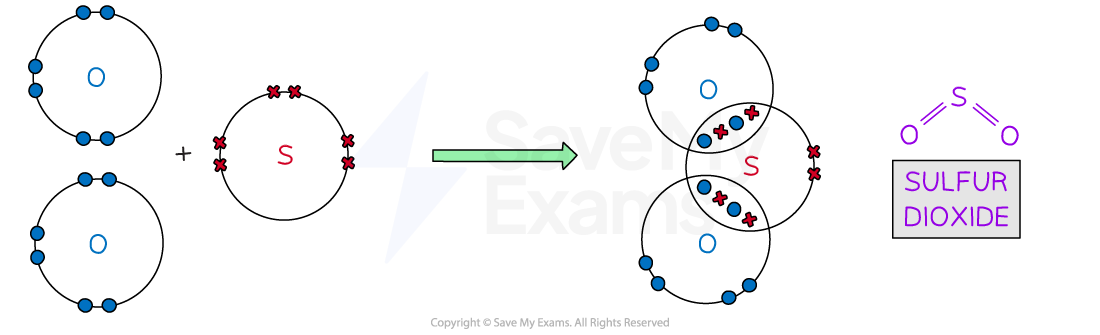
Sulfur dioxide, SO2
-
Each oxygen atom has six outer electrons and the sulfur atom, also, has six outer electrons
-
Each oxygen atom shares two of its outer electrons with the sulfur atom, which forms a sulfur dioxide molecule
- The molecule contains two double covalent bonds due to two sets of two shared pairs of electrons
-
Sulfur now has an expanded octet as it has a share of 10 electrons
Sulfur dioxide, SO2 – dot and cross diagram
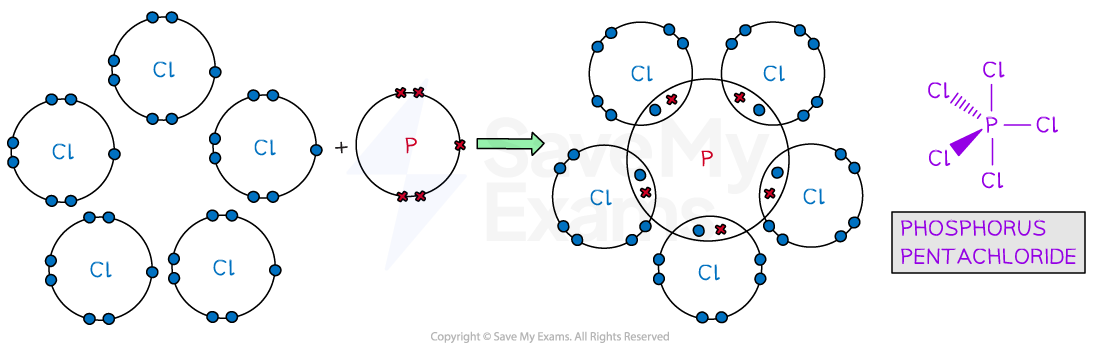
Phosphorus pentachloride, PCl5
-
Each chlorine atom has seven outer electrons and the phosphorus atom has five outer electrons
- The chlorine atom has six paired electrons and one unpaired electron
-
When each chlorine atom pairs its unpaired outer electron with one outer electron from phosphorus, a single covalent P-Cl bond forms
- The overall phosphorus pentachloride molecule contains five single covalent bonds
-
Phosphorus now has an expanded octet as it has a share of 10 electrons
Phosphorus pentachloride, PCl5 – dot and cross diagram
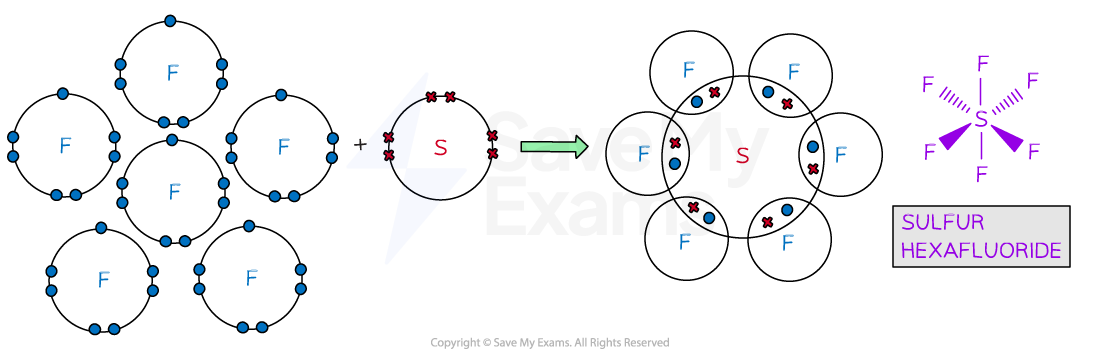
Sulfur hexafluoride, SF6
-
Each fluorine atom has seven outer electrons and the sulfur atom has six outer electrons
- The fluorine atom has six paired electrons and one unpaired electron
-
When each fluorine atom pairs its unpaired outer electron with one outer electron from sulfur, a single covalent S-F bond forms
- The overall sulfur hexafluoride molecule contains six single covalent bonds
-
Sulfur now has an expanded octet as it has a share of 12 electrons
Sulfur hexafluoride, SF6 – dot and cross diagram
Exam Hint
- Covalent bonding takes place between non-metal atoms.
- Remember to use the Periodic Table to decide how many electrons are in the outer shell of a non-metal atom.
Was this revision note helpful?