Chemical Reactivity of Alkanes (Cambridge International AS Chemistry)
Exam board Cambridge International · ASUpdated 2026-10-19
Unreactivity of Alkanes
Spec point —
14.1.5
Strength of C-H bonds
- Alkanes consist of carbon and hydrogen atoms which are bonded together by single bonds
- Unless a lot of heat is supplied, it is difficult to break these strong C-C and C-H covalent bonds
- This decreases the alkanes’ reactivities in chemical reactions
Lack of polarity
- The electronegativities of the carbon and hydrogen atoms in alkanes are almost the same
- This means that both atoms share the electrons in the covalent bond almost equally
The Pauling Scale
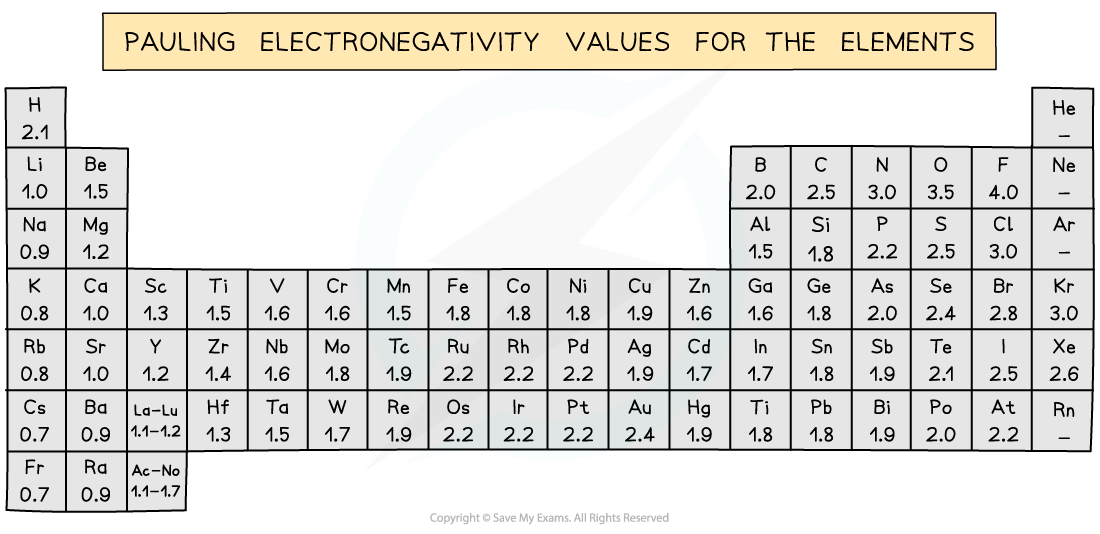
The Pauling Scale gives carbon 2.5 and hydrogen 2.1, so the difference in electronegativity between carbon and hydrogen is only 0.4
-
As a result of this, alkanes are nonpolar molecules and have no partial positive or negative charges (δ+ and δ- respectively)
-
Alkanes therefore do not react with polar reagents
- They have no electron-deficient areas to attract nucleophiles
- They also lack electron-rich areas to attract electrophiles
Examining bond polarity in ethane
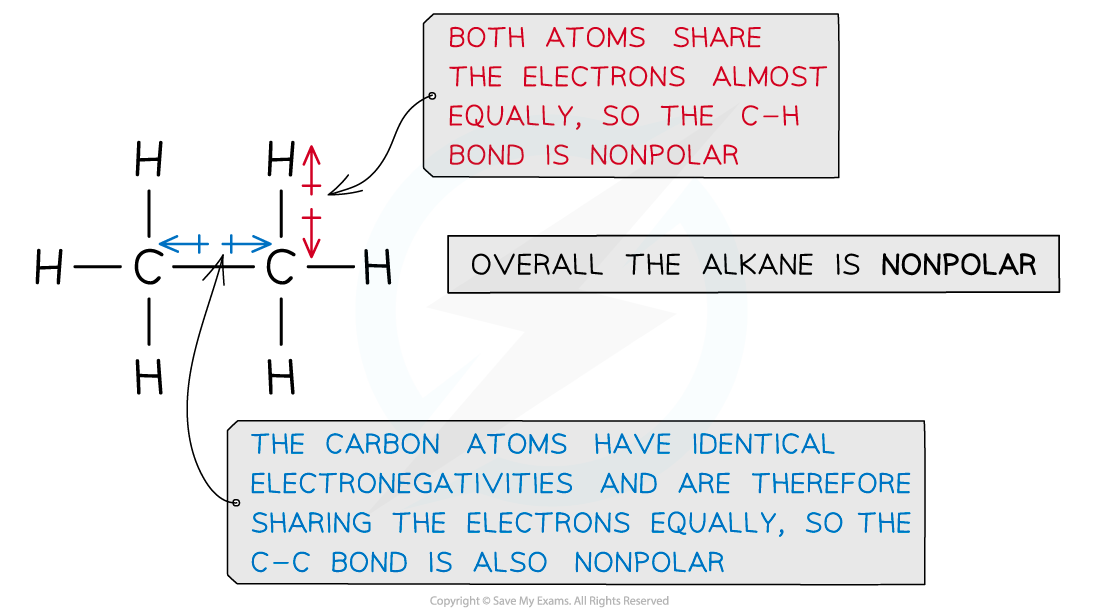
Ethane is an example of an alkane that lacks polarity due to almost similar electronegativities of the carbon and hydrogen atoms
- Due to the unreactivity of alkanes, they only react in combustion reactions and undergo substitution by halogens
Exam Hint Remember: nucleophiles are negatively charged and are attracted to electron-deficient regions
Electrophiles are positively charged and attracted to electron-rich regions
Was this revision note helpful?
Build on this topic