Logarithmic Functions (Cambridge International A-Level Mathematics)
Exam board Cambridge International · A-LevelUpdated 2026-07-02
Logarithmic functions
What are logarithmic functions?
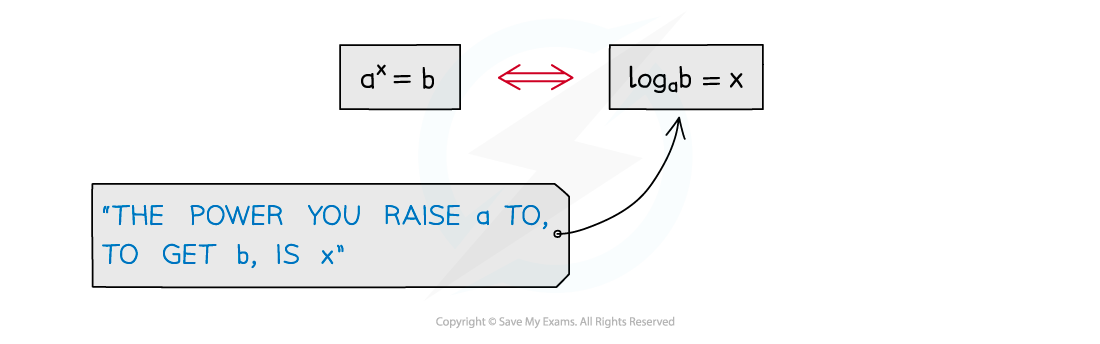
-
and are equivalent statements
-
a > 0
-
a is called the base
-
Every time you write a logarithm statement say to yourself what it means
- log381 = 4 “the power you raise 3 to, to get 81, is 4”
- logpq = r “the power you raise p to, to get q, is r”
How are logarithms and powers inverses of each other?
- A logarithm is the inverse of raising to a power so we can use rules to simplify logarithmic functions
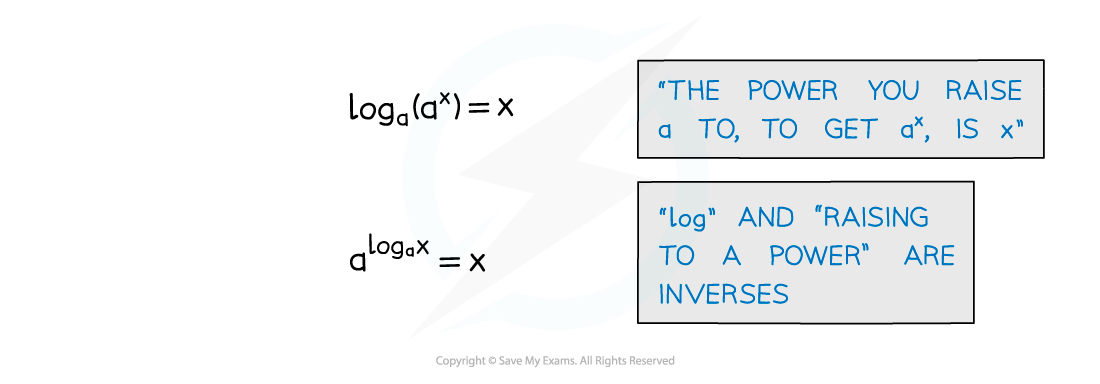
How do I use the inverse property of logs and powers?
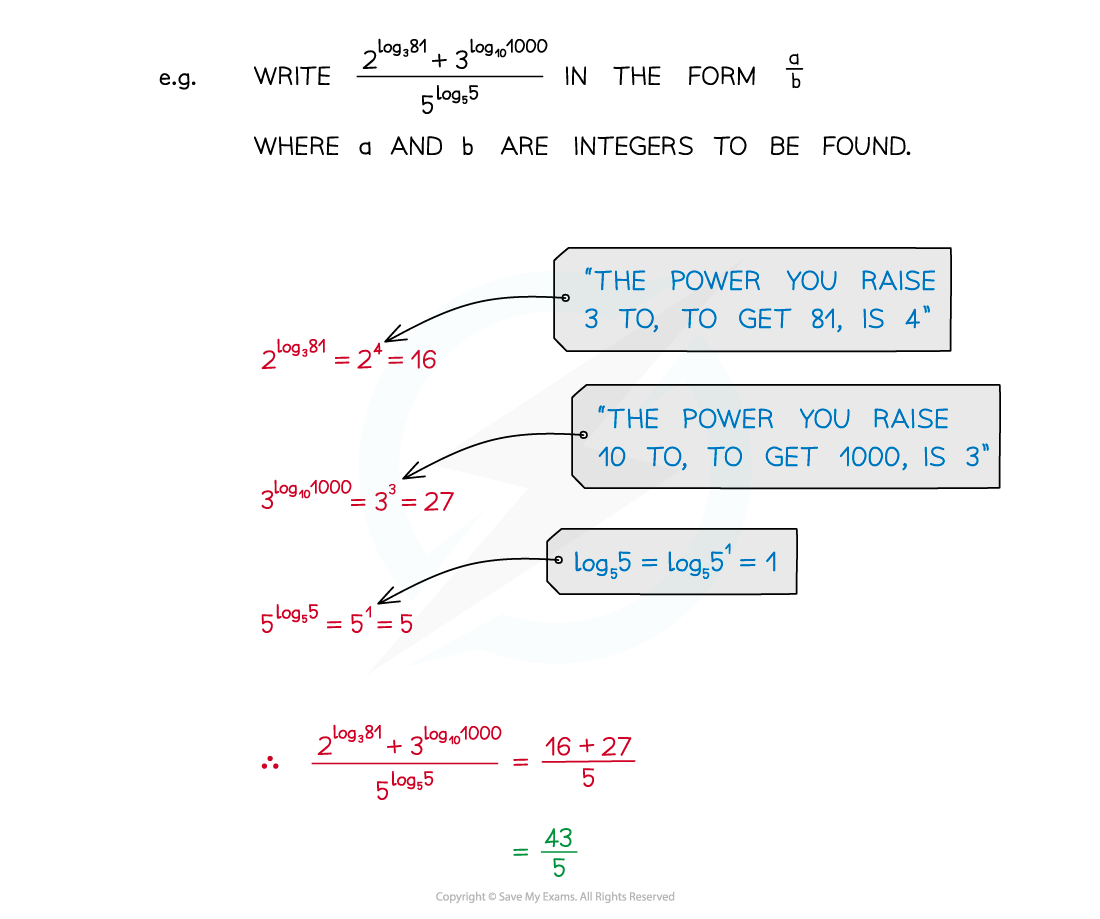
- Recognising the rules of logarithms allows expressions to be simplified
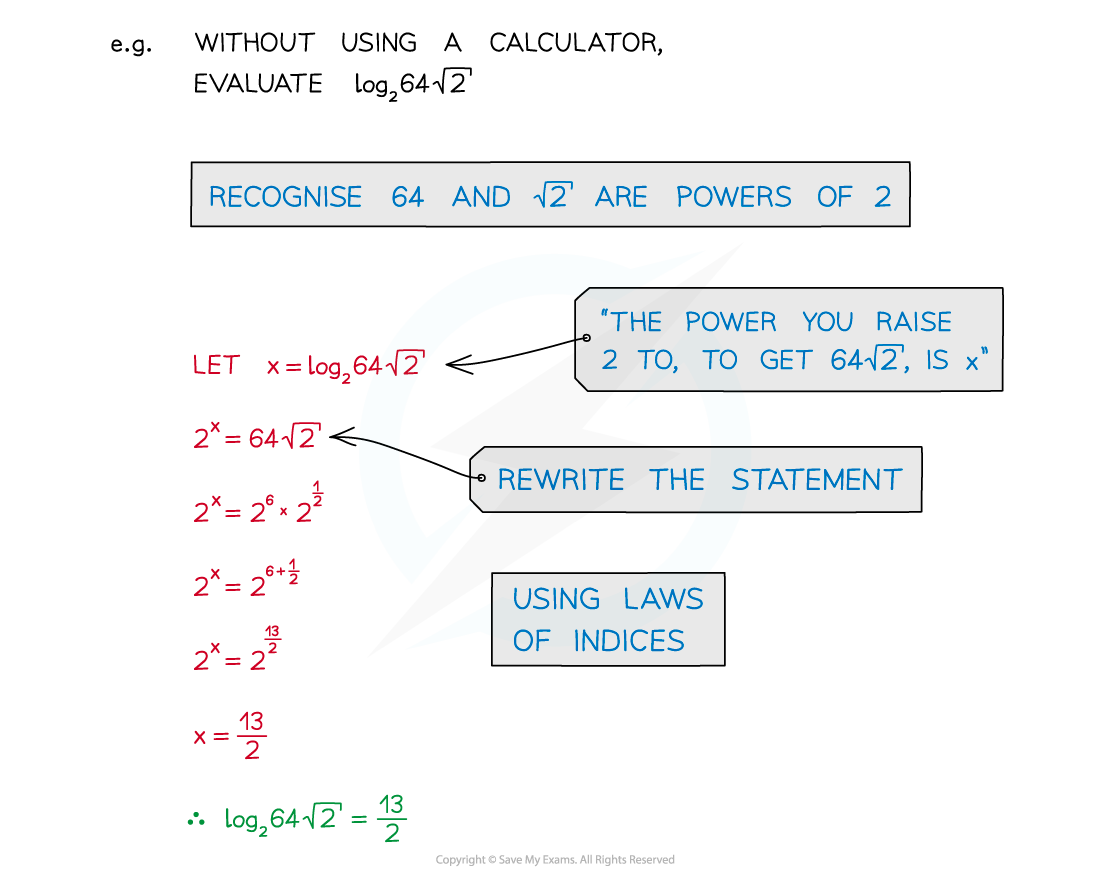
-
Recognition of common powers helps in simple cases For more awkward cases a calculator is needed
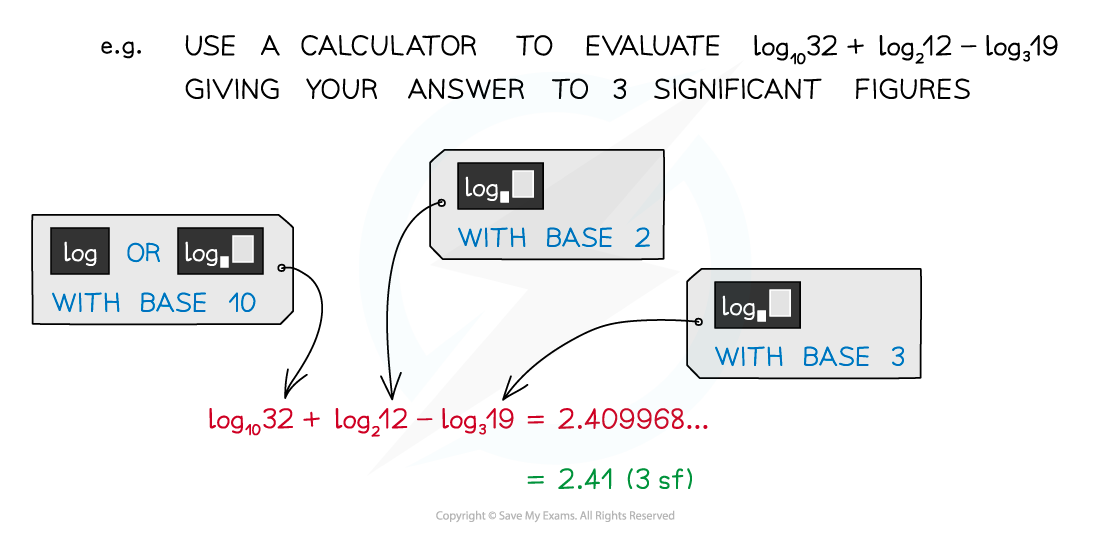
- Powers of 2: 20 = 1, 21 = 2, 22 = 4, 23 = 8, 24 = 16, …
- Powers of 3: 30 = 1, 31 = 3, 32 = 9, 33 = 27, 34 = 81, …
- The first few powers of 4, 5 and 10 should also be familiar
-
Calculators can have, possibly, three different logarithm buttons

- This button allows you to type in any number for the base

- Natural logarithms (see “e”)

- Shortcut for base 10 although SHIFT button needed
- Before calculators, logarithmic values had to be looked up in printed tables
What notation is used with logarithms?
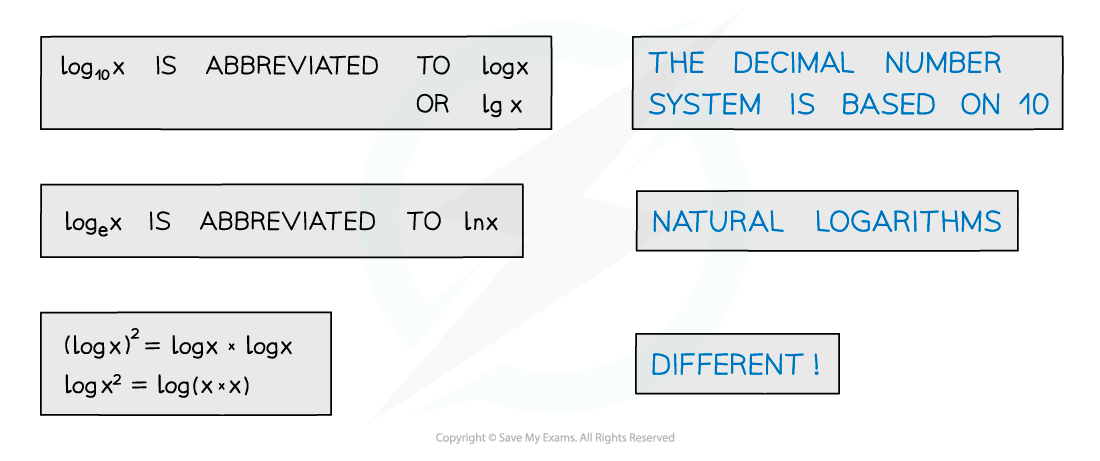
-
10 is a common base
- log10x is abbreviated to log x or lg x
-
The value e is another common base
- logex is abbreviated to ln x
-
(log x)2≠ log x2
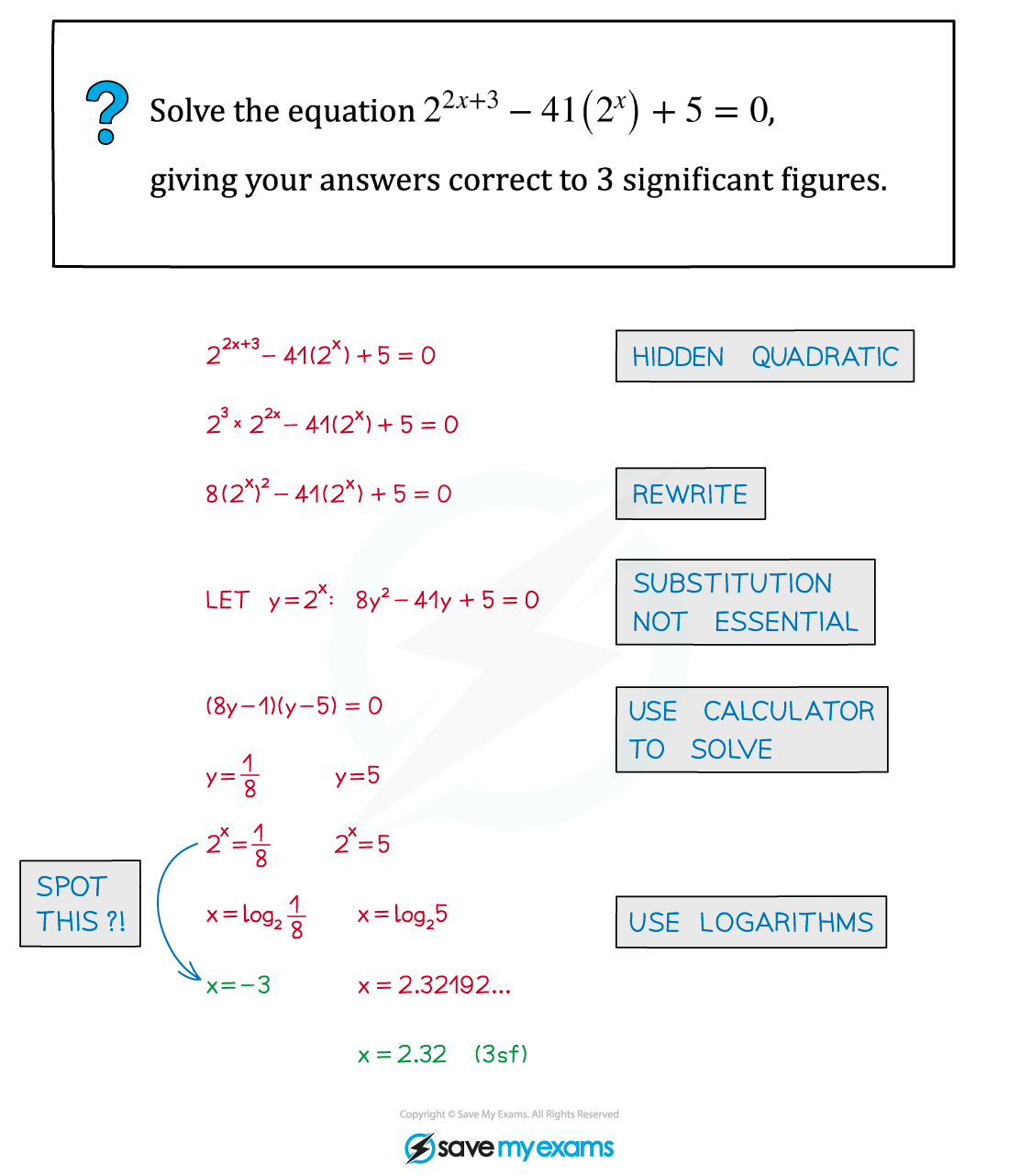
Worked Example
Was this revision note helpful?