12 markseasy
The function is given by
where is an integer.
Find the coefficient of in the binomial expansion of , in terms of .
14 questions · 83 marks · ≈ 1 hour · spans 14 of 24 topics
Assembled from the topic question banks — not an official Cambridge International paperThe function is given by
where is an integer.
Find the coefficient of in the binomial expansion of , in terms of .
The graph of , where , is shown below.
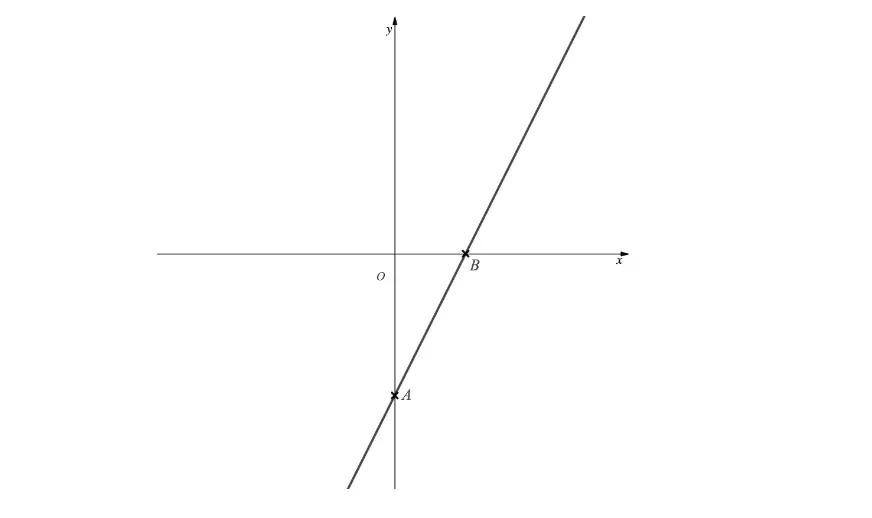
Determine the coordinates of the points marked and .
(i) On the diagram above, sketch the graph of y = |\text{f}(x - 1)|.
(ii) Determine the coordinates of the image of the points and under the transformation in part (i).
Let
Express in partial fractions.
The polynomial is defined by .
Given that and , find the values of and .
Factorise completely.
The solutions of the cubic equation are , and , where is real.
Given that , work out the other two solutions of the equation.
(i) On an Argand diagram, show the complex numbers , , and as position vectors.
(ii) Describe the geometric transformation that maps to .
For a complex number , a square root of is a complex number where and are real numbers and where
Given that , show that and .
(i) Solve the equations in part (a) to find the possible values of and .
(ii) Hence determine the two square roots of .
Express the numbers and in exponential form.
The complex number is given by .
Hence express each of the following in exponential form, in terms of and :
(i)
(ii)
The point , where |z| \neq 0, is represented on an Argand diagram.
Describe the geometrical transformation that maps to each of the following points:
(i)
(ii)
The diagram shows the curve with parametric equations
, ,
for .
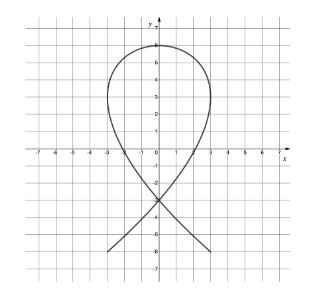
(i) Write down the value of at the point .
(ii) Write down the value of at the points and .
Find an expression for in terms of .
(i) Find the values of , and at the point where .
(ii) Hence show that the equation of the tangent to at the point where is
2\sqrt{2}x + 3y - \left( 9\sqrt{3} + 6 \right) = 0
Find the derivative of the function \text{f}(x) = \text{sin}\left(\text{cos}\left(\text{ln}\left(\dfrac{1}{x}\right)\right)\right), .
The equation of a curve is .
Show that .
Find the equation of the normal to the curve at the point where . Give your answer in the form , where , and are integers.
Given that , solve the differential equation
giving in terms of .
Show that
\int_{0}^{1} \frac{3x\text{e}^{-3x^{2}}}{3 - 2\text{e}^{-3x^{2}}} \, \text{d}x = \frac{1}{4}\,\text{ln} \; \left(3 - 2\text{e}^{-3}\right)
Simplify
giving your answer in the form , where and are integers to be found.
Write
2\text{log}_{a} x + 3\text{log}_{a}\left(x + 1\right) - \text{log}_{a} 4\left(x + 2\right)
as a single logarithm.
(i) Sketch the graph of .
(ii) State whether this graph indicates exponential growth or exponential decay.
Find the value of when .