Venn Diagrams with Conditional Probability (Cambridge International A-Level Mathematics)
Exam board Cambridge International · A-LevelUpdated 2026-07-02
Further Venn Diagrams
What do you mean by further Venn diagrams?
-
The Venn diagrams used here are no more complicated than those in the first Venn Diagrams revision note, however
- questions may use set notation as well, or alongside contextual questions
- there may be more detailed use of conditional probability
- mutually exclusive, three events and other unusual Venn diagram setups may be involved
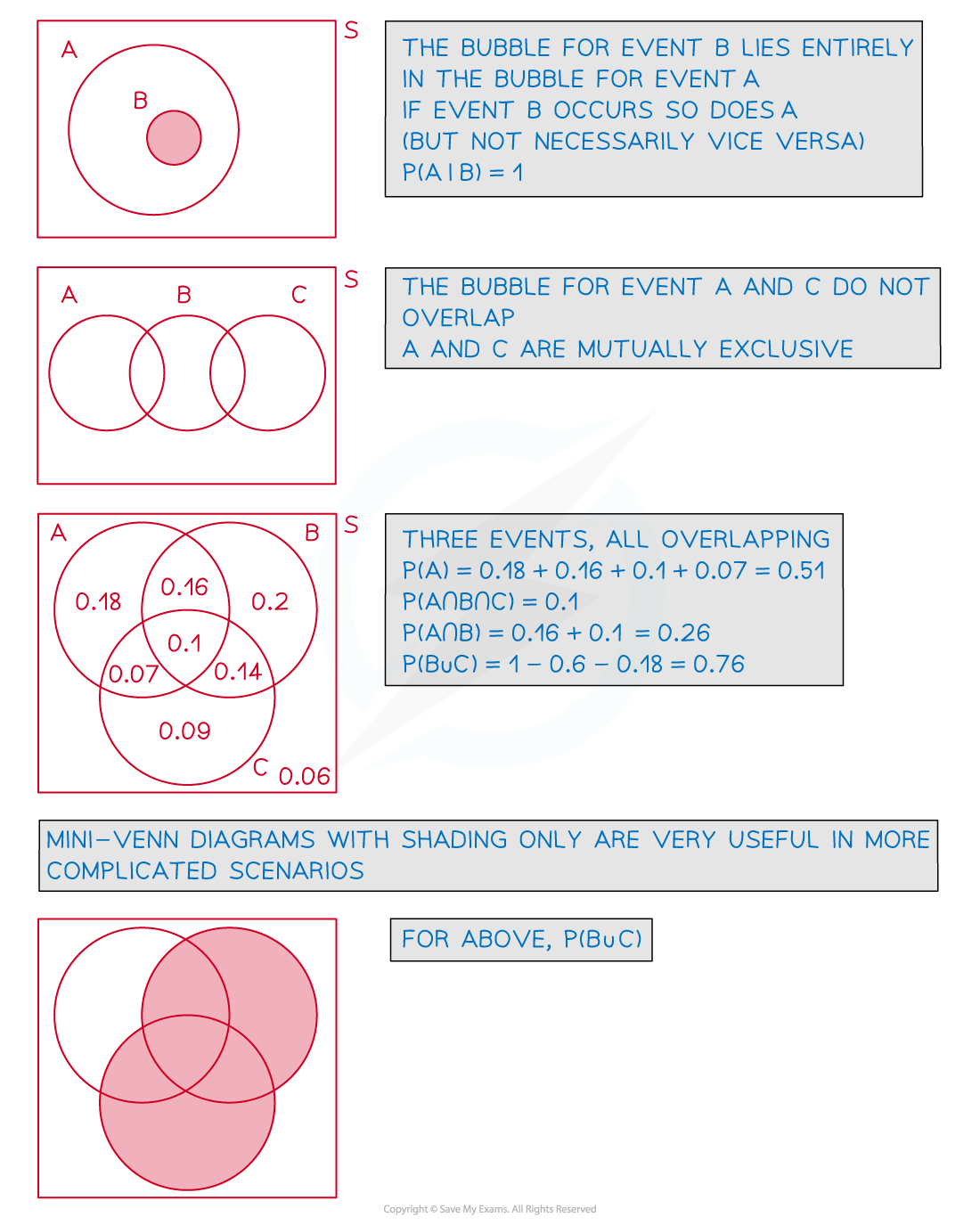
How do I solve conditional probability problems using Venn diagrams?
-
Interpreting questions in terms of AND (), OR (),complement ( ‘ ) and “given that” ( | )
-
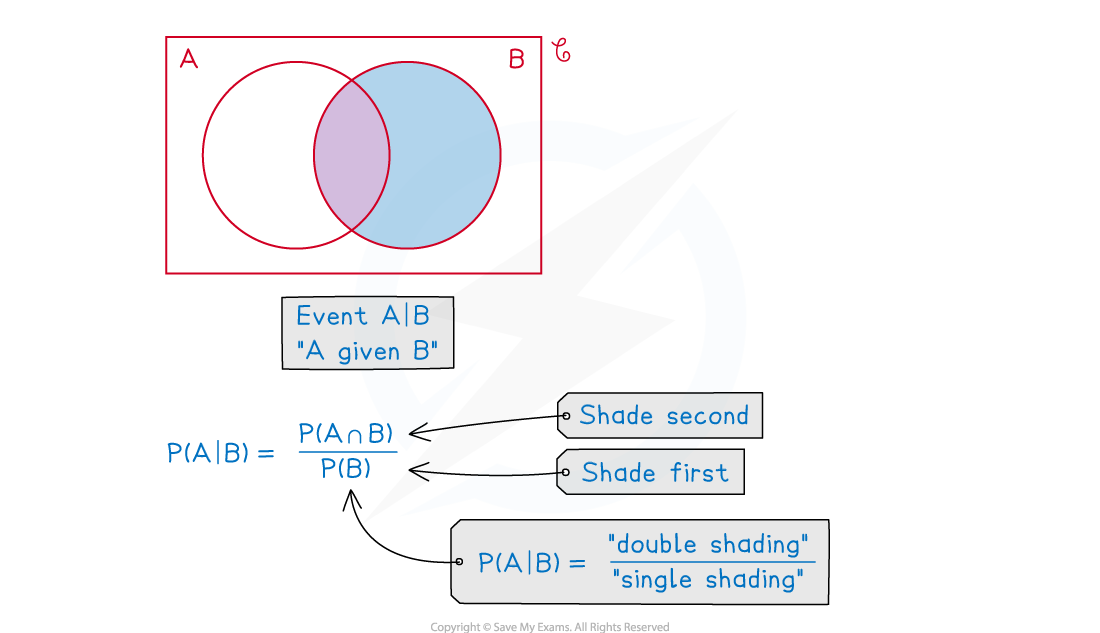
Use mini-Venn diagrams to sketch and shade the regions you are dealing with – use different colours if available or different styles of shading if not
- Shading can help you see the answer
since shade B first, then shade
the answer will then be
Worked Example Three events, and are such that
events and are mutually exclusive
Find
(i)
(ii)
(iii)
Answer:
Exam Hint
Although very versatile, Venn diagrams may not always be the best option
- use a tree diagram if one event follows another
e.g. two beads drawn from a bag without replacement
- use a two-way table for showing how many items/people are in associated categories e.g. A school year group split by gender selecting which sport they wish to play
Was this revision note helpful?
Build on this topic