Skewness (Cambridge International A-Level Mathematics)
Skewness
What is skewness?
-
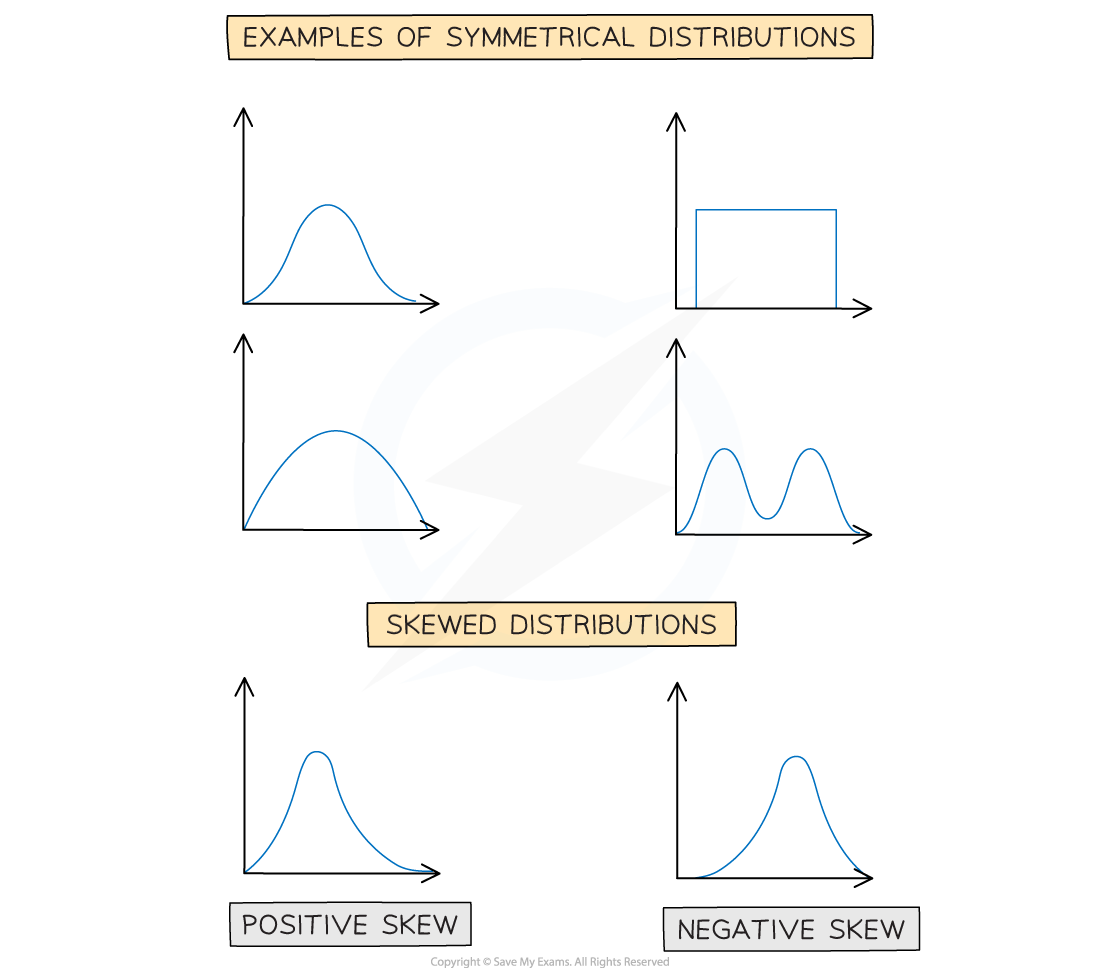
The distribution of a data set is either symmetrical or it has skewness.
-
Skewness describes the way in which data in a non – symmetrical distribution is leaning
-
A distribution that has its tail on the right side has positive skew
-
A distribution that has its tail on the left side has negative skew
-
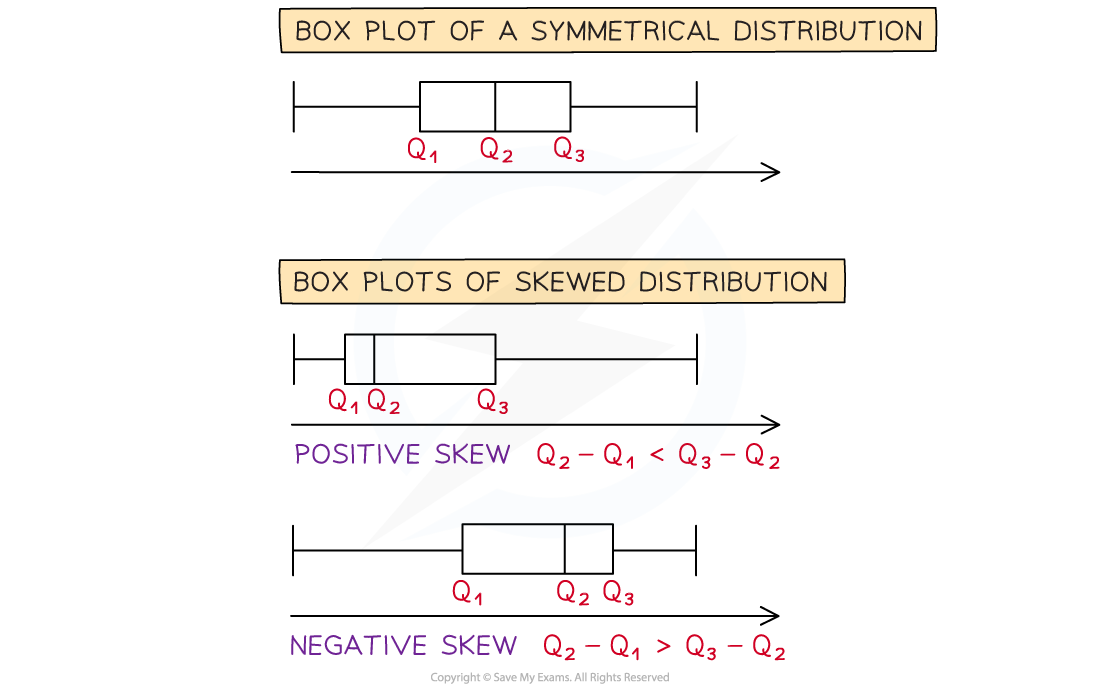
If the distribution is shown on a box plot looking at the difference between the quartiles can help decide how it is skewed
-
If the median is closer to the lower quartile then the distribution has positive skew
- Q3 - Q2 > Q2- Q1
-
If the median is closer to the upper quartile then the distribution has negative skew
- Q3 - Q2 < Q2 - Q1
-
-
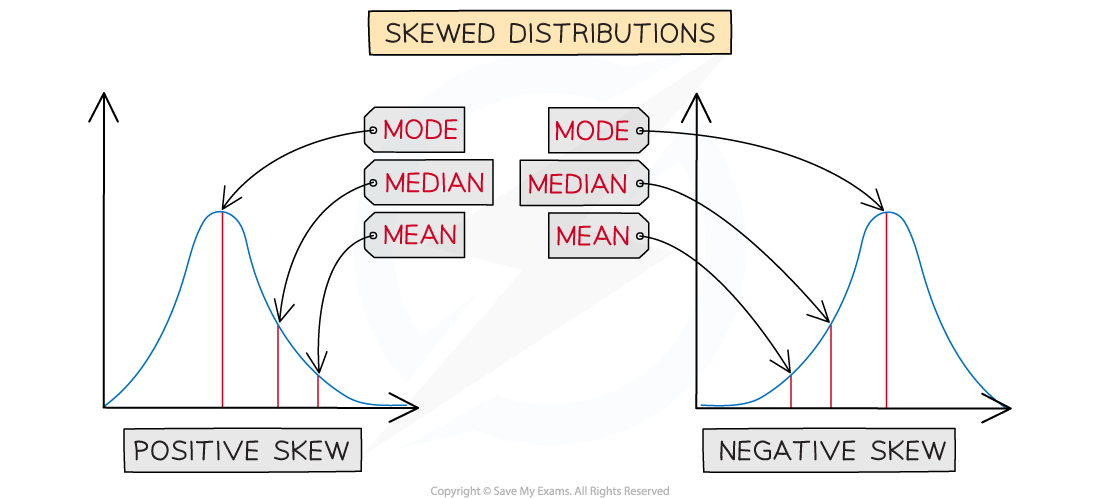
Looking at the values of the statistics can help you decide whether distribution is positively skewed or negatively skewed
-
In a positively skewed distribution
- Mode < median < mean
-
In a negatively skewed distribution
- Mean < median < mode
-
Exam Hint
- You only need to be able to recognise the different types of skewness
- It can help to comment on skewness when asked to compare distributions
Was this revision note helpful?
Build on this topic