Encapsulation (OOP) (Cambridge International A-Level Computer Science)
Encapsulation (OOP)
What is encapsulation?
- In A Level Computer Science, encapsulation refers to the practice of grouping data (attributes) and methods(functions) within a class
- Using encapsulation ensures that data remains secure and is not accidentally modified or misused by controlling access to them using access modifiers (e.g., public, private)
- It also helps to organize code by keeping related data and methods together within an object
- Encapsulation promotes code reusability, which means the same object or class can be used in different parts of a program without rewriting the code
- Encapsulation uses a concept called “Abstraction” which reduces complexity by hiding the implementation details of the object, making it easier to understand and work with
- Programmers can use methods and classes from other parts of the program without having to understand how that it has been constructed internally
Encapsulation in classes
- Private variables are only accessible within the class itself, and external code cannot access them directly.
- Encapsulation hides how things work inside a class from the outside. External code can interact with the class using public methods without needing to understand its internal details
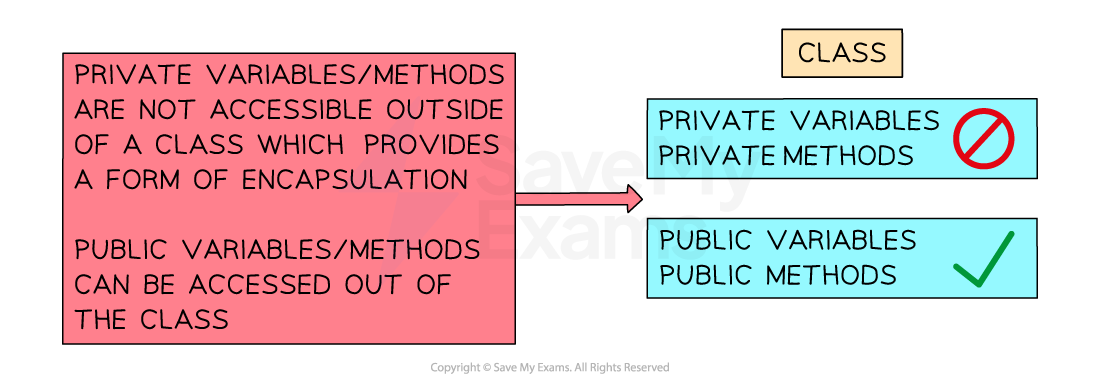
Encapsulation in classes
Encapsulation in methods
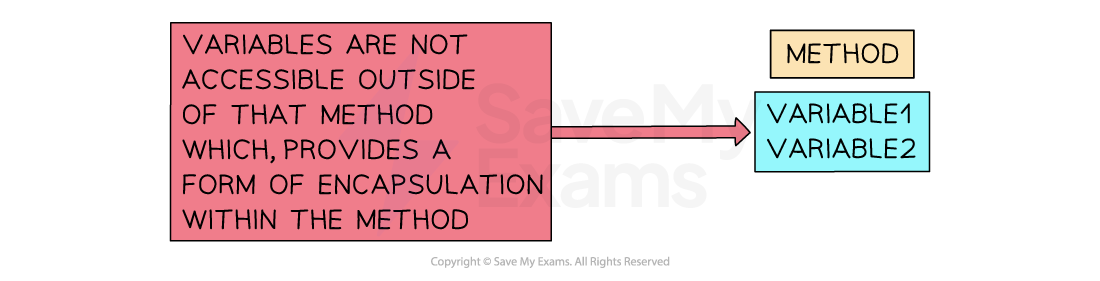
Encapsulation in methods
Exam Hint
- When determining whether a method or attribute is public or private, if neither keyword appears, then assume it is public
Programming encapsulation (OOP)
What is a get method?
- The "get" method is a common naming convention for a type of method that is used to retrieve the value of an object's private attributes (instance variables)
- These methods are also known as "getter" methods or "accessor" methods
- The main purpose of a get method is to provide controlled access to the internal state (data) of an object without allowing direct modification
- Attributes are often declared as private to achieve encapsulation, so cannot be accessed directly from outside the class
- External code can use the public get methods to read the values of these private attributes (also known as instance variables)
Pseudocode
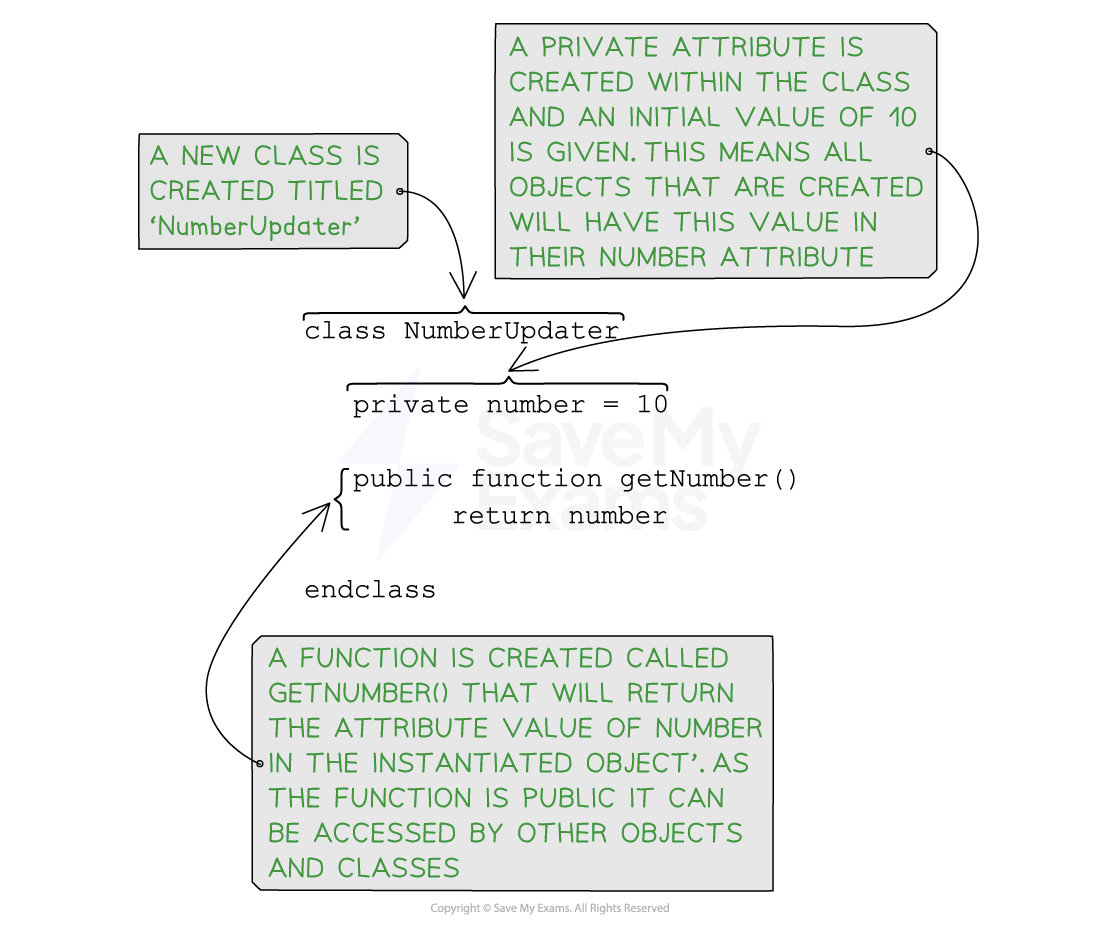
Pseudocode for a get method
Java
Python
What is a set method?
- The "set" method is a common naming convention for a type of method that is used to set the value of object's private instance variables
- Setter methods, also known as “setter” methods or “mutator” methods
- Generally additional code is written within the method to allow controlled access by enforcing certain conditions or validations before updating the attribute
Pseudocode
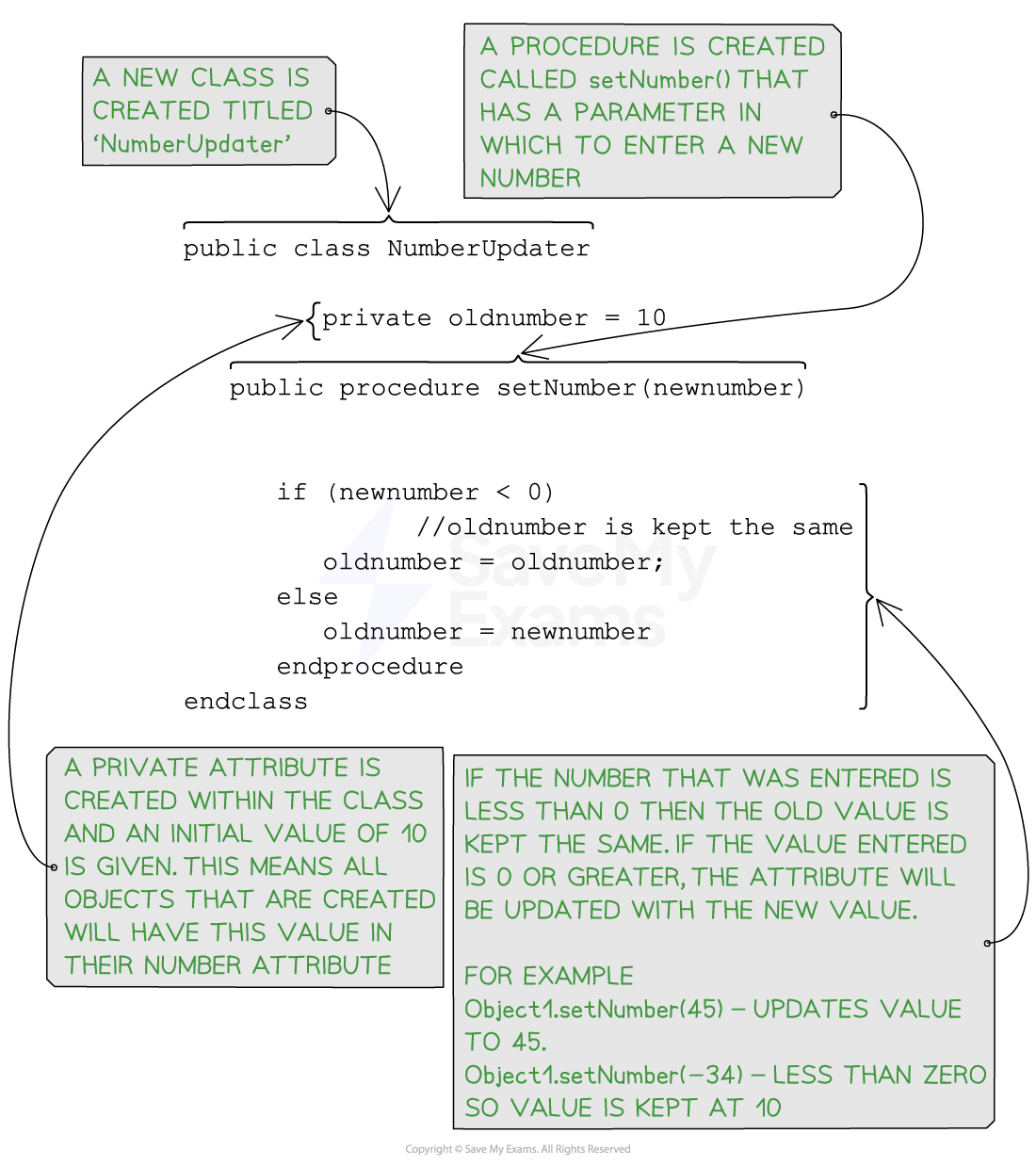
Pseudocode for a "setter" method
Java
Python
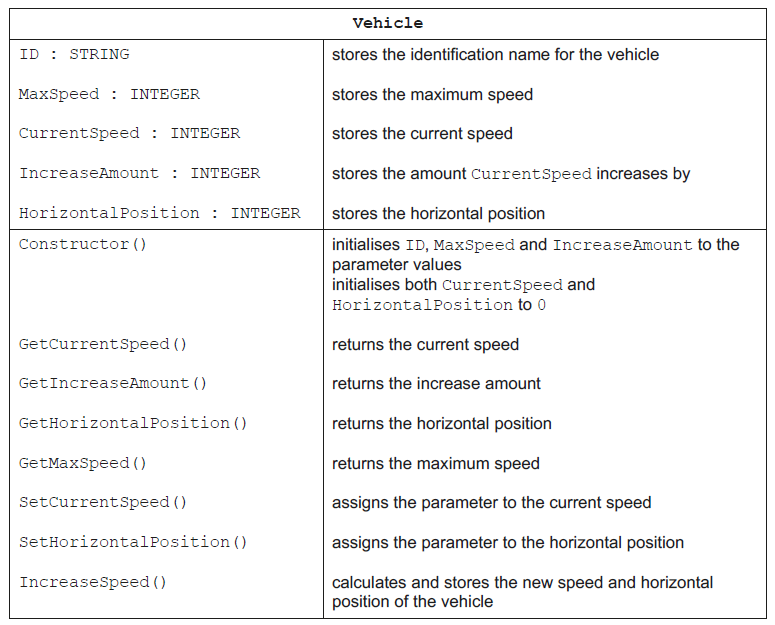
Worked Example A computer game is being designed that will include different vehicles. A prototype for the game is being developed using object‑oriented programming.
The class
Vehiclestores data about the vehicles. Each vehicle has an identification name, a maximum speed, a current speed and a horizontal position. The valueIncreaseAmountis added to the current speed each time the vehicle increases its speed.
Write program code for the get methods
GetCurrentSpeed(),
GetIncreaseAmount(),GetMaxSpeed()andGetHorizontalPosition()[3]Final answer: Answer
- 1 get function header (and end where appropriate) with no parameter … [1 mark]
- …returning attribute (without overwriting) [1 mark]
- 3 further correct get methods [1 mark]
Example program code:
VB.NET
Java
Python
Was this revision note helpful?
Build on this topic