Embedded Systems (Cambridge International A-Level Computer Science)
Exam board Cambridge International · A-LevelUpdated 2026-10-01
Embedded systems
What is an embedded system?
-
An embedded system is a computer system which is used to perform a dedicated function, inside a larger mechanical unit
-
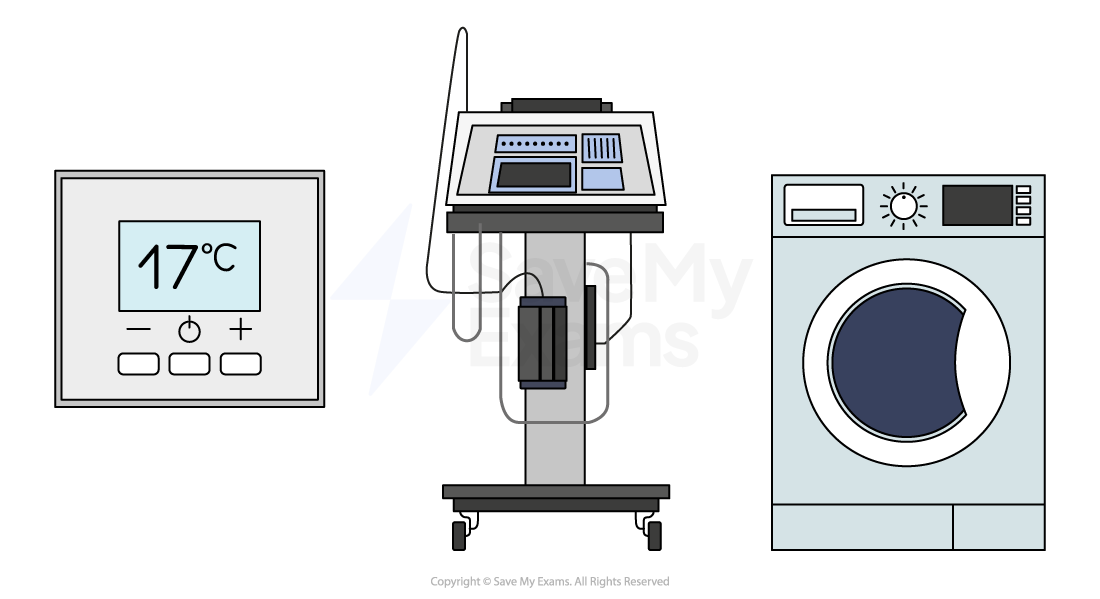
Examples of embedded systems include
- Heating thermostats
- Hospital equipment
- Washing machines
- Dishwashers
- Coffee machines
- Satellite navigation systems
- Factory equipment
- Security systems
- Traffic lights
Benefits and drawbacks of embedded systems
| Benefits | Drawbacks |
|---|---|
| Small and compact – easy to fit into dedicated devices | Limited functionality – only performs specific tasks |
| Low power consumption – efficient and cost-effective | Hard to upgrade or repair – often built into the device |
| Fast and reliable – designed for quick, repetitive tasks | Limited memory and processing power |
| Cheaper to produce – uses minimal hardware | Not flexible – can’t easily be reprogrammed for other tasks |
| Works in real-time – ideal for time-sensitive operations (e.g. alarms) | May be less secure – limited protection if connected to other systems |
Worked Example Explain why the lane detection system is an example of an embedded system. [2]
Final answer: Answer
1 mark per point (max 2):
- The lane detection system is built into / integrated into the car [1 mark]
- The lane detection system only performs one task [1 mark]
- The lane detection system is not easily changed/updated by the car owner [1 mark]
Was this revision note helpful?