Aerobic Respiration: The Link Reaction (Cambridge International A-Level Biology)
Aerobic Respiration: Entering the Link Reaction
Spec point — describe the link reaction, including the role of coenzyme A in the transfer of acetyl (C) groups
-
The end product of glycolysis is pyruvate
-
Pyruvate contains a substantial amount of chemical energy that can be further utilised in respiration to produce more ATP
-
When oxygen is available pyruvate will enter the mitochondrial matrix and aerobic respiration will continue
-
It moves across the double membrane of the mitochondria via active transport
- It requires a transport protein and a small amount of ATP
-
Once in the mitochondrial matrix pyruvate takes part in the link reaction
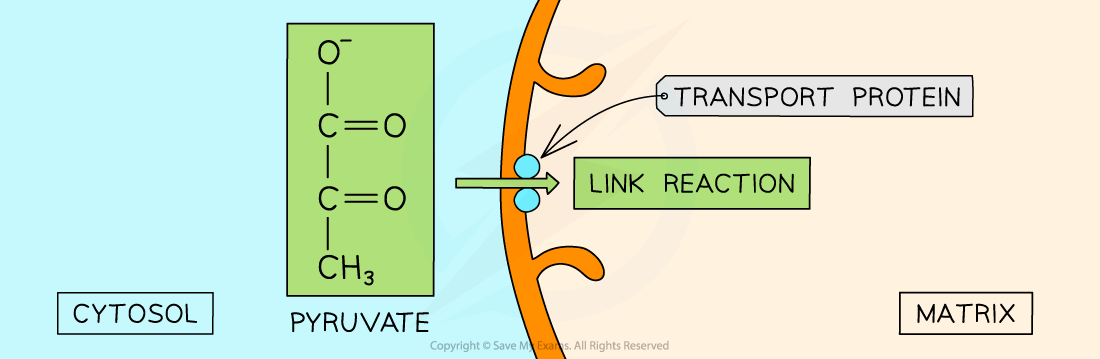
Pyruvate moving across the mitochondrial double membrane
Aerobic Respiration: Link Reaction
- The link reaction is so-called because it links glycolysis to the Krebs cycle
- The steps are:
-
Decarboxylation and dehydrogenation of pyruvate by enzymes to produce an acetyl group, CH3C(O)-
-
Combination with coenzyme A to form acetyl CoA
-
It produces:
- Acetyl CoA
- Carbon dioxide (CO2)
- Reduced NAD (NADH)
pyruvate + NAD + CoA → acetyl CoA + carbon dioxide + reduced NAD
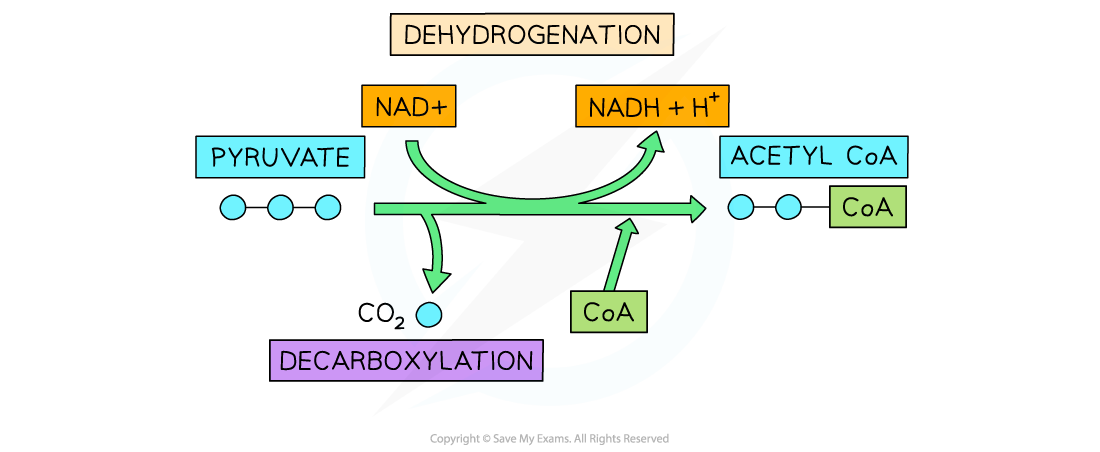
The link reaction
Role of coenzyme A
- A coenzyme is a molecule that helps an enzyme carry out its function but is not used in the reaction itself
- Coenzyme A consists of a nucleoside (ribose and adenine) and a vitamin
- In the link reaction, CoA binds to the remainder of the pyruvate molecule (acetyl group 2C) to form acetyl CoA
- It then supplies the acetyl group to the Krebs cycle where it is used to continue aerobic respiration
- This is the stage that brings part of the carbohydrate (or lipid/amino acid) into the further stages of respiration and links the initial stage of respiration in the cytoplasm to the later stages in the mitochondria
Exam Hint Remember that there are two pyruvate molecules produced per glucose molecule so you need to multiply everything by 2 when thinking about what happens to a single glucose molecule in aerobic respiration.
Was this revision note helpful?
Build on this topic