The Nervous System (Cambridge International A-Level Biology)
Exam board Cambridge International · A-LevelUpdated 2026-06-30
Spec point —
15.1.2· compare the features of the nervous system and the endocrine system
The nervous system
-
The human nervous system consists of the following:
- Central nervous system (CNS)—the brain and the spinal cord
- Peripheral nervous system (PNS)—all of the nerves in the body
-
It allows us to make sense of our surroundings and respond to them and to coordinate and regulate body functions
-
Information is sent through the nervous system as nerve impulses
- These are electrical signals that pass along nerve cells known as neurones
-
A bundle of neurones is known as a nerve
-
Neurones coordinate the activities of sensory receptors (eg. those in the eye), decision-making centres in the central nervous system, and effectors such as muscles and glands
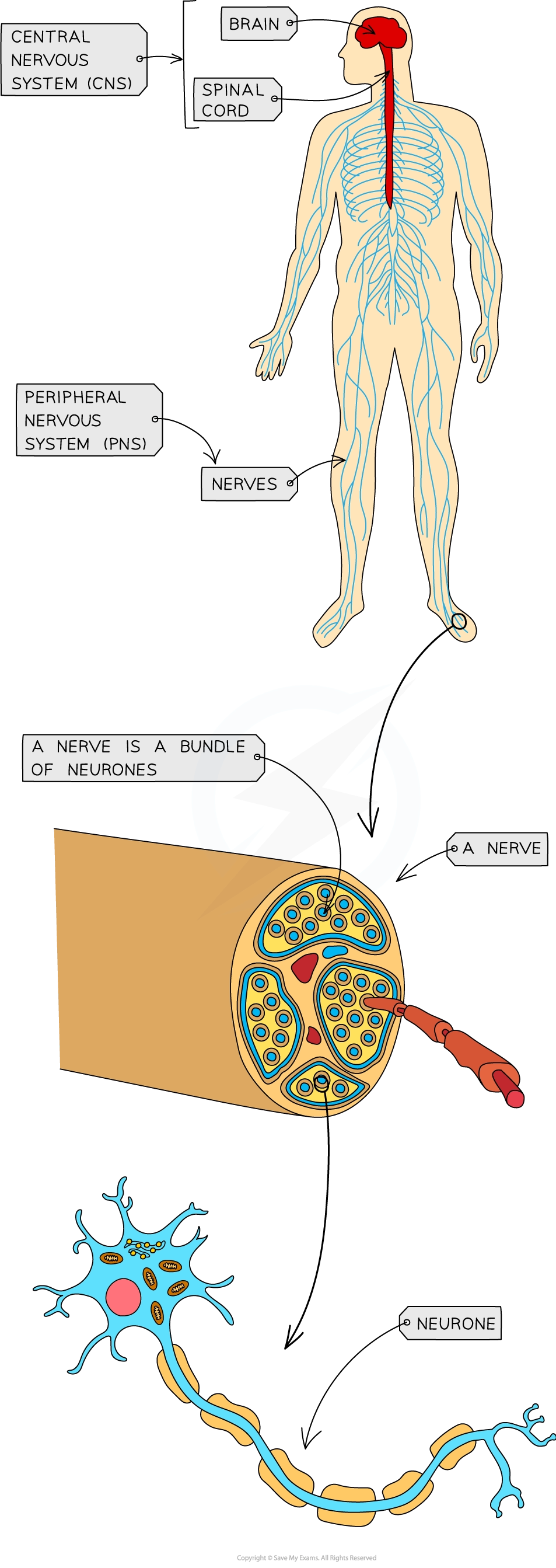
The human nervous system comprises the central and peripheral nervous systems
| Nervous system | Endocrine system | |
|---|---|---|
| Parts of the system | Brains, spinal cord, nerves/neurones | Glands |
| Type of message | Electrical impulse | (Chemical) hormone |
| Method of transmission | Neurones | Bloodstream |
| Effectors | Muscles or glands | Target cells in specific tissues |
| Speed of transmission | Very fast | Slower |
| Duration of effect | Short - until electrical impulses stop | Longer - until the hormone is broken down |
Was this revision note helpful?