Chromosome Structure (Cambridge International A-Level Biology)
Spec point —
5.1.1· describe the structure of a chromosome, limited to: • DNA • histone proteins • sister chromatids • centromere • telomeres
Chromosome structure
-
Chromosomes are made of one very long, condensed DNA molecule associated with proteins (in eukaryotic cells)
- The main proteins present are the large positively charged globular proteins called histones
- Their role is to organise and condense the DNA tightly so that it fits into the nucleus
-
The tightly coiled combination of DNA and proteins is called chromatin—this is what chromatids, and therefore chromosomes, are made of
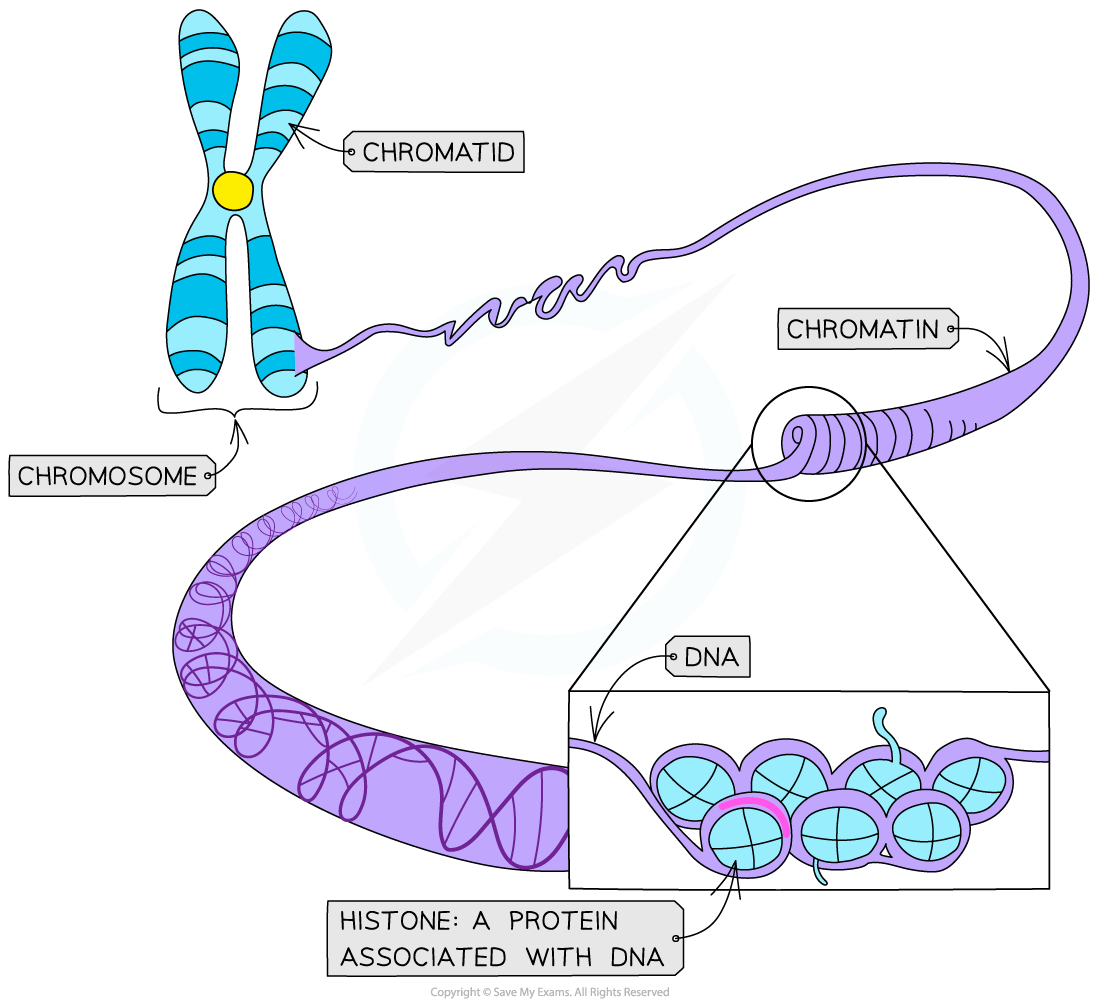
DNA is coiled around histone proteins to make chromatin
-
During interphase (S phase) the DNA replicates to create two identical strands of DNA called chromatids
- These chromatids are joined together by a narrow region called the centromere
-
The two chromatids that make up the double structure of a chromosome are known as ‘sister chromatids’
-
It is important that the sister chromatids are identical (contain the same genes) because this is key to cell division
- One chromatid goes into one daughter cell and one goes into the other daughter cell during mitosis, ensuring the daughter cells are genetically identical
-
Each chromatid is made up of one very long, condensed DNA molecule, which is made up of a series of genes
-
The ends of the chromatids in chromosomes are ‘sealed’ with protective structures called telomeres
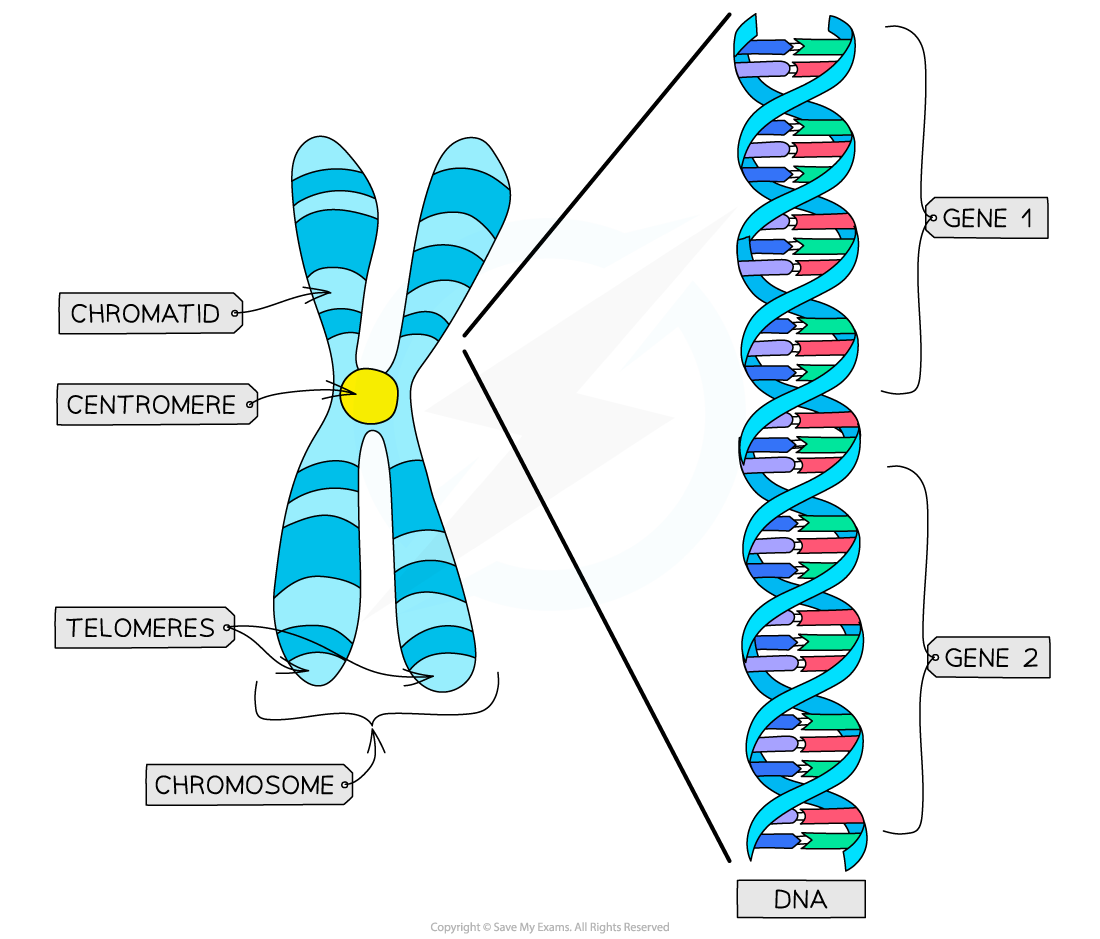
Simplified diagram of the structure of a chromosome
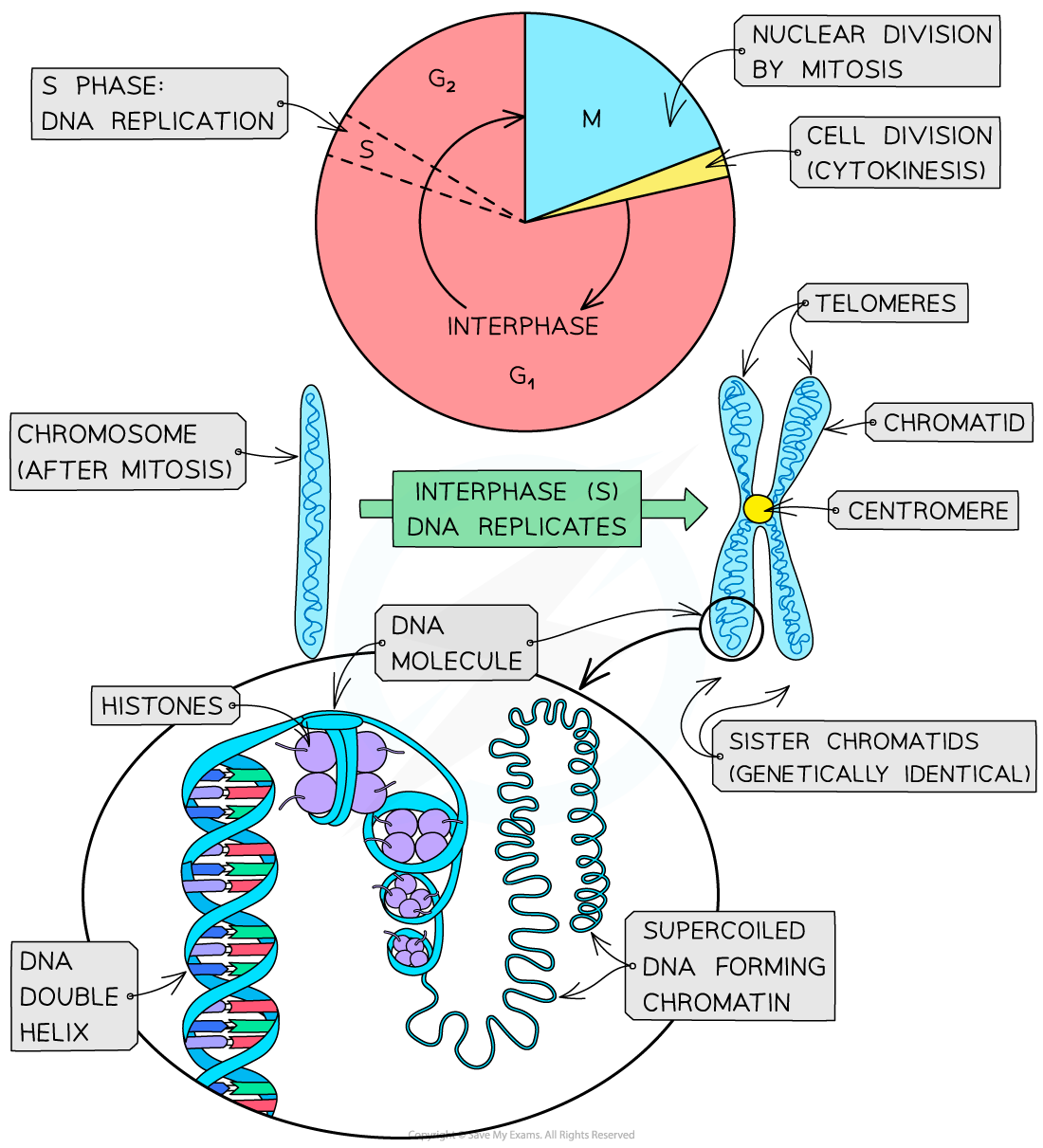
Diagram illustrating the structure of a chromosome before and after the S phase
Exam Hint It is important that you are able to distinguish when the terms chromatid, sister chromatids and chromosomes are used.
Was this revision note helpful?