Extract:
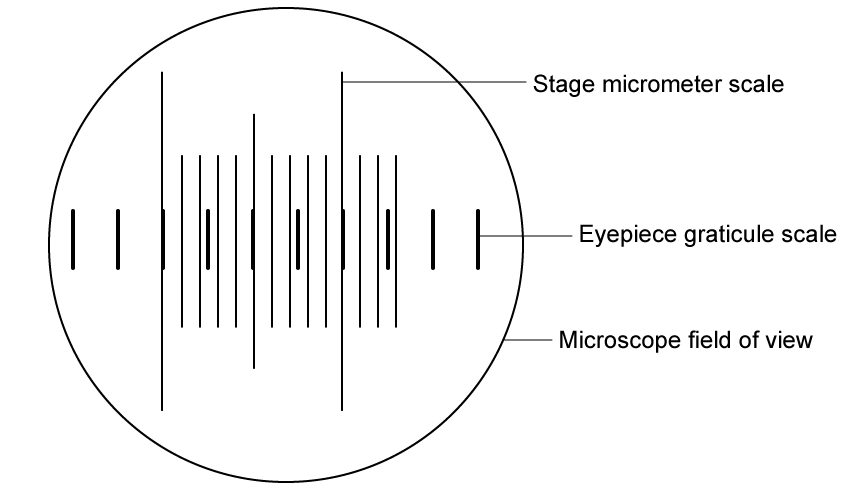
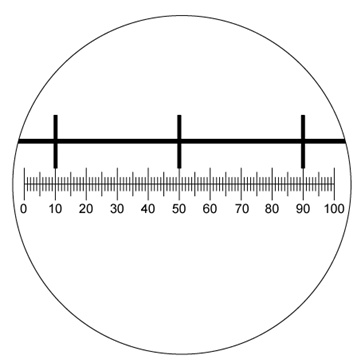
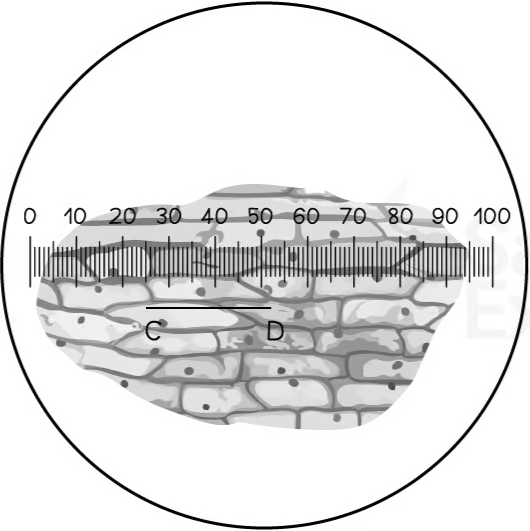
A student used a light microscope to view a specimen. They wanted to work out the actual size of the specimen, and decided to use a stage micrometer, together with the ruler visible inside the eyepiece of the microscope (known as the eyepiece graticule).
A stage micrometer is needed in addition to the eyepiece graticule because the size of the units of the eyepiece graticule change depending on the magnification being used; the stage micrometer can be used to calibrate the graticule / the graticule needs to be calibrated.
The graticule is the little ruler that you can see inside the eyepiece when you look down a microscope; it always stays the same size no matter what magnification you are using. This means that the length measured by the graticule changes at different magnifications and it therefore needs to be calibrated using a stage micrometer before it can be used to measure the size of a specimen.
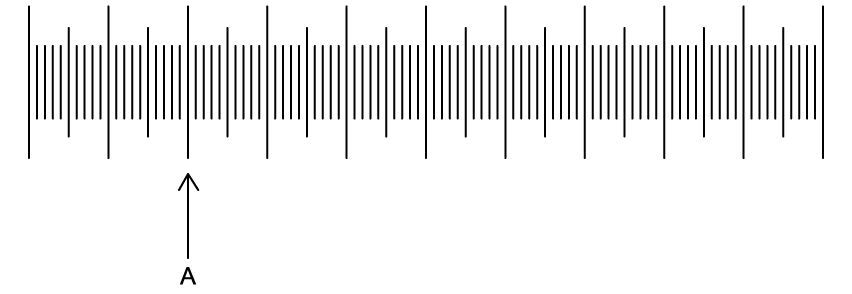
A stage micrometer is a slide with a small ruler that has divisions of known length which can be put on the microscope stage and viewed at the same time as the eyepiece graticule.
The steps required to calibrate the eyepiece graticule of a light microscope using a stage micrometer are:
- Line up the scale of the graticule with the scale on the stage micrometer;
- Count the number of subdivisions of the stage micrometer that fit into each division of the eyepiece graticule;
- Multiply that number by the distance between each subdivision of the stage micrometer to give the distance between each division of the eyepiece graticule;
For example, the smallest subdivision etched onto the surface of most stage micrometers is 0.01 mm (10 µm). If 5 subdivisions of the stage micrometer fit into each division of the eyepiece graticule, then each division of the graticule is 5 x 10 = 50 μm.
Explain why the steps outlined in part (b) would need to be repeated when the student changes to a more powerful objective lens.